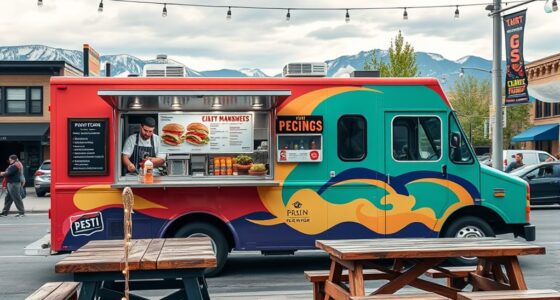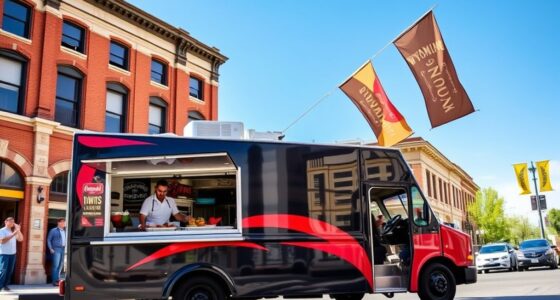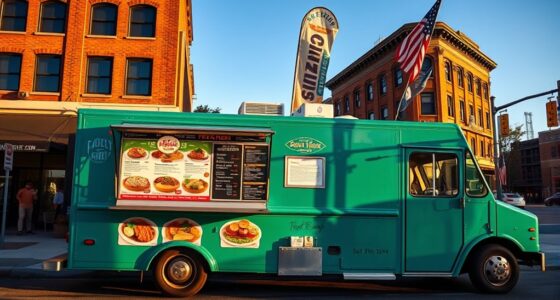

To start a food truck in Toledo, Ohio, you’ll need to secure various permits like a Mobile Food Vending License, registration with the Department of Finance, and health department approvals, costing a few hundred dollars. Plan for startup costs between $40K and $150K for your truck and equipment, and choose busy locations like farmers markets or near medical centers. Focus on a simple menu and use social media to attract customers. If you keep exploring, you’ll find everything you need to launch successfully.

Get kitchen staples and gadgets delivered free with Prime
- Fast, free delivery on millions of items
- Prime Video, Amazon Music and more included
- Member-only deals all year
Key Takeaways
- Obtain necessary permits including mobile food licenses, health inspections, and transient vendor licenses from Toledo and Ohio authorities.
- Budget $40,000–$150,000 for truck purchase/rent, plus additional costs for equipment, permits, insurance, and initial inventory.
- Choose high-traffic locations like farmers markets, medical centers, downtown areas, and event venues, ensuring proper permits.
- Plan a menu of 5–15 quick-prep, quality items with clear presentation, seasonal updates, and efficient ingredient use.
- Promote your food truck via social media, participate in local events, and ensure compliance with health, safety, and licensing regulations.
Navigating Permits and Licensing Requirements in Toledo
Managing permits and licensing requirements in Toledo can seem complex, but understanding the necessary steps is essential for legal operation. You’ll need to submit a registration application to the City of Toledo’s Department of Finance, Division of Taxation, for each mobile unit. This requires providing tax and utility compliance certificates, a retail food establishment license, a State of Ohio Vendor license, and proof of general liability insurance—$1 million for motorized units and $300,000 for pushcarts. Each unit needs its own registration, valid for one year, with a $50 fee. Additionally, you must obtain a Mobile Food Vending License from the Toledo-Lucas County Health Department, which involves plan review, inspections, and compliance with Ohio food safety codes. Finally, a Transient Vendor’s License from Ohio is necessary for selling taxable goods at specific locations or events. Staying informed about licensing requirements and updates can help ensure your food truck operates smoothly and legally in Toledo.
Estimating Startup and Operational Expenses
Estimating startup and operational expenses is crucial for planning a successful food truck business in Toledo. Your initial costs include purchasing or renting a food truck, which ranges from $40,000 to $150,000, plus equipment like ovens and refrigerators. You’ll also need $2,000–$3,000 for initial inventory, and about $300 for serveware. Licensing, permits, and insurance can cost from a few hundred to several thousand dollars, with liability insurance being a significant ongoing expense. Expect $500–$1,000 for initial fuel and maintenance. Monthly operational costs include labor, ingredients, and utilities, which can total over $1,600. Proper budgeting guarantees you cover startup investments and sustain operations smoothly. Regularly assessing your expenses helps maintain profitability and adapt to changing costs.
Choosing Suitable Locations for Your Food Truck
Selecting the right locations for your food truck is essential to attract steady customers and maximize sales. Popular spots like Lewis Ave, Levi’s Square, and Sautter’s Market draw diverse crowds, especially during farmers markets from Tuesday to Friday. Parking near medical centers like Toledo Clinic and Dana captures lunchtime professionals, while weekend mornings at local lots and markets target families and weekend shoppers. Downtown areas and event venues see increased foot traffic during lunch and after hours, ideal for quick sales. Make certain you have the proper permits for public or private property and follow local regulations on time limits and safety codes. Collaborate with event organizers or business owners to secure strategic spots, balancing high-traffic areas with less saturated locations to stay competitive. Understanding local zoning laws and restrictions is also crucial to prevent fines or shutdowns.
Planning a Safe and Appealing Menu
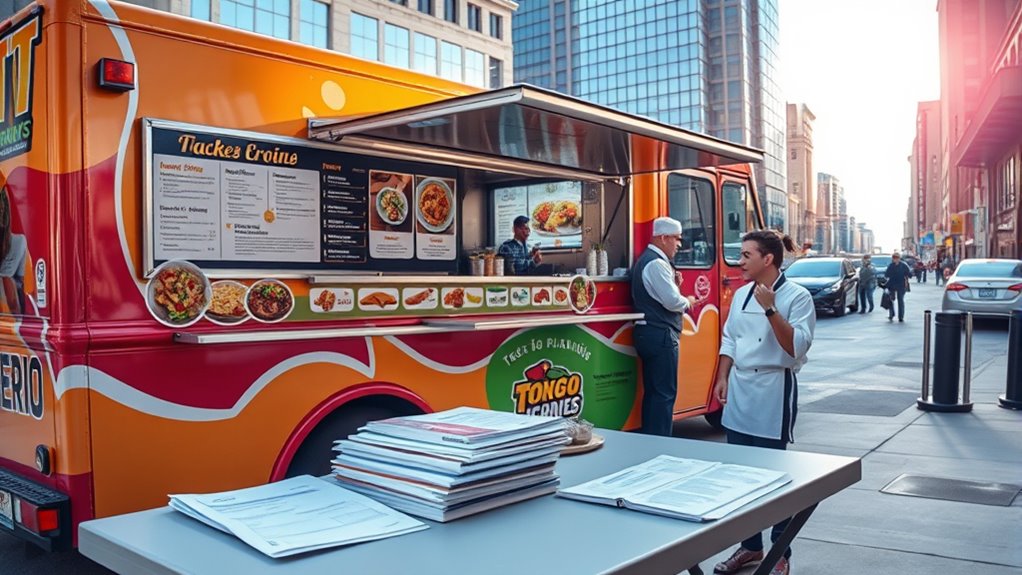
Creating a safe and appealing menu starts with focusing on the quality and simplicity of your offerings. Limit your menu to 5–15 items to guarantee quick service and clear choices, emphasizing quality over quantity. Choose dishes that can be prepared in under five minutes, and use overlapping ingredients to reduce waste and simplify inventory. Consider your kitchen size and staff skills when selecting menu items. Design your menu with clear categories and highlight signature dishes in prominent spots to attract attention. Use digital boards with vivid visuals and prices for easy readability. Incorporate seasonal ingredients and regularly update your menu to keep it fresh and exciting. Prioritize food safety by following health regulations, choosing safe ingredients, and training staff in proper handling to prevent contamination. Research local food trends to ensure your menu appeals to the community and stays competitive. Additionally, paying attention to the overall ambiance and presentation can enhance customer satisfaction and encourage repeat visits.
Effective Marketing Strategies for Food Truck Success
To succeed in the competitive food truck industry, leveraging effective marketing strategies is essential. Social media is a powerful tool—68% of food truck owners use platforms like Facebook to promote their business, boosting sales by around 20%. Customers spend about 15% more at trucks that actively engage online. Mobile apps that help customers find trucks have grown in popularity by 35%, making discovery easier. Investing in social media ads can also attract nearly 40% of new customers. Participating in local festivals and community events increases visibility and foot traffic, while partnering with local businesses enhances reach. Focus on identifying your target market, like Millennials, and tailor your messaging. Loyalty programs and data analytics further improve customer retention and marketing ROI, driving your success. Market growth Additionally, the global food truck market was valued at approximately $1.1 billion in 2020, with a CAGR of 6.4%, indicating strong industry expansion potential. Incorporating popular beverage choices like no-sugar-added drinks or healthy juices can appeal to health-conscious customers and differentiate your menu.
Ensuring Compliance and Maintaining Operational Standards
Ensuring compliance and maintaining operational standards are critical for the success and legality of your food truck business in Toledo. You must submit a formal application to the Toledo Department of Finance, Division of Taxation, including documents like a tax compliance certificate, Ohio retail food license, and a current Vendor license. Each truck needs a separate registration, valid for a year, with a $50 fee.
Meet Ohio food safety codes by using NSF or FDA-certified equipment, food-grade hoses, and backflow prevention devices. Keep the area within 15 feet of your truck clean, avoid obstructing fire lanes, and follow restrictions near schools and government buildings. Additionally, understanding juice detox side effects and regulations can help you maintain safe practices if you incorporate beverage options into your menu.
| Compliance Area | Requirements |
|---|---|
| Licensing & Registration | Application, certificates, insurance, annual renewal |
| Health & Safety Standards | Proper food handling, certified equipment, water safety |
| Operational Restrictions | Clean area, no fire lane obstruction, safe gas use |
| Food & Menu Regulations | Prohibited items, menu approval, documentation |
Frequently Asked Questions
How Long Does the Permit Approval Process Typically Take in Toledo?
You’re likely wondering how long the permit approval process takes in Toledo. Usually, standard vendor permits take about 10-15 business days, while those needing health department review can take 15-20 days. If plans require review by the health department, it might extend to 30 days. To avoid delays, submit a complete application early, coordinate inspections, and stay compliant with all requirements. Planning ahead helps guarantee a smoother approval process.
Are There Any Restrictions on Operating Hours for Food Trucks?
You need to know that Toledo limits food truck operating hours typically from 7 a.m. to 11 p.m. to comply with noise and safety rules. You can’t operate outside these times without special permission, and location restrictions may also apply, like in parks or busy streets. You must stay with your truck while open, and moving regularly is required. Violating these hours can lead to fines or permit issues, so plan accordingly.
Can I Sell Alcohol or Beverages From My Food Truck?
Did you know Ohio offers various liquor permits, with fees ranging from $376 to $2,344? You can sell alcohol from your food truck, but you need the right permit—like a D-1, D-2, or D-3—depending on what you plan to sell. make certain you follow local rules in Toledo, such as venue restrictions and licensing requirements, to legally serve beverages and avoid penalties.
What Are the Parking Regulations Specific to Food Trucks in Toledo?
You need to follow Toledo’s specific parking rules for food trucks. You can park in designated spots like St. Clair Street at Levis Square, but avoid residential zones unless permitted. Make sure you’re not blocking sidewalks or streets, and keep a safe distance from buildings and other mobile units. Always stay with your truck, and verify you have the proper permits and registration to park legally and avoid fines.
Are There Special Considerations for Operating During Winter or Adverse Weather?
When operating during winter or bad weather, you need to plan for safety and equipment challenges. Make sure your refrigeration and heating systems are winterized, and use insulation to protect your inventory. Keep backup power sources ready, and ensure your lighting is sufficient for shorter days. Adjust your hours and menu to suit colder conditions, and always follow safety regulations for generators and fuel systems to prevent accidents.
Conclusion
So, armed with permits, a tempting menu, and prime spots, you’re now ready to conquer Toledo’s food scene—because nothing says success like a well-oiled food truck empire. Just remember, in the world of mobile munchies, a dash of patience and a sprinkle of luck are your secret ingredients. Keep compliance in check, and maybe, just maybe, your food truck will outshine even the most seasoned local restaurants—at least until the health inspector rolls by.
Halloween Picks
halloween
As an affiliate, we earn on qualifying purchases.