Employing solar-powered refrigeration helps you reduce reliance on fossil fuels and lowers environmental impact by using clean, renewable solar energy. It offers reliable cooling even during cloudy days, saving you money on energy bills and supporting sustainability. Enhanced efficiency means fewer panels and cost savings, while eco-friendly refrigerants minimize harmful emissions. To discover how you can implement this system effectively and benefit from its long-term advantages, continue exploring the key factors involved.
Key Takeaways
- Solar-powered refrigeration reduces reliance on fossil fuels, providing sustainable and environmentally friendly cooling solutions.
- High-efficiency solar panels maximize energy capture, ensuring reliable and consistent refrigeration performance.
- Proper system maintenance extends equipment lifespan and maintains optimal efficiency in solar refrigeration setups.
- Selecting eco-friendly refrigerants minimizes environmental impact and aligns with the sustainability benefits of solar systems.
- System design should consider solar panel efficiency to optimize size, cost, and cooling reliability for specific applications.
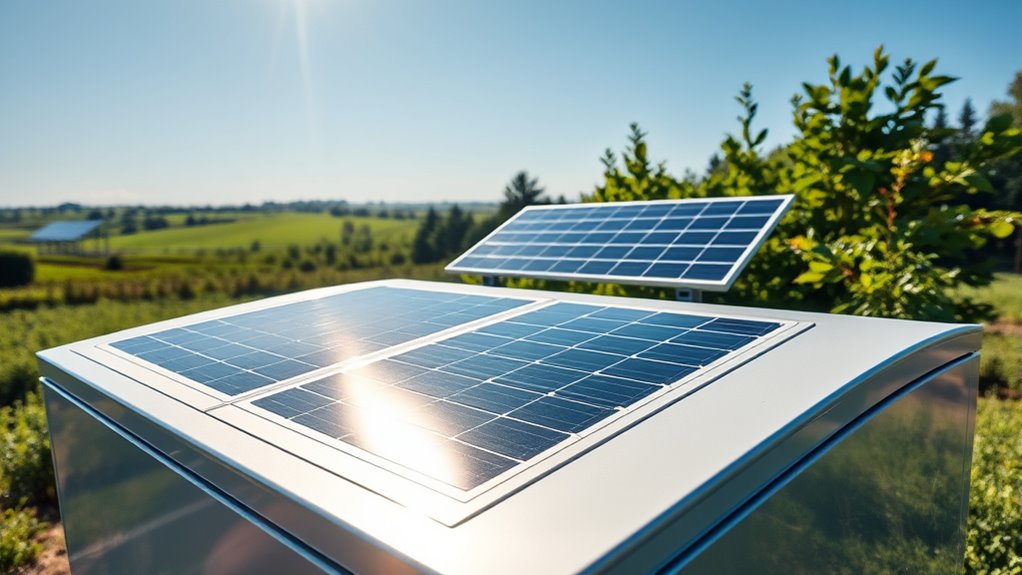
Solar-powered refrigeration offers an innovative solution to cooling needs by harnessing the energy of the sun. When you rely on solar energy, you’re tapping into a clean, renewable source that reduces your dependence on fossil fuels and minimizes environmental harm. One key factor that influences the effectiveness of this technology is solar panel efficiency. High-efficiency solar panels convert more sunlight into usable electricity, which means you can generate more power with fewer panels, saving space and reducing overall costs. As technology advances, newer panels offer improved efficiency, making solar refrigeration systems more accessible and practical, even in areas with less consistent sunlight.
By optimizing solar panel efficiency, you guarantee that your refrigeration unit operates reliably throughout the day, regardless of weather conditions. This is especially vital in regions where sunlight varies or during cloudy days. The more efficient your panels, the better your system can maintain a steady cooling environment, keeping your perishables fresh and your products safe. Additionally, solar panel efficiency directly impacts the size and complexity of the system needed, which can influence installation costs and maintenance requirements, so choosing the right panels is a strategic decision.
Implementing solar system maintenance practices ensures sustained performance and longevity of your refrigeration setup.
Another important aspect to contemplate is the refrigerant used within the system. Traditional refrigerants, like chlorofluorocarbons (CFCs) and hydrochlorofluorocarbons (HCFCs), have a substantial refrigerant environmental impact because they contribute to ozone depletion and have high global warming potential. Modern solar refrigeration systems often utilize eco-friendly refrigerants, such as hydrofluoroolefins (HFOs) or natural options like ammonia and carbon dioxide, which markedly reduce their environmental footprint. This shift toward environmentally conscious refrigerants aligns perfectly with the sustainability benefits of solar power, creating a system that’s not only energy-efficient but also environmentally responsible.
Frequently Asked Questions
What Is the Lifespan of Solar-Powered Refrigeration Units?
You can expect your solar-powered refrigeration unit to last about 10 to 15 years with proper maintenance. Battery longevity plays a vital role, typically lasting 5 to 10 years depending on usage and quality. Inverter durability is also essential, often lasting 8 to 12 years if well-maintained. Regular checks and timely replacements ensure your system remains efficient and extends its overall lifespan, saving you money in the long run.
Are There Specific Maintenance Requirements for Solar Refrigerators?
You need to regularly maintain your solar refrigerator by cleaning the solar panels to guarantee peak energy absorption. Check and clean the solar panel surfaces periodically, especially in dusty or polluted areas. Additionally, monitor and maintain the batteries to prevent buildup and ensure efficient storage. Proper battery maintenance involves checking for corrosion and ensuring connections are secure. These steps help your solar refrigerator operate efficiently and extend its lifespan.
How Do Weather Conditions Affect Solar Refrigeration Efficiency?
Weather conditions critically impact your solar refrigeration’s efficiency. Heavy rain, snow, or cloud cover reduce sunlight, lowering energy production and weather resilience. Strong winds can strain or damage solar panel durability if not properly secured. To maintain peak performance, verify your system is weather-resistant, with durable panels, and consider backup power options for extreme conditions. Regular maintenance helps your solar refrigeration adapt to changing weather and keeps it running smoothly.
Can Solar Refrigeration Operate During Nighttime or Cloudy Days?
Think of your solar refrigerator as a diligent sun chariot, carrying energy across day and night. It can operate during nighttime or cloudy days thanks to its battery storage, which holds excess solar energy collected during sunny periods. This stored energy guarantees continuous cooling, maintaining high energy efficiency even when the sun’s not shining. So, with a good battery system, your solar refrigeration works seamlessly, no matter the weather.
What Are the Initial Costs Compared to Traditional Refrigeration?
You’ll find that initial costs for solar-powered refrigeration are generally higher than traditional systems due to installation expenses and specialized equipment. The cost comparison shows that while the upfront investment is significant, you save on energy bills over time and benefit from environmental advantages. Plus, solar refrigeration often qualifies for incentives, helping offset installation expenses, making it a more cost-effective choice in the long run.
Conclusion
By choosing solar-powered refrigeration, you’re embracing a future where sustainability blooms like a garden in spring. This eco-friendly technology not only reduces your carbon footprint but also acts as a beacon of innovation in energy efficiency. As you harness the sun’s endless power, you’re planting seeds for a cleaner, greener world. So, let this bright idea be your lighthouse, guiding you toward smarter, more sustainable cooling solutions that shine as brightly as the sun itself.