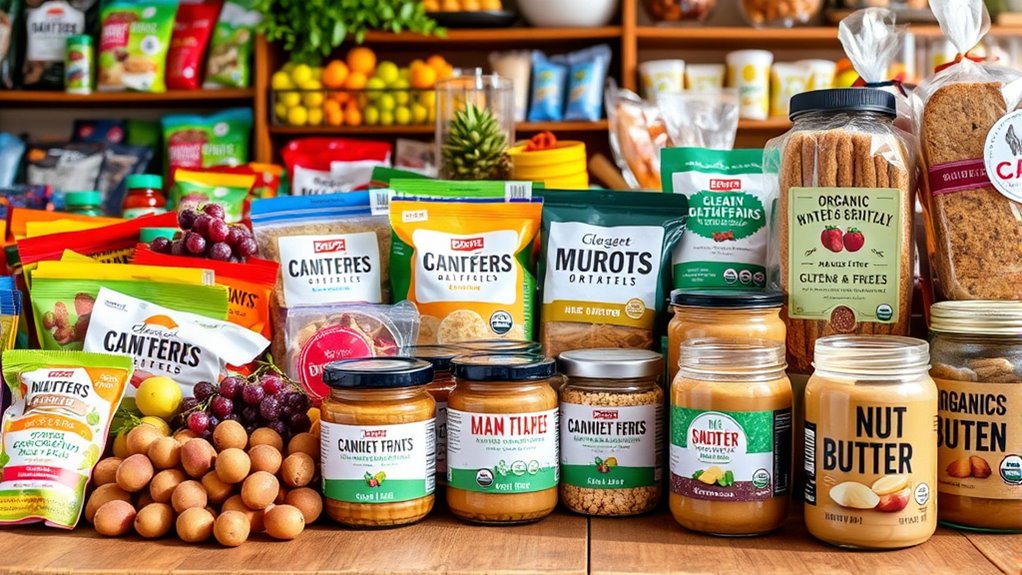

The market for gluten-free and allergen-friendly products is booming as consumers like you seek healthier, safer options. You’ll notice more plant-based snacks, with ingredients that are simple and recognizable. Eco-friendly packaging is also gaining popularity, reflecting your concern for sustainability. Brands are transparent about their practices, and products that align with your values are everywhere. Keep exploring—you’ll discover how these trends are shaping smarter, more inclusive choices for your lifestyle.
Key Takeaways
- Growing consumer demand for safe, allergen-free, and gluten-free snack options drives product innovation.
- Plant-based snacks with natural ingredients are increasingly popular for their allergen-friendly and health benefits.
- Brands prioritize sustainable packaging to meet environmentally conscious consumers’ expectations.
- Transparent communication about ingredients and eco-friendly practices boosts consumer trust and brand loyalty.
- The trend reflects a broader shift toward mindful, responsible consumption that aligns with health and sustainability values.

Have you noticed how more people are choosing gluten-free and allergen-friendly options? It’s clear that growing awareness of food sensitivities and allergies is driving this shift. Consumers now prioritize products that are safe for various dietary needs without sacrificing taste or convenience. One major trend fueling this movement is the rise of plant-based snacks. These snacks cater to a broad audience seeking healthier, more sustainable options, and they often come with the added benefit of being naturally gluten-free and allergen-friendly. You might find yourself reaching for crunchy chickpea crisps, nut-based granola bars, or vegetable chips that are both delicious and safe for those with food restrictions. The appeal lies in their simplicity—made from real, recognizable ingredients—and their ability to meet multiple dietary needs at once.
Choosing gluten-free, allergen-friendly, plant-based snacks made from real ingredients for healthier, sustainable, and inclusive eating.
Alongside the popularity of plant-based snacks, sustainable packaging has become a critical factor in consumer choices. More people like you are paying attention to how products are packaged because it reflects a brand’s commitment to environmental responsibility. Brands are now using innovative, eco-friendly packaging materials that reduce waste and carbon footprint. This shift aligns perfectly with the values of health-conscious and environmentally aware consumers who want their choices to contribute positively to the planet. When shopping for gluten-free or allergen-friendly snacks, you may notice products wrapped in compostable wrappers, biodegradable containers, or recyclable cartons. These packaging choices make it easier to enjoy your snacks guilt-free, knowing you’re supporting sustainability efforts.
The combination of plant-based snacks and sustainable packaging isn’t just a marketing trend—it’s a reflection of a broader cultural shift. You’re increasingly aware of how your food choices impact your health, the environment, and the world around you. This awareness influences the brands you support and the products you purchase. Companies that prioritize both allergen safety and sustainability often communicate their values transparently, making it easier for you to make informed decisions. As you explore new snack options, you’ll find many brands highlighting their eco-friendly packaging and plant-based ingredients, aligning with your desire for healthier, more responsible consumption.
Ultimately, the rise of gluten-free and allergen-friendly options, especially plant-based snacks packaged sustainably, signals a future where health, ethics, and environmental consciousness go hand in hand. You now have more power than ever to choose products that align with your values—snacks that nourish your body without compromising the planet. This trend isn’t just a passing fad; it’s a movement towards a better, more mindful way of enjoying food. Additionally, understanding emotional dysregulation common in individuals with BPD can help you navigate interactions more effectively during such lifestyle shifts.
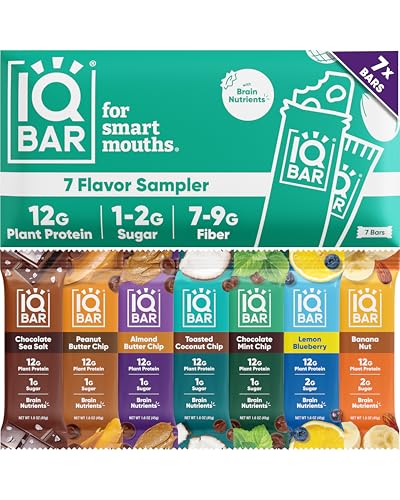
IQBAR Clean Plant Protein Bars, Sampler 7-Count | Protein Snack
- Certified Clean Label: Healthy, low carb, plant-based snack
- Vegan and Diet Friendly: Gluten-free, dairy-free, soy-free, kosher
- Versatile Meal or Snack: Suitable for breakfast, post-workout, or travel
As an affiliate, we earn on qualifying purchases.
As an affiliate, we earn on qualifying purchases.
Frequently Asked Questions
How Do Gluten-Free Products Affect Overall Nutrition?
Gluten-free products can impact your overall nutrition by often having lower nutrient density, meaning they might lack essential vitamins and minerals found in gluten-containing grains. They can also vary in calorie content, with some being higher or lower than their traditional counterparts. You should pay attention to ingredient labels to guarantee you’re still getting balanced nutrition. Incorporating diverse, nutrient-rich foods helps maintain your health despite these product differences.
Are Allergen-Friendly Foods Always Safer for Everyone?
Allergen-friendly foods aren’t always safer for everyone, since about 20% of food allergies are to less common ingredients. You should check labeling accuracy and ingredient transparency carefully, as mislabeling can pose risks even in allergen-friendly products. While these foods aim to reduce allergy risks, they aren’t foolproof, so it’s essential to read labels thoroughly and consult with a healthcare professional if you have allergies or sensitivities.
What Are Common Cross-Contamination Risks in Allergen-Friendly Cooking?
Cross-contamination risks in allergen-friendly cooking include poor kitchen hygiene, like using the same utensils or cutting boards for different ingredients, which can transfer allergens. You should also be cautious with ingredient sourcing, ensuring products are certified allergen-free and stored separately. Always sanitize surfaces and tools thoroughly and double-check labels to reduce cross-contact risks, keeping your kitchen safe for everyone with allergies.
How Do Gluten-Free Diets Impact Digestive Health Long-Term?
A gluten-free diet can be a double-edged sword, like walking a tightrope over a chasm of health risks. While it may improve symptoms for some, it can also alter your gut microbiome and hinder nutrient absorption long-term. You might find your digestion becomes less efficient, and nutrient deficiencies could develop if you’re not careful. To stay balanced, focus on nutrient-rich, gluten-free foods to support your digestive health.
What Certifications Should I Look for in Allergen-Free Products?
You should look for certifications like NSF Certified Gluten-Free, USDA Organic, or Gluten-Free Certification Organization (GFCO) to verify allergen-free products meet strict standards. These certifications confirm that products adhere to certification standards and undergo rigorous testing, ensuring label accuracy. Always check for a reputable seal on the packaging, and read labels carefully to confirm the product’s allergen-free status, giving you confidence and safety in your choices.
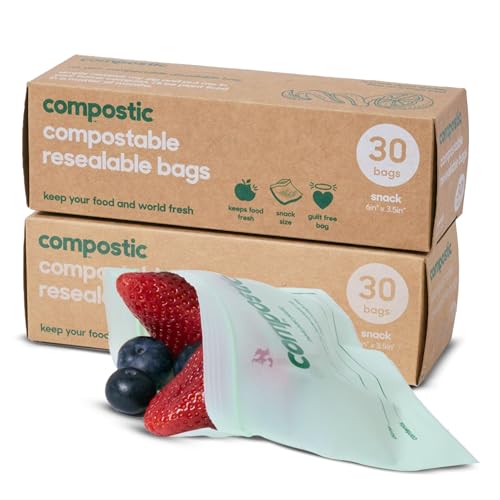
Compostic Compostable Snack Bags, Snack Size (60 Count) Starter Pack — Resealable Zip-Seal, Plant-Based, Home Compostable, Freezer Safe, BPA-Free, Non-Toxic, GMO-Free Food Storage Bags
- Perfectly Sized Snack Bags: Ideal for trail mix, fruit, and crackers
- Home Compostable Material: Breaks down in 12-24 weeks in compost
- Resealable Zip-Seal: Keeps snacks fresh and prevents spills
As an affiliate, we earn on qualifying purchases.
As an affiliate, we earn on qualifying purchases.
Conclusion
By embracing these gluten-free and allergen-friendly trends, you’re not just making a change—you’re transforming your entire life into a vibrant, worry-free paradise. Imagine biting into a delicious treat, knowing it’s safe and healthy, while your stress melts away like ice cream on a hot day. These trends don’t just make food safer; they turn every meal into a celebration of health and happiness. Get ready to live, love, and eat with unstoppable joy!

Festive Chickpea Hearts – Crunchy Garbanzo Beans – Husk-Free Roasted Chickpea Snacks – Vegan Snacks with 5g Protein Per Serving – Plant Based, Halal, Gluten Free, Dairy Free – 1oz 12pc Variety Pack
- Crunchy Chickpea Snacks: Gently cooked, husk-free for crunch
- Creamy Texture: Husk removed and halved for smoothness
- Variety Pack: 12 flavors including Sea Salt and Spicy
As an affiliate, we earn on qualifying purchases.
As an affiliate, we earn on qualifying purchases.

Kraft Paper Bags with Transparent Window, Stand Up Pouches Smell Proof Bags
- Quantity and Size: 100 kraft bags, various sizes
- Heat Sealing: Dual seal for freshness and protection
- Reclosable Zipper & Tear Notch: Easy resealing and opening for convenience
As an affiliate, we earn on qualifying purchases.
As an affiliate, we earn on qualifying purchases.