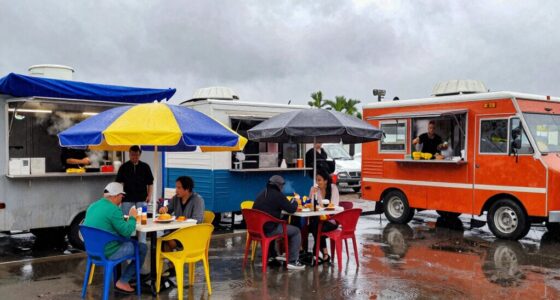

Hosting a food truck crawl effectively boosts vendor visibility and creates an engaging experience for attendees. To do this, foster strong vendor partnerships, guarantee trucks are well-maintained, and communicate clearly about logistics, schedules, and layout. Assign a dedicated point person for support and troubleshoot issues promptly to keep everything running smoothly. By focusing on reliability and open communication, you’ll craft a seamless, memorable event that highlights your vendors’ best offerings. Keep going to discover more strategies to succeed.

Get kitchen staples and gadgets delivered free with Prime
- Fast, free delivery on millions of items
- Prime Video, Amazon Music and more included
- Member-only deals all year
Key Takeaways
- Coordinate with vendors to plan routes, schedules, and locations for maximum attendee engagement.
- Ensure all trucks are well-maintained and reliable to prevent breakdowns during the crawl.
- Communicate event details, layout, and timing clearly with vendors through shared platforms.
- Assign a point person to handle logistics, troubleshoot issues, and support vendors on the day.
- Promote vendor diversity and create a memorable experience to showcase their culinary offerings effectively.

Food truck crawls have become a popular way to explore diverse cuisines in a single outing. If you’re organizing one, your goal is to create an engaging experience that highlights the unique flavors and personalities of each vendor. To do this effectively, you need to focus on building strong vendor partnerships and ensuring smooth operations throughout the event. These partnerships are the backbone of a successful crawl, as they foster collaboration, trust, and consistency. By working closely with vendors, you can coordinate menu options, set expectations for service, and plan logistics that benefit everyone involved. This collaboration also helps you craft a cohesive experience, where attendees can sample a variety of cuisines without confusion or delays.
One key aspect of managing multiple food trucks is truck maintenance. You want each truck to run reliably, so they serve fresh, hot dishes without interruptions. Before the event, check in with each vendor to confirm their trucks are well-maintained—tires inflated, engines checked, and cooking equipment functioning properly. Regular maintenance reduces the risk of breakdowns or delays that could frustrate attendees and tarnish your event’s reputation. Offering vendors a checklist or support for truck maintenance shows your commitment to their success, encouraging them to bring their best during the crawl. Proper vehicle upkeep is essential for ensuring consistent service quality and safety.
As you plan your event, clear communication is essential. Share details about the layout, timing, and expected foot traffic with your vendors. This way, they can prepare their trucks and staff accordingly. Establishing a schedule for setup, service, and teardown helps prevent chaos and ensures everyone is on the same page. You might also consider creating a shared platform or group chat where vendors can troubleshoot issues, coordinate deliveries, or ask questions. This ongoing communication strengthens vendor partnerships and keeps everyone aligned.
On the day of the crawl, ensure that logistics run smoothly by having a designated point person who can address any issues promptly. Keep an eye on truck maintenance needs during the event—if a vehicle shows signs of trouble, assist the vendor in resolving the issue quickly so they can resume serving customers. Building this level of support not only keeps the event on track but also demonstrates your dedication to the vendors’ success, encouraging them to participate in future crawls.
Ultimately, a well-organized food truck crawl hinges on strong vendor partnerships and diligent truck maintenance. By fostering open communication and providing support, you create an environment where vendors can thrive, and attendees enjoy a seamless, flavorful adventure. Your attention to these details helps turn a simple gathering into a memorable celebration of culinary diversity.
As an affiliate, we earn on qualifying purchases.
Frequently Asked Questions
How Do I Secure Permits for a Food Truck Crawl?
To secure permits for a food truck crawl, you need to apply for food truck permits and event licensing through your local health department and city government. Contact them early to understand specific requirements, such as health inspections, parking permissions, and insurance. Make sure to submit all necessary paperwork, pay any fees, and schedule inspections ahead of time to ensure your event runs smoothly and stays compliant with local regulations.
What Is the Ideal Number of Vendors for a Successful Crawl?
For a successful crawl, aim for 8 to 12 vendors, creating a vibrant mix that attracts attendees. Studies show that diverse vendor options increase attendance by 30%, so focus on vendor diversity to keep the crowd engaged. You want to balance vendor variety with attendee capacity, ensuring everyone has a great experience without overcrowding. Keep the lineup manageable, lively, and varied to maximize your event’s success.
How Can I Promote My Food Truck Crawl Effectively?
You can promote your food truck crawl effectively by leveraging social media platforms to create buzz and reach a wider audience. Share engaging posts, event details, and behind-the-scenes content. Additionally, form local partnerships with community groups, businesses, and influencers to boost visibility. Encourage vendors to promote the event too, and consider offering incentives for attendees to share their experience online, ensuring your event gains maximum exposure.
What Safety Measures Should Be Implemented During the Event?
Think of your event as a well-oiled machine, where safety keeps everything running smoothly. You should implement strict crowd control measures, like barriers and clear signage, to prevent chaos. Prioritize food safety by ensuring vendors follow hygiene protocols, use gloves, and have proper food storage. Regularly monitor the area, and have emergency plans in place. These steps help keep your event safe, enjoyable, and memorable for everyone involved.
How Do I Handle Vendor Payments and Revenue Sharing?
You should establish clear vendor contracts that outline payment terms and revenue sharing models before the event. Decide whether vendors pay a flat fee, a percentage of sales, or a combination, and communicate this clearly. Collect payments through secure methods, and track sales accurately during the event. Regularly update vendors on revenue sharing, and guarantee transparency by providing detailed reports afterward, fostering trust and smooth financial management.
As an affiliate, we earn on qualifying purchases.
Conclusion
As you navigate the lively streets, savoring diverse flavors from each truck, remember that a food truck crawl isn’t just about eating—it’s about discovery. Just like a surprise ingredient in a familiar dish, each vendor offers a unique twist that keeps your taste buds guessing. So, embrace the chaos and charm of the crawl. After all, in a world of endless options, sometimes the simplest journey—one truck at a time—becomes your most memorable adventure.
As an affiliate, we earn on qualifying purchases.
catering event logistics organizer
As an affiliate, we earn on qualifying purchases.
As an affiliate, we earn on qualifying purchases.
NFL season / tailgating Picks
team gear
As an affiliate, we earn on qualifying purchases.