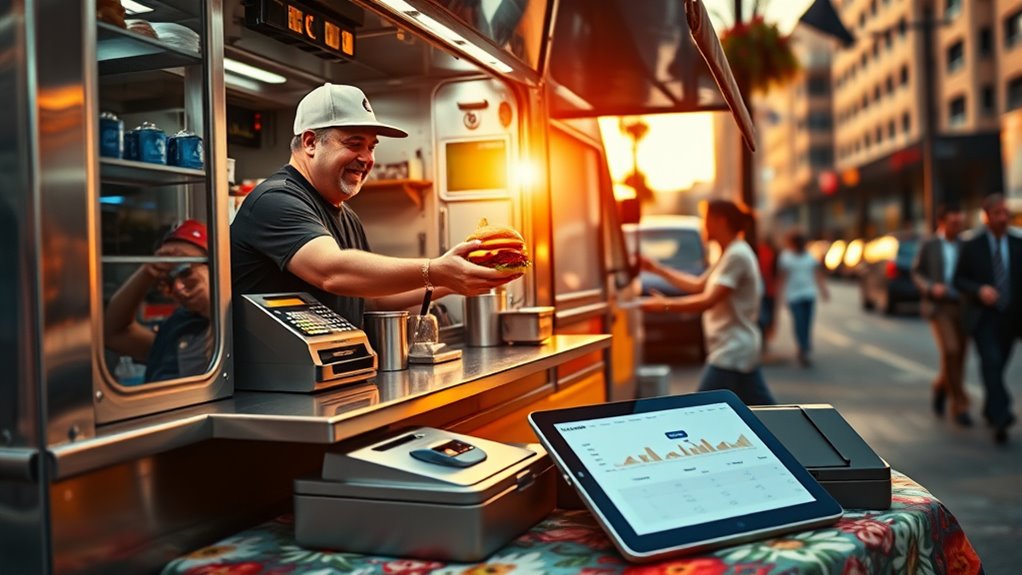

To effectively manage cash flow in your mobile food business, focus on tight inventory control and strong vendor relationships to secure better payment terms and discounts. Regularly review your cash flow statements, forecast future needs, and adjust spending during slow periods. balancing revenue and expenses helps prevent shortages. By implementing these practices, you’ll keep your business running smoothly. Want to discover more ways to optimize your cash flow? Continue exploring for expert tips and strategies.

Get kitchen staples and gadgets delivered free with Prime
- Fast, free delivery on millions of items
- Prime Video, Amazon Music and more included
- Member-only deals all year
Key Takeaways
- Regularly track and review cash flow statements to identify shortages and adjust operations proactively.
- Build strong vendor relationships to negotiate favorable payment terms and discounts, improving cash management.
- Monitor inventory closely to prevent overstocking, reduce waste, and free up cash for other needs.
- Plan for seasonal fluctuations and unexpected expenses with accurate cash flow projections.
- Delay non-essential purchases and utilize short-term financing during cash shortages to maintain business stability.

Ever wondered how mobile food businesses keep their operations running smoothly despite fluctuating sales and expenses? The secret lies in effective cash flow management, which hinges on a few critical practices. One of the most essential is mastering inventory management. When you track your inventory carefully, you prevent overstocking and understocking, both of which can drain your cash. Overstocking ties up funds in unused supplies, while understocking can lead to missed sales and disappointed customers. Implementing a streamlined inventory system helps you monitor real-time stock levels, identify slow-moving items, and forecast future needs. This way, you avoid unnecessary purchases and ensure you’re always prepared for busy periods. Good inventory management also reduces waste, saving money that can be better allocated elsewhere, ultimately supporting healthier cash flow.
Alongside managing inventory, sharpening your vendor negotiations plays a pivotal role. Building strong relationships with vendors can lead to better payment terms, discounts, and priority service. When you negotiate effectively, you might secure longer payment periods or bulk discounts, which directly improve your cash flow by delaying outgoing payments without harming your supply chain. Don’t just accept the initial prices; shop around, compare offers, and leverage your purchasing volume to negotiate favorable terms. Being transparent about your business needs and growth potential can also encourage vendors to work with you more flexibly. Remember, vendors often prefer reliable, consistent customers and might be willing to offer better deals if you demonstrate long-term commitment and professionalism. Negotiating well ensures you don’t tie up excessive cash in inventory or pay more than necessary, freeing up funds for other essential expenses like payroll, marketing, or equipment maintenance.
In addition to managing inventory and negotiating with vendors, you should regularly review your cash flow statements and keep a close eye on your cash position. This allows you to spot potential shortages early and make informed decisions. For example, if you notice cash is tight, you might delay non-essential purchases or seek short-term financing. Implementing accurate cash flow projections can further enhance your ability to anticipate future financial needs. Combining strong inventory practices with strategic vendor negotiations helps you maintain a healthy cash flow, even amid seasonal fluctuations or unexpected expenses. It’s all about balancing incoming revenue with outgoing costs, and these tactics give you the control to keep your mobile food business financially stable. When you stay proactive and organized, you can navigate lean periods, capitalize on busy times, and keep your operations running smoothly without unnecessary financial stress.
inventory management system for food trucks
As an affiliate, we earn on qualifying purchases.
As an affiliate, we earn on qualifying purchases.
Frequently Asked Questions
How Can Mobile Food Businesses Predict Seasonal Cash Flow Fluctuations?
To predict seasonal cash flow fluctuations, you should focus on seasonal planning and revenue forecasting. Track past sales data during different seasons to identify patterns, then adjust your inventory and staffing accordingly. Use these insights to create conservative financial projections, ensuring you’re prepared for slow or busy periods. Regularly review and update your forecasts, so you can proactively manage cash flow and avoid surprises throughout the year.
What Are Effective Strategies for Managing Cash Flow During Slow Sales Periods?
Think of managing cash flow during slow sales like steering a ship through calm waters—you need steady navigation. Focus on inventory management to avoid excess stock and cut costs. Negotiate with suppliers for better payment terms, easing cash pressure. For example, during winter, you might stock only popular items. Staying proactive helps you keep your business afloat, even when sales dip, ensuring you’re ready to sail again when demand picks up.
How Should Mobile Vendors Handle Cash Flow When Expanding to New Locations?
When expanding to new locations, you should secure vendor licensing early to avoid legal issues and plan for equipment financing to cover necessary upgrades or additional gear. Keep a close eye on cash flow by tracking expenses and revenue, and set aside reserves for unforeseen costs. This proactive approach helps you manage cash flow effectively, ensuring your expansion is sustainable without disrupting your existing operations.
What Role Does Technology Play in Managing Mobile Food Business Cash Flow?
Think of technology as your trusty co-pilot in managing cash flow. Digital payments streamline transactions, making it easier to track income and reduce cash handling risks. Inventory management tools help you monitor stock levels, preventing overstocking or shortages that can strain finances. By leveraging these tech solutions, you gain real-time insights, improve efficiency, and keep your mobile food business financially healthy, even when you’re on the move.
How Can Mobile Food Businesses Prepare for Unexpected Expenses Impacting Cash Flow?
You should start by setting aside an emergency fund that covers at least three to six months of expenses, giving you a safety net for unexpected costs. Additionally, invest in insurance planning to protect your business from unforeseen incidents. Regularly review your cash flow and adjust your budget accordingly. Being proactive with these strategies guarantees you’re better prepared for surprises, minimizing their impact on your mobile food business.
vendor negotiation tools for small business
As an affiliate, we earn on qualifying purchases.
As an affiliate, we earn on qualifying purchases.
Conclusion
Managing your mobile food business’s cash flow is like steering a ship—you need to stay alert and adjust your course quickly. By keeping a close eye on expenses, maintaining steady revenue, and planning for slow days, you’ll keep your business afloat. Remember, good cash flow management isn’t just a safety net; it’s the fuel that drives your success forward. Stay proactive, and your business will navigate challenges as smoothly as a boat gliding through calm waters.
cash flow management software for mobile food vendors
As an affiliate, we earn on qualifying purchases.
As an affiliate, we earn on qualifying purchases.
short-term business financing options
As an affiliate, we earn on qualifying purchases.
As an affiliate, we earn on qualifying purchases.
Halloween Picks
halloween
As an affiliate, we earn on qualifying purchases.