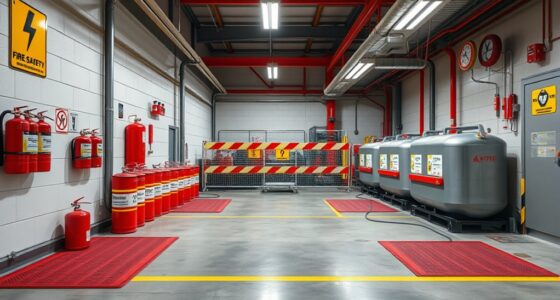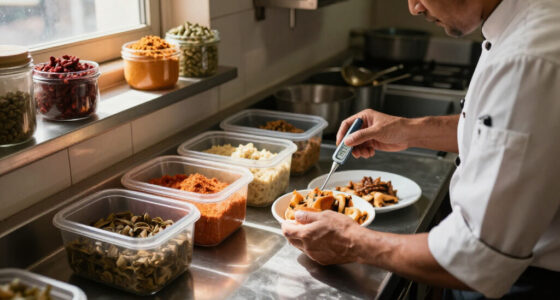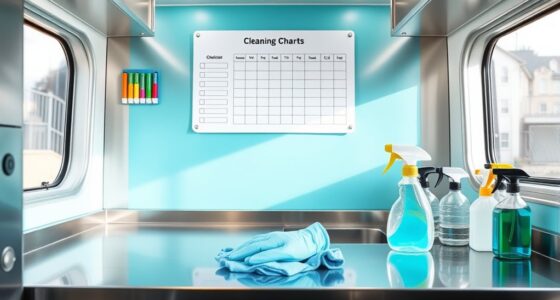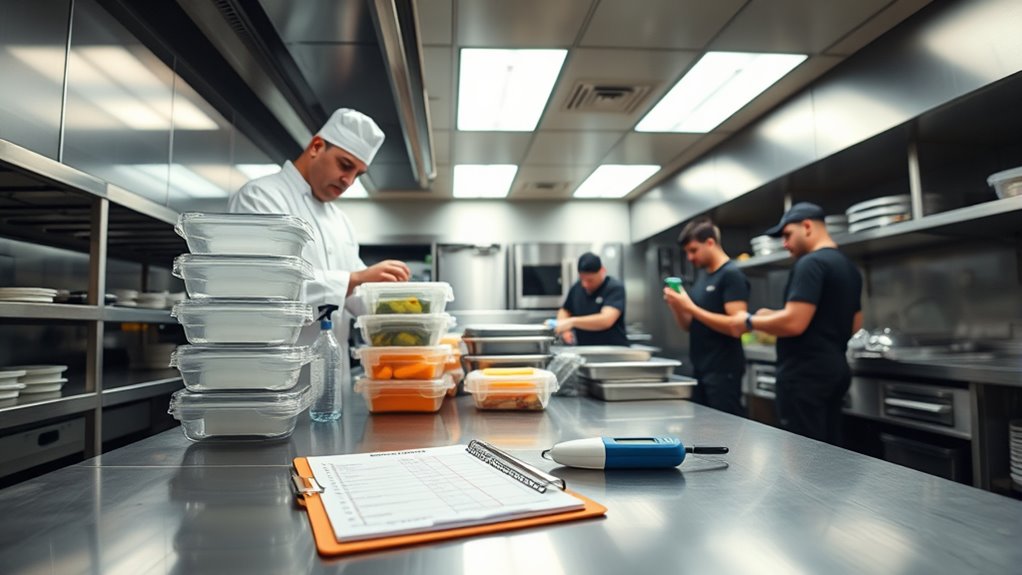

To prepare for health inspections, guarantee your restaurant follows strict sanitation protocols by regularly cleaning all surfaces, maintaining detailed documentation, and training staff on hygiene standards. Conduct mock inspections to identify and fix issues early, keep records up-to-date, and stay informed about local health regulations. Foster a culture of continuous improvement and organization to make compliance seamless. If you want proven tips to stay inspection-ready, the next steps can guide you further.

Get kitchen staples and gadgets delivered free with Prime
- Fast, free delivery on millions of items
- Prime Video, Amazon Music and more included
- Member-only deals all year
Key Takeaways
- Establish and follow a strict cleaning schedule covering all areas, including countertops, restrooms, and food prep zones.
- Train staff regularly on hygiene protocols, proper handwashing, glove use, and safe food storage practices.
- Maintain organized documentation of cleaning logs, pest control records, and employee training certificates for quick access.
- Conduct regular mock inspections and routine sanitation practices to identify issues early and ensure compliance.
- Foster a culture of continuous improvement by encouraging staff feedback, recognizing efforts, and staying updated on health regulations.
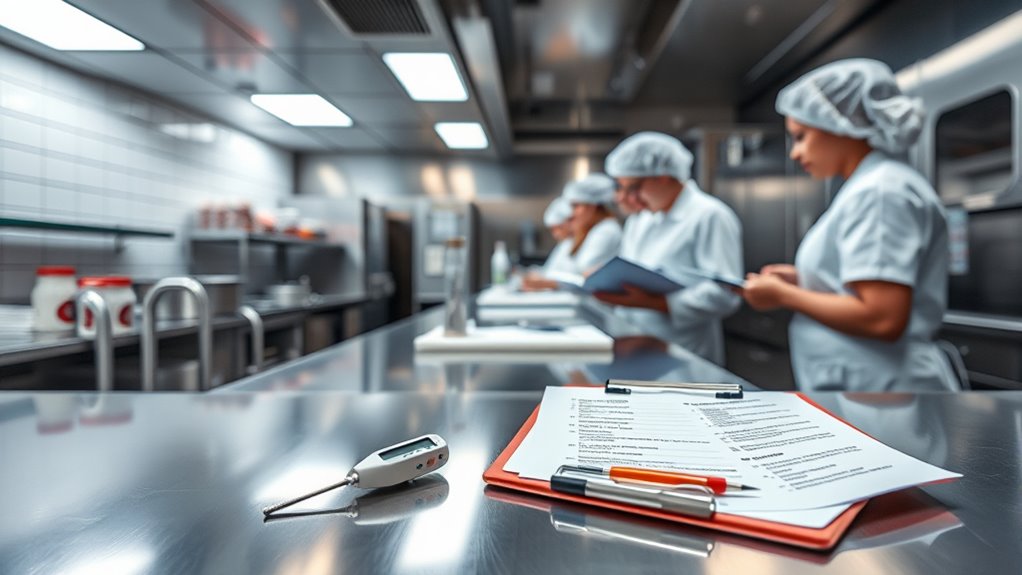
Are you prepared to pass your next health inspection with flying colors? Ensuring your restaurant meets all health standards isn’t just about avoiding penalties; it’s about providing a safe, clean environment that customers trust. The foundation of a successful inspection starts with restaurant sanitation. You need to keep every surface, utensil, and piece of equipment spotless. Regularly disinfect countertops, cooking areas, and restrooms. Implement a strict cleaning schedule that covers every corner, and don’t forget to track these routines in a log. Proper sanitation reduces the risk of foodborne illnesses and demonstrates your commitment to safety. Remember, inspectors look for consistency, so maintaining high standards daily is essential. It’s wise to set up checklists and assign specific tasks to staff members, ensuring nothing is overlooked.
Staff training plays an equally important role in preparing for inspections. Your team must understand the importance of cleanliness and proper food handling. Conduct thorough training sessions that cover hygiene protocols, such as handwashing techniques, glove use, and safe food storage. Make sure everyone knows how to identify potential hazards and correct them immediately. Well-trained staff not only keeps the restaurant compliant but also creates a culture of safety. Reinforce training regularly, especially when new staff joins or procedures change. When employees are confident in their roles, they’re more likely to follow procedures diligently, which minimizes risks during inspections.
To streamline preparation, establish clear policies that everyone adheres to. For example, set protocols for cleaning schedules, pest control, and waste management. Keep documentation up-to-date, including maintenance logs, pesticide records, and employee training certificates. An organized, transparent system shows inspectors that your restaurant takes compliance seriously. Conduct mock inspections periodically to identify weaknesses and address them proactively. These drills help staff get comfortable with inspection procedures and improve response times. Also, stay informed about local regulations and updates in health codes. Being proactive means you’re less likely to be caught off guard during the actual inspection. Incorporating regular sanitation practices such as routine disinfection can significantly enhance your compliance efforts.
Finally, foster an environment where continuous improvement is valued. Encourage staff to report issues immediately and suggest solutions. Recognize and reward their efforts to maintain high standards. When everyone on your team understands their role in restaurant sanitation and staff training, passing health inspections becomes a seamless process rather than a stressful event. With consistent effort, organized policies, and a dedicated team, you’ll not only ace your next health inspection but also build a reputation for safety and quality that keeps customers coming back.
Frequently Asked Questions
How Often Are Health Inspections Typically Scheduled?
Health inspections are typically scheduled annually, but they can vary depending on your location and the type of establishment. During these inspections, you’re evaluated on food safety and sanitation standards to ensure compliance. It’s essential that you uphold proper cleanliness, proper food handling, and documentation at all times. Regular self-assessments can help you stay prepared, minimizing surprises and demonstrating your commitment to safety and sanitation standards.
What Are Common Violations That Lead to Penalties?
About 70% of health violations relate to food safety and sanitation standards, leading to penalties. Common violations include improper food storage, inadequate handwashing facilities, and unsanitary surfaces. You should prioritize maintaining clean equipment, proper food temperatures, and employee hygiene to avoid these issues. Regular staff training and routine inspections help guarantee compliance, reducing the risk of fines and protecting your customers’ health.
How Can I Improve Staff Training for Compliance?
You can improve staff training for compliance by focusing on staff engagement and conducting regular training assessments. Engage your team with interactive sessions and real-world scenarios to boost understanding. After each training, perform assessments to identify gaps and adjust content accordingly. Keep training sessions consistent, encourage questions, and provide ongoing support. This approach guarantees your staff stays informed, confident, and compliant, reducing violations and fostering a culture of safety.
Are There Digital Tools to Track Inspection Readiness?
Yes, digital checklists and compliance software make tracking inspection readiness a breeze. These tools help you stay organized, monitor progress, and identify areas needing attention before inspections. With real-time updates, you can effortlessly guarantee your facility’s standards are met, reducing stress and avoiding surprises. Embracing these digital solutions transforms compliance from a chore into a smooth, proactive process, giving you peace of mind and confidence when the inspection day arrives.
What Are the Consequences of Non-Compliance?
If you don’t comply with health regulations, you face serious consequences. Legal repercussions can include fines, penalties, or even license suspension, which might shut down your operations temporarily or permanently. Financial penalties can be costly, impacting your bottom line and reputation. Non-compliance also risks losing customer trust and could lead to lawsuits. Staying compliant helps you avoid these issues and guarantees your business runs smoothly and legally.
Conclusion
By staying vigilant, verifying values, and valuing vigilance, you’ll navigate health inspections with confidence. Consistent cleanliness, compliance, and commitment create a culture of care that customers trust. Remember, preparation breeds peace of mind, preventing problems before they begin. So, stay sharp, stay sincere, and sustain standards steadily. When you prioritize preparedness, you promote professionalism, pride, and protection—paving the path for a spotless, successful, and satisfying health inspection every time.
NFL season / tailgating Picks
team gear
As an affiliate, we earn on qualifying purchases.