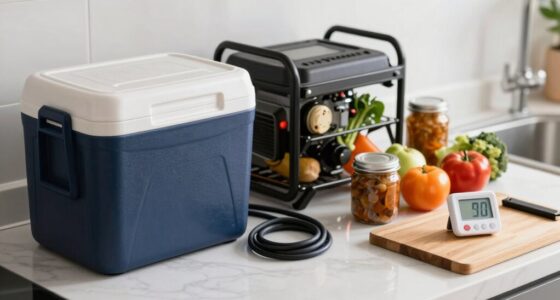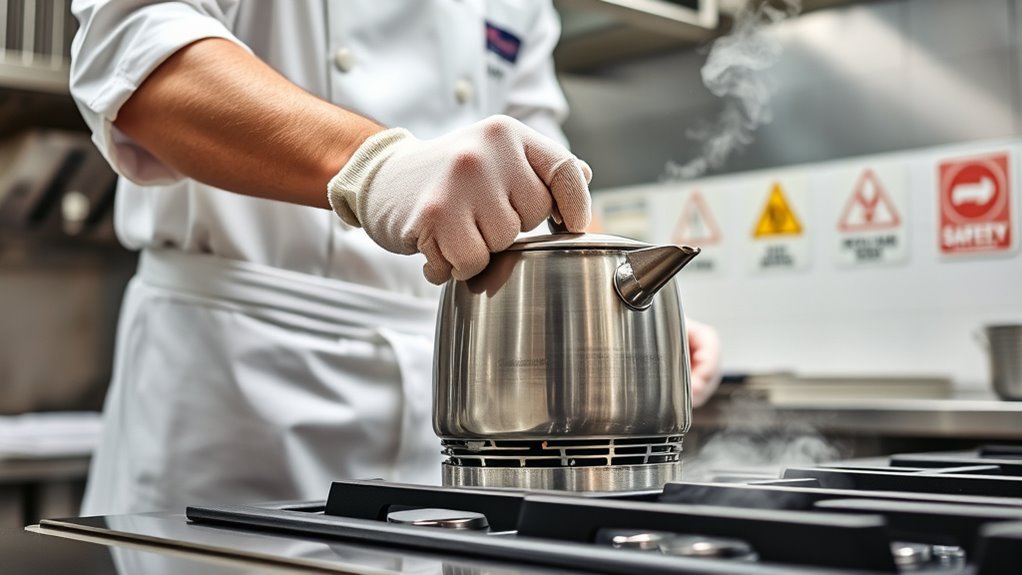
To operate cooking equipment safely, always follow the manufacturer’s instructions and stay attentive during use. Regularly inspect and clean appliances, checking cords and burners for damage or buildup. Use appropriate tools and heat-resistant gloves when handling hot surfaces, and keep flammable materials away. Make sure safety features are engaged and respond quickly to any signs of malfunction, like smoke or unusual noises. Continue exploring best practices to keep your kitchen secure and accident-free.

Get kitchen staples and gadgets delivered free with Prime
- Fast, free delivery on millions of items
- Prime Video, Amazon Music and more included
- Member-only deals all year
Key Takeaways
- Always read and follow manufacturer instructions for proper appliance operation.
- Keep a fire extinguisher nearby and know how to use it in case of emergencies.
- Regularly inspect and maintain equipment, including cleaning and checking electrical cords.
- Use heat-resistant gloves and appropriate utensils to handle hot surfaces and liquids safely.
- Stay attentive, respond promptly to signs of malfunction, and keep flammable materials away from heat sources.
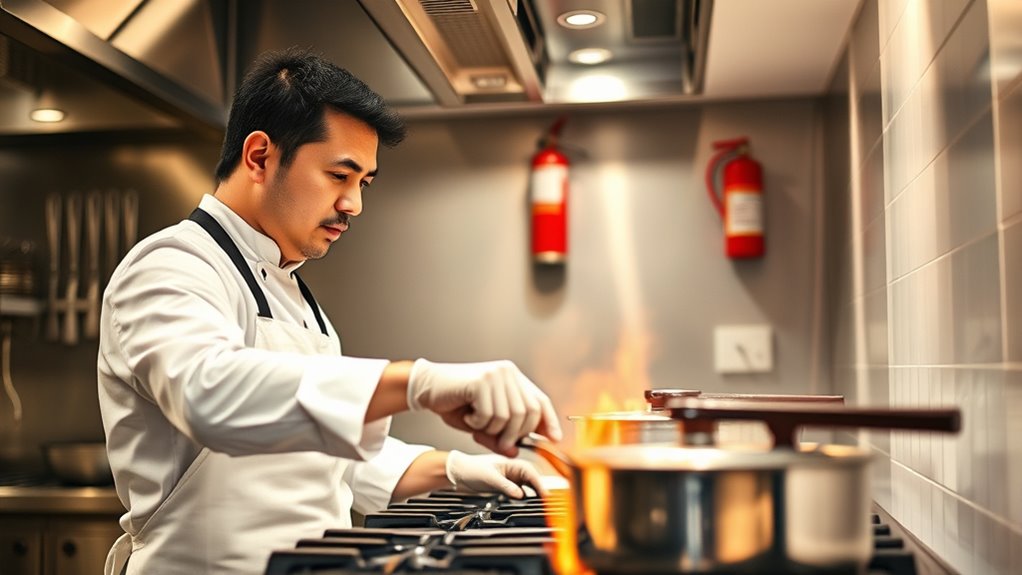
Cooking equipment is essential in kitchens, but operating it safely is crucial to prevent accidents and injuries. When you work with stoves, ovens, and other appliances, you’re responsible for maintaining a safe environment. One of the most critical aspects of safety is fire safety. Fires can start if equipment is left unattended, if grease or food spills accumulate, or if faulty wiring causes sparks. To minimize these risks, always stay attentive when cooking, never leave appliances unattended while active, and keep a fire extinguisher nearby. Make sure you know how to use it properly and regularly check that it’s in working condition. Also, avoid wearing loose clothing that could catch fire, and keep flammable materials away from heat sources.
Proper maintenance procedures play a key role in preventing fires and prolonging the life of your equipment. Regularly inspecting and cleaning your appliances removes grease, food debris, and dust that could ignite or cause malfunctions. For example, clean the burners of your stove to ensure even heat distribution and prevent flare-ups. Check electrical cords for damage or fraying, and replace any worn-out parts immediately. Keeping ventilation systems clean also reduces the buildup of grease and smoke, which can be fire hazards. Establishing a routine maintenance schedule helps catch potential issues early, reducing the chance of sudden equipment failure or fire incidents. When you perform maintenance, make sure appliances are unplugged and cooled down first, following manufacturer guidelines. This not only ensures your safety but also keeps your equipment functioning efficiently. Additionally, understanding the importance of equipment safety features can help you utilize your appliances more effectively and prevent accidents.
In addition to fire safety and maintenance procedures, understanding how to operate cooking equipment correctly is essential. Always read the user manual for specific safety instructions and recommended settings. Use the right utensils and tools designed for each appliance to prevent accidents or damage. For example, avoid using metal utensils on non-stick surfaces, which can cause scratches and compromise safety. Be cautious when handling hot surfaces and liquids, and use oven mitts or heat-resistant gloves to prevent burns. If you notice any irregular smells, smoke, or unusual noises, turn off the equipment immediately and investigate the cause. Ignoring these signs can lead to bigger problems, including fires or equipment failure.
Ultimately, practicing good fire safety habits and adhering to maintenance procedures ensures safe operation of your cooking equipment. It’s your responsibility to stay vigilant, keep appliances in top condition, and respond promptly to any issues. Doing so not only protects you but also creates a safer environment for everyone in the kitchen. Remember, being proactive about safety saves lives and prevents costly accidents, so always prioritize these practices every time you cook.
As an affiliate, we earn on qualifying purchases.
Frequently Asked Questions
How Often Should Cooking Equipment Be Inspected for Safety?
You should inspect your cooking equipment regularly, ideally based on your maintenance schedules and inspection checklists. For most commercial kitchens, daily visual checks are essential, while more thorough inspections should happen weekly or monthly. Regular inspections help identify potential hazards early, ensuring safety. Always follow manufacturer guidelines and document each inspection to maintain proper safety standards and prevent accidents or equipment failures.
What Are Common Signs of Equipment Malfunction?
You should watch for signs of equipment malfunction like excessive vibration or unusual noises, which often indicate issues. If the equipment vibrates more than usual or makes strange sounds, it could be a sign of worn parts or misalignment. Unusual noises, such as grinding or squealing, should be checked promptly. Address these signs immediately to prevent further damage or safety hazards, ensuring your cooking equipment operates safely and efficiently.
Are There Specific Safety Standards for Commercial Cooking Devices?
Like flipping a switch on a vintage radio, you need to follow industry-specific standards for commercial cooking devices. These standards make sure safety and efficiency. You should check that your equipment has proper certification, which confirms it meets safety regulations. Yes, there are specific safety standards for commercial cooking devices, set by organizations like UL and NSF, to help you operate safely and prevent accidents in your kitchen.
How Should I Handle a Gas Leak From Cooking Appliances?
If you suspect a gas leak from your cooking appliances, you should immediately activate gas leak detection alerts and follow emergency shutdown procedures. Turn off the appliance and ventilate the area to disperse the gas. Evacuate everyone from the vicinity and avoid using any electrical switches or open flames. Call emergency services to handle the situation safely, ensuring no one is at risk of ignition or inhalation.
What Personal Protective Equipment Is Recommended When Operating the Equipment?
You should wear personal protective gear, including safety gloves, when operating cooking equipment to prevent burns and injuries. Gloves protect your hands from hot surfaces, sharp edges, and potential splashes. Always choose food-safe, heat-resistant gloves suited for the task. Additionally, consider eye protection if there’s a risk of splashes or sparks. Proper PPE guarantees your safety while handling and operating cooking appliances efficiently.
As an affiliate, we earn on qualifying purchases.
Conclusion
Remember, operating cooking equipment safely is like tending a delicate garden—you must stay attentive and cautious. I once saw a chef save a kitchen from fire by quickly shutting off a stove, proving that awareness and quick action prevent disasters. According to safety statistics, proper training reduces accidents by 50%. So, stay alert, follow procedures, and treat your equipment with care. Your vigilance keeps everyone safe, turning your kitchen into a thriving, accident-free garden.
kitchen appliance safety check kit
As an affiliate, we earn on qualifying purchases.
As an affiliate, we earn on qualifying purchases.
As an affiliate, we earn on qualifying purchases.
Halloween Picks
halloween
As an affiliate, we earn on qualifying purchases.