During power problems, keep your refrigerator and freezer doors closed to maintain cold temperatures and prevent spoilage. Use coolers with ice packs for essential items if power is out longer. Place thermometers inside your appliances to monitor temperatures and discard any food that exceeds safe limits. If you’re using a generator, make sure it’s outside and properly ventilated. Staying vigilant with proper storage and temperature checks helps protect your food—and there’s more tips to ensure safety during outages.

Get kitchen staples and gadgets delivered free — and shop member deals
- Fast, free delivery on millions of items
- Access to Prime Big Deal Days deals on October 6–7
- Prime Video, Amazon Music and more included
Key Takeaways
- Keep refrigerator and freezer doors closed to maintain cold temperatures during power outages.
- Use thermometers to monitor food temperatures and discard items exceeding safe temperature limits.
- Store perishable foods in the coldest areas and prioritize high-priority items like dairy and meats.
- Use coolers with ice packs to keep essential foods cold if power is unavailable for extended periods.
- Operate generators outdoors in well-ventilated areas and avoid overloading to prevent food safety hazards.
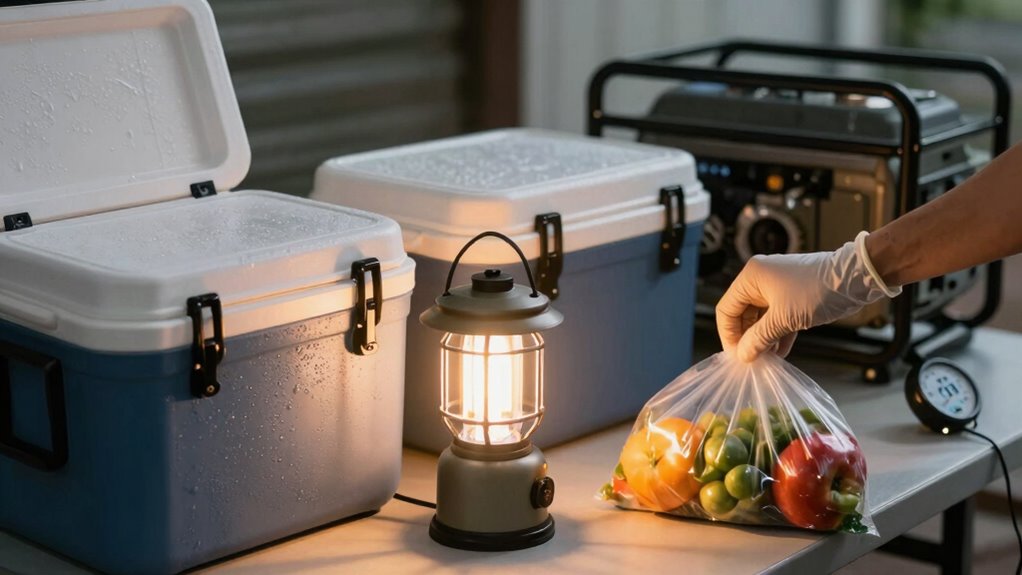
Power outages can quickly threaten the safety of your food, especially if the outage lasts for several hours or more. When the power goes out, your first priority should be to protect your perishable items from spoilage and contamination. To do this effectively, you need to be prepared with solid emergency preparedness plans and good food storage techniques. Being proactive helps you minimize waste and keeps your family safe from foodborne illnesses.
Start by organizing your freezer and refrigerator so that the most perishable foods are easily accessible. During an outage, keep the refrigerator door closed as much as possible to preserve the cold temperature. A refrigerator can keep food cold for about four hours if unopened, while a full freezer can maintain its temperature for up to 48 hours if unopened. If you anticipate a prolonged power outage, consider investing in a generator, but remember that your success depends on proper planning and use. Make sure your generator is correctly installed, and always follow safety guidelines to prevent carbon monoxide poisoning or electrical hazards.
Keep fridge doors closed and consider a generator for prolonged outages, following safety guidelines.
Good food storage techniques are essential in emergency preparedness. Freeze water in plastic containers and keep them in your freezer. These ice blocks will help keep your food cold longer if the power goes out. If you have a cooler, use it along with ice packs to store essential items for as long as possible. When storing food, prioritize high-priority items like dairy, meats, and leftovers, and keep them in the coldest part of your fridge or freezer. Label perishable items with the date you stored them so you can quickly check if they’re still safe to eat once power is restored. Additionally, understanding food safety guidelines can help you identify when food is no longer safe to consume. Proper food storage techniques are also vital to prevent spoilage. Regularly monitoring food temperatures is crucial because even a slight increase can lead to bacterial growth and foodborne illness. To further reduce risks, consider using a food thermometer to verify that temperatures stay within safe ranges during outages.
If you’re using a generator, avoid running it inside your home or garage—place it outdoors in a well-ventilated area to prevent dangerous fumes from accumulating. Connect only the necessary appliances, and don’t overload the generator, which could cause damage or fire hazards. Also, keep a thermometer in your refrigerator and freezer so you can monitor temperatures. Food safety guidelines recommend keeping fridge temperatures below 40°F and freezer temperatures at 0°F for safety. Regularly checking the temperature of stored food can help you determine if it remains safe to eat.
Lastly, consider keeping a basic emergency kit with batteries, a portable radio, and non-perishable food items. This kit ensures that even if your food storage is compromised, you have access to safe food and essential information. Planning ahead with emergency preparedness and proper food storage techniques helps you maintain food safety during generator or power problems, reducing waste and protecting your health when it matters most.
refrigerator thermometer for food safety
As an affiliate, we earn on qualifying purchases.
As an affiliate, we earn on qualifying purchases.
Frequently Asked Questions
How Long Can Refrigerated Food Stay Safe Without Power?
Refrigerated food can stay safe for about 4 hours without power if the temperature stays below 40°F. After that, Food temperature rises, increasing the risk of bacteria growth. To maximize Storage duration, keep the refrigerator door closed as much as possible. Use a thermometer to monitor temperature, and when in doubt, discard perishable items that have been above safe temperatures for more than 2 hours.
What Are the Signs of Spoiled Food After a Power Outage?
When food whispers its warning, you’ll notice a sour or rancid food smell that clings to the air, like a bad secret. Visible mold or discoloration on food surfaces also signals spoilage. If the texture feels slimy or if the food has an off-putting appearance, it’s time to say goodbye. Trust your senses—these signs are your first line of defense against consuming unsafe, spoiled food after a power outage.
Can I Refreeze Thawed Food Safely?
You can refreeze thawed food safely if it was thawed in the refrigerator and kept at 40°F or below. Follow thawing precautions, like refreezing within 1-2 days, to prevent bacteria growth. If the food was thawed using other methods, such as in cold water or microwave, cook it first before refreezing. Always follow refreezing guidelines to maintain food safety and quality.
How Should I Handle Cooked Leftovers During Power Outages?
During a power outage, handle cooked leftovers with care—don’t leave them out for more than two hours, even if the power’s out. Use food storage techniques like refrigeration or freezing if possible, and follow safety precautions to prevent bacteria growth. If leftovers have been at room temperature too long, discard them. Always prioritize safety to avoid foodborne illnesses, and keep a thermometer handy to monitor temperatures when power returns.
What Emergency Supplies Should I Keep for Food Safety?
You should keep emergency supplies like a thermometer, ice packs, and extra coolers for food preservation. Store non-perishable emergency foods such as canned goods, dried fruits, and energy bars for quick access. Make sure you have sufficient refrigeration supplies, like ice or dry ice, to maintain safe temperatures. Proper emergency storage helps prevent spoilage and foodborne illnesses during power outages, ensuring your food stays safe until power is restored.
As an affiliate, we earn on qualifying purchases.
Conclusion
When the power’s out, your focus should be on keeping food safe and sound. Keep the refrigerator door closed as much as possible, and use coolers with ice for perishables. Remember, a food safety plan is your best armor—think of it as your modern-day shield against spoilage. Stay vigilant, act swiftly, and don’t forget: in a pinch, patience and preparedness are your greatest allies, like a trusty knight in a digital age.
As an affiliate, we earn on qualifying purchases.
food storage containers for emergencies
As an affiliate, we earn on qualifying purchases.
As an affiliate, we earn on qualifying purchases.
Fall Picks
fall essentials
As an affiliate, we earn on qualifying purchases.