To guarantee your food truck’s success, start by accurately estimating your startup costs, including truck options, permits, and equipment. Control ongoing expenses like inventory, staff, and maintenance by tracking and adjusting regularly. Navigate permits and fees early to avoid fines, and plan for hidden costs such as fuel and seasonal supplies. Focus on maximizing your budget through efficient inventory management and strategic menu choices. Keep learning; this guide offers more tips to help you succeed.

Get kitchen staples and gadgets delivered free with Prime
- Fast, free delivery on millions of items
- Prime Video, Amazon Music and more included
- Member-only deals all year
Key Takeaways
- Accurately estimate startup costs including trucks, permits, equipment, and initial inventory to develop a realistic budget.
- Control operating expenses by managing inventory carefully and scheduling staff efficiently during peak and slow periods.
- Plan for permit, licensing, and regulatory fees early to avoid costly fines and ensure compliance.
- Use forecasting tools and sensitivity analysis to predict revenue, monitor expenses, and adjust budgets proactively.
- Incorporate cost-saving strategies like seasonal ingredients, preventive maintenance, and vendor negotiations to maximize profitability.
Estimating Your Startup Costs

Estimating your startup costs is a critical first step in launching a successful food truck business. Vehicle costs vary widely: new trucks range from $75,000 to $200,000, depending on size and features, while used trucks can cost $50,000 to $100,000. A used chassis with a new kitchen might cost $85,000 to $115,000 but may need repairs. Renting a truck costs $2,000 to $3,000 monthly, ideal for testing concepts. In Texas, new trucks typically cost $35,000 to $95,000, with first-year expenses including equipment and permits adding up to $8,000 to $30,000. Don’t forget to budget for permits, licenses, insurance, branding, marketing, and initial inventory, all essential for launching smoothly. Proper planning can help manage overall startup expenses effectively, and understanding the costs associated with leasing can provide additional options for acquiring a vehicle.
Managing Monthly Operating Expenses

To keep your monthly expenses in check, focus on controlling food inventory costs and optimizing staff scheduling. Proper inventory management helps reduce waste and spoilage, while smart scheduling guarantees you’re not overpaying wages. By fine-tuning these areas, you can improve your profit margins and keep your food truck financially healthy. Regularly reviewing your costs ensures you can make timely adjustments to maintain efficiency and profitability. Additionally, understanding cost-effective menu planning can further enhance your financial management strategies.
Control Food Inventory Costs
Controlling food inventory costs is essential for maintaining a profitable food truck operation. Effective management reduces waste, prevents stockouts, and ensures you’re not over-spending on ingredients. Regular inventory audits help you catch discrepancies early, identify theft, and track usage trends to adjust orders accordingly. Building strong supplier relationships allows for flexible delivery schedules, just-in-time stock, and better pricing. Using technology, like digital inventory systems, keeps real-time data at your fingertips, making ordering and forecasting more accurate. Applying FIFO ensures older stock is used first, reducing spoilage. Proper temperature controls and storage optimize shelf life and prevent unnecessary waste. Recognizing demand cycles can help you adjust inventory levels proactively, avoiding excess stock during slow periods and shortages during busy times. Additionally, understanding inventory turnover rates helps you identify how quickly products are moving, enabling more precise ordering to match sales patterns.
- Conduct weekly or bi-weekly physical counts
- Maintain open communication with suppliers
- Use inventory management software
- Train staff on FIFO and storage best practices
Optimize Staff Scheduling
Effective staff scheduling is essential for managing your food truck’s monthly expenses. By analyzing demand patterns, you can match staffing levels to customer flow, reducing waste and overstaffing. Identify peak hours, special events, and slower periods to optimize shifts. Use the following table to plan efficiently:
| Demand Factors | Actions | Examples |
|---|---|---|
| Peak hours and days | Schedule more staff during busy times | Lunch rush, weekends |
| Special events | Add temporary staff for events | Festivals, catering gigs |
| Slow periods | Assign maintenance tasks | Off-peak mornings |
| Variability across locations | Adjust staff per site | Downtown vs. suburbs |
| Staff rotation | Fair shift distribution | Rotate undesirable shifts |
Consistent schedules, fair shift policies, and proactive time-off management help build reliability, reduce burnout, and keep costs predictable.
Navigating Permits and Regulatory Fees
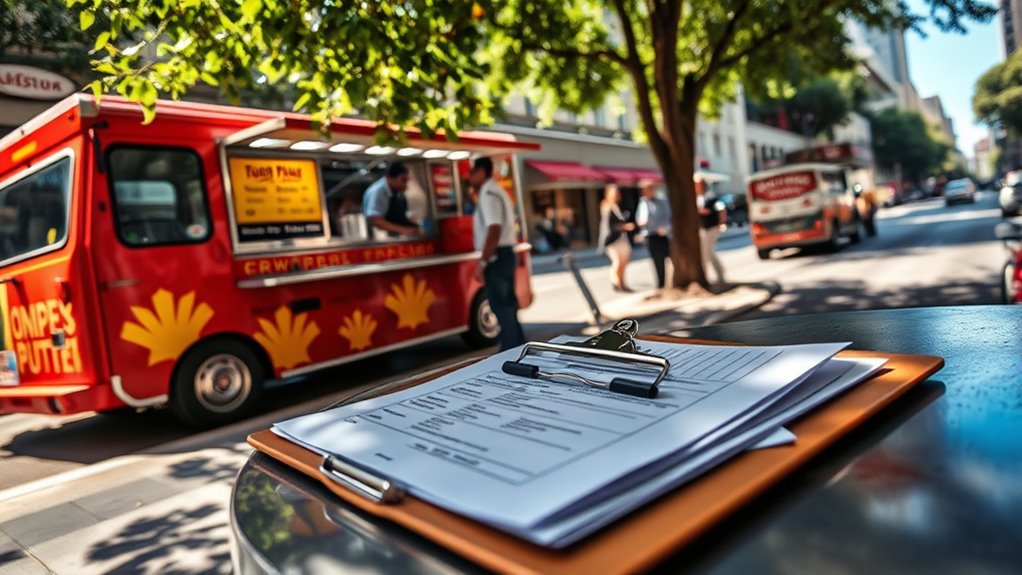
Managing permits and regulatory fees is a crucial step in launching and maintaining a successful food truck business. These costs can considerably impact your budget, with average annual expenses exceeding $28,000 nationwide. Costs vary widely depending on your city—Boston can top $39,000, while Portland stays around $5,400. You’ll need multiple permits, including food service, health, and parking permits, often taking about 37 days to obtain. Failing to comply can lead to fines, permit suspensions, or shutdowns. Permitting processes and timelines can also differ significantly depending on local government procedures, so early planning is essential. Additionally, understanding the operating hours of your local grocery stores can help you better coordinate your supply chain and ensure you have access to necessary ingredients during your business hours.
Understanding Market Trends and Growth Opportunities

Understanding market trends and growth opportunities helps you make smarter budgeting decisions for your food truck. The industry is projected to grow steadily, with increasing consumer demand for diverse, convenient, and eco-friendly options. By tracking these trends, you can identify expansion and diversification strategies that position your business for long-term success. Additionally, the market size is substantial, valued at approximately $1.5 trillion, highlighting significant potential for new entrants and existing operators to expand their reach. Staying informed about market fluctuations can help you adapt your strategies proactively and capitalize on emerging opportunities.
Market Valuation & Projections
The food truck market is experiencing rapid growth, driven by rising consumer demand for diverse and gourmet options, as well as the low startup costs compared to traditional restaurants. By 2025, the US market is valued between $1.09 billion and $4.36 billion, with over 48,000 trucks operating. Globally, it’s projected to reach $7.87 billion by 2030, growing at a CAGR of 6.3%. In the US, growth rates range from 5% to 6.4%, fueled by urban expansion and changing dining preferences. Consumer trends like gourmet, eco-friendly, and viral flavors boost demand. Technological innovations and corporate partnerships diversify revenue streams. The industry is also shifting toward more pre-order-only models, utilizing mobile ordering and digital POS systems to streamline service. This shift towards digital ordering is making it easier for operators to manage high volumes and improve customer experience. Key points to consider:
- Market size expected to double by 2030
- Steady growth driven by consumer preferences
- Tech adoption enhances profitability
- Urban areas are growth hubs
Expansion & Diversification Strategies
Expanding your food truck business requires staying ahead of market trends and seizing growth opportunities. Partnering with corporate sectors like tech and finance opens steady weekday revenue streams beyond seasonal events. These collaborations, with tailored menus and polished branding, boost on-site catering and employee perks, building brand loyalty. Additionally, embracing market trends such as eco-conscious practices and new technology can give your business a competitive edge.
Developing a Strategic Budgeting Plan

Developing a strategic budgeting plan is essential for guiding your food truck business toward financial stability and growth. It helps you set realistic goals, allocate resources effectively, and prepare for potential risks. Start by establishing initial financial assumptions and projections, including income statements, cash flow, and balance sheets, using forecasting software for accuracy. Verify your assumptions through sensitivity analysis to guarantee your plan withstands market fluctuations. Focus on key costs such as startup expenses—truck purchase, branding, equipment, and permits—and ongoing operational expenses like insurance, marketing, and supplies. Accurate financial planning is crucial for securing investor confidence and long-term success. Understanding cost control mechanisms can help you better manage your expenses and improve profitability. Use visuals like graphs and charts to communicate your financial health clearly. Break down expenses for better cost control. Align costs with revenue projections to determine profitability. Regularly monitor and adjust your budget based on actual data.
Accounting for Hidden and Miscellaneous Costs

When creating your food truck’s budget, accounting for hidden and miscellaneous costs can prevent surprises that threaten your financial stability. Unexpected repairs, like engine fixes costing over $12,000 or kitchen equipment repairs up to $6,000, can hit hard if not planned for. Routine maintenance, fuel, propane, and cosmetic touch-ups also add monthly expenses, often between $500 and $1,000. Licensing and permit fees vary widely by city—some over $28,000 annually—so check local costs regularly. Payment processing fees, typically around 2.6-2.9%, cut into profits, while seasonal fluctuations and marketing efforts can increase costs during slow periods. Insurance premiums, storage fees, and supplies like utensils or napkins are ongoing expenses. Setting aside a contingency fund of about 20% helps cover these unforeseen or miscellaneous costs, ensuring your budget stays balanced. Permits and licenses incur ongoing fees, such as health, parking, and event permits, totaling hundreds of dollars monthly; costs vary by location and can multiply across multiple areas. Additionally, maintaining an organized record of all expenses helps in tracking these hidden costs and adjusting your budget accordingly.
Tips for Maximizing Budget Efficiency
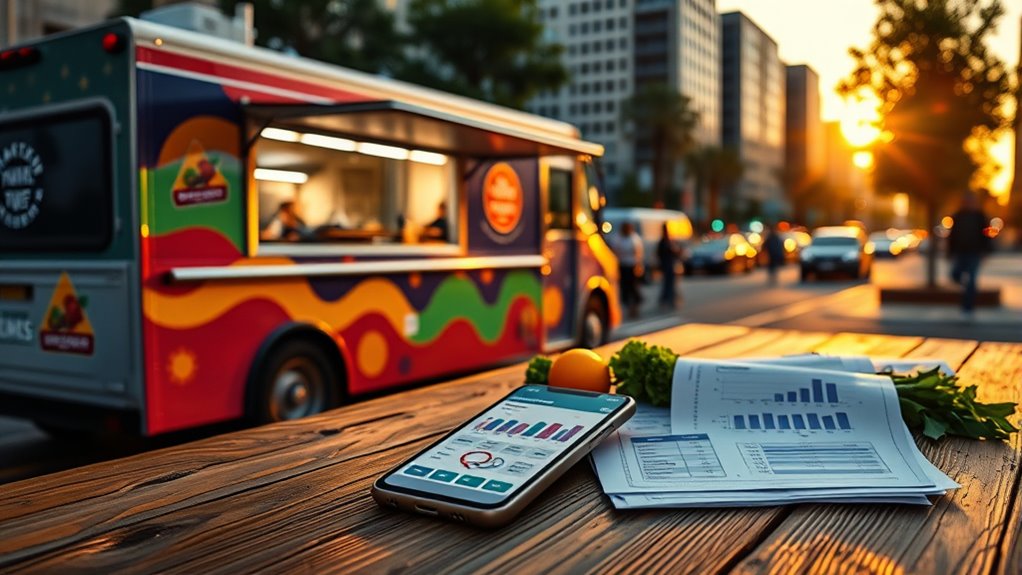
Maximizing budget efficiency starts with smart planning and diligent management. Focus on strategies that cut costs without sacrificing quality. For example, design your menu around overlapping ingredients to reduce inventory complexity and waste. Choose versatile equipment to avoid unnecessary expenses on specialized tools. Incorporate seasonal ingredients to capitalize on price fluctuations and diversify your offerings cost-effectively. Regularly analyze sales data to promote high-margin dishes and phase out less profitable ones. Additionally, developing combo deals and flexible portion sizes can attract more customers and increase revenue. Using cost-effective procurement methods can further lower expenses and improve profit margins. Use quality used equipment and shop for deals to lower upfront costs. Research local tax incentives to further reduce expenses and boost your bottom line. Schedule preventative maintenance to avoid costly repairs. Implement real-time inventory tracking to reduce waste. Adjust prices based on ingredient costs and sales trends.
Frequently Asked Questions
How Can I Secure Affordable Financing for My Food Truck Startup?
You can secure affordable financing by exploring multiple options. Consider equipment financing for manageable payments on your truck and gear, or look into small business loans like SBA or bank loans if you have good credit. Online lenders offer quick funds with flexible terms, and crowdfunding or grants can provide non-repayable funds. Comparing interest rates, repayment terms, and eligibility requirements helps you find the best deal for your startup’s needs.
What Are Effective Strategies to Reduce Ongoing Operational Costs?
To cut operational costs, you should align staffing with busy hours and cross-train employees for flexibility. Use scheduling software to forecast labor needs and hire part-time staff during slow periods. Opt for versatile, energy-efficient equipment, and negotiate better deals with suppliers, especially for bulk purchases. Implement inventory management and automation tools to reduce waste and labor expenses. Regular maintenance and strategic menu planning also help keep costs low and profits steady.
How Do Seasonal Fluctuations Impact Budgeting and Revenue Forecasts?
You should know that seasonal demand swings can cause revenue to fluctuate by up to 50%. This means your budgeting and forecasts must be adaptable, accounting for high sales during peak seasons and significant drops in colder months. Planning for these variations ensures you can manage cash flow, control costs, and avoid surprises. Adjust your marketing, staffing, and inventory strategies accordingly to stay on track year-round.
What Are the Best Ways to Plan for Unexpected Repair Expenses?
You should set aside an emergency fund of around $1,200 annually and add $50–$100 monthly for unexpected repairs. Regularly inspect and service your truck to catch issues early, preventing costly breakdowns. Keep a maintenance schedule based on your truck’s condition, and factor in insurance coverage for incidents like theft or weather damage. Planning ahead guarantees you’re prepared for surprises, minimizing disruptions and protecting your profits.
How Can I Budget for Marketing and Promotional Activities Effectively?
To budget effectively for marketing and promotions, start by allocating 5-10% of your total sales, with new trucks aiming closer to 10% for rapid growth. Focus on high-ROI channels like social media and local events, and track your results regularly to adjust spending. Use low-cost tactics like email marketing and community engagement, ensuring you maximize visibility without overspending while building a strong customer base.
Conclusion
Balancing your food truck budget is both an art and a science. While managing costs keeps your business afloat, dreaming big fuels your passion. Stay disciplined with your expenses, but don’t forget to seize growth opportunities. By carefully planning and staying adaptable, you’ll turn your food truck into a thriving success. Remember, it’s not just about penny-pinching; it’s about investing wisely in your culinary journey and the future you envision.
Halloween Picks
halloween
As an affiliate, we earn on qualifying purchases.