
Mobile kitchens now serve as creative art platforms, blending design, culinary innovation, and community engagement. They transform from simple vendors into mobile canvases that reflect cultural themes or personal stories, making art accessible in everyday settings. These dynamic spaces challenge traditional ideas of art and display, encouraging interaction and connection. By exploring how food trucks incorporate technology, storytelling, and social messages, you’ll discover ways they redefine artistic expression in vibrant, innovative ways.
Key Takeaways
- Food trucks serve as mobile canvases, showcasing exterior artwork that reflects cultural themes and personal stories.
- Limited space encourages culinary innovation, blending unexpected ingredients to create edible art and storytelling.
- Exterior designs and branding promote local artists and raise awareness for social issues through visual expression.
- Mobility allows food trucks to reach diverse communities, fostering cultural exchange and community engagement.
- Integration of STEM in design enables sustainable, innovative, and interactive platforms for artistic and culinary expression.
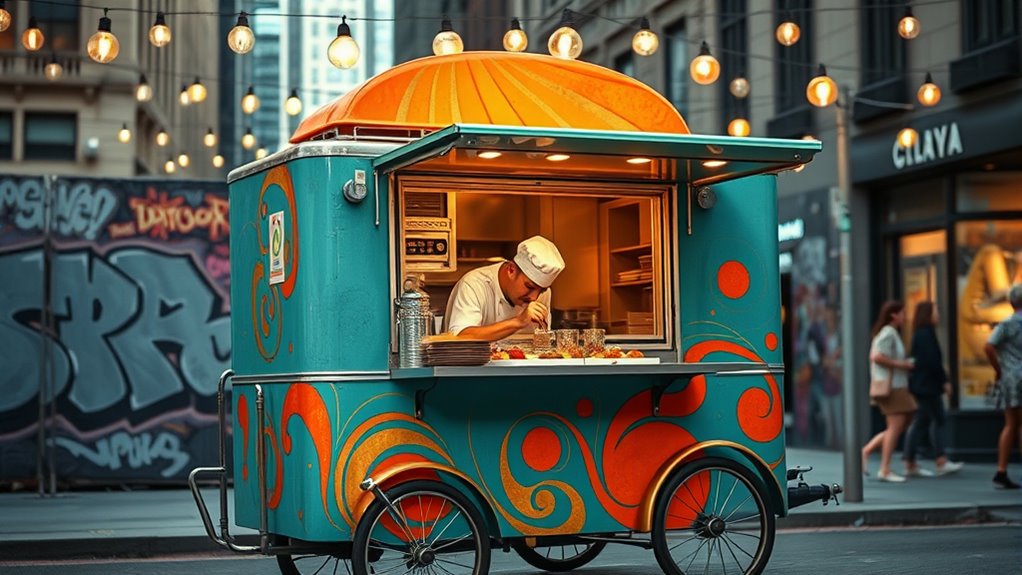
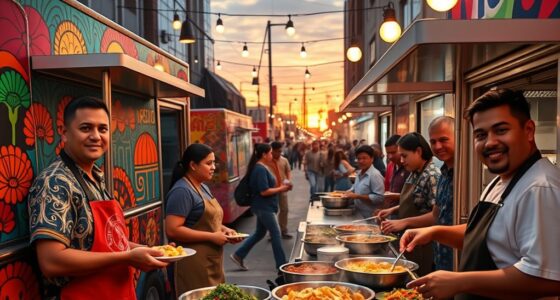
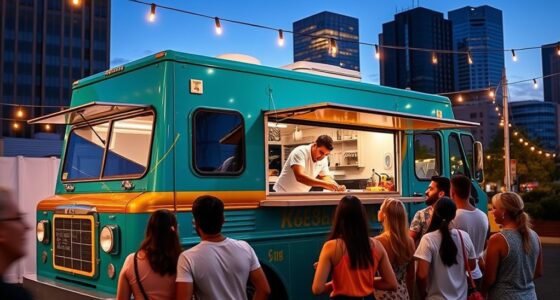
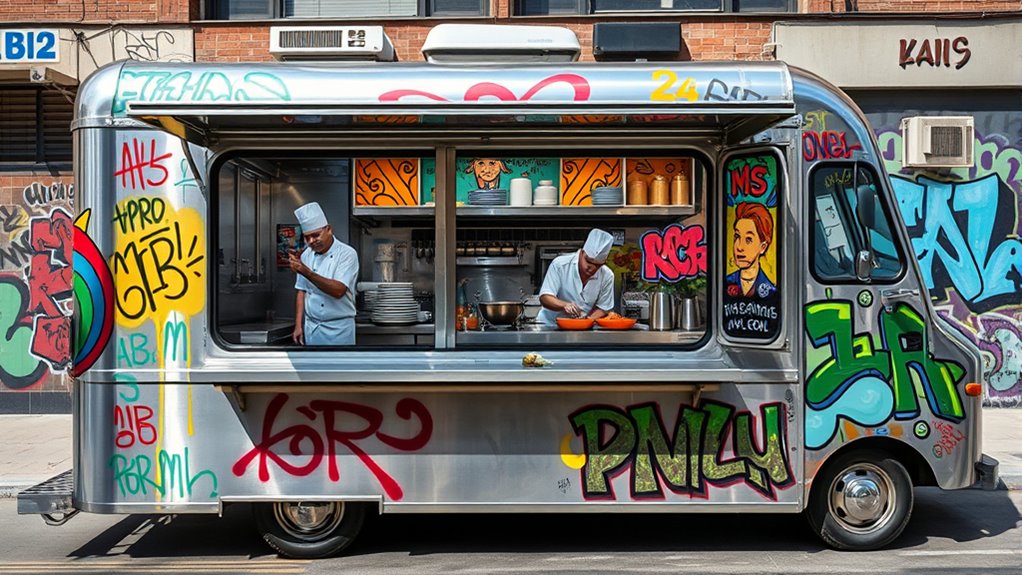
Mobile kitchens are transforming from simple food vendors into dynamic artistic platforms that engage communities and challenge traditional notions of art. As you explore the world of food trucks, you’ll notice how these mobile kitchens do more than just serve meals—they become canvases for creativity and innovation. Food trucks, with their limited space and mobility, demand culinary innovation to stand out. Chefs and artists alike use this platform to experiment with flavors, presentation, and storytelling, turning each dish into a form of artistic expression. You might see vibrant, eye-catching designs on the truck’s exterior that reflect cultural themes or personal stories, transforming the vehicle itself into a moving piece of art.
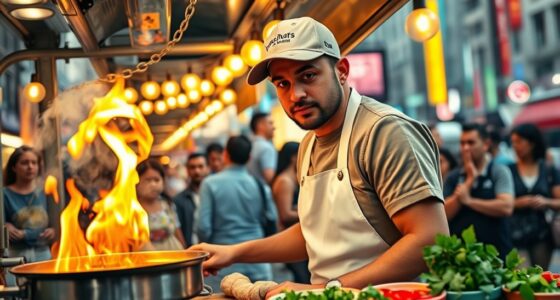
Inside, culinary innovation drives the experience. Chefs push boundaries by blending unexpected ingredients, reimagining traditional dishes, or incorporating local flavors to create something fresh and exciting. This experimentation doesn’t just satisfy hunger; it sparks curiosity and conversation among patrons. You’re often encouraged to interact with the chefs, ask about their inspiration, and learn about the cultural or social messages behind each dish. This direct engagement makes the culinary experience more meaningful and elevates it beyond mere sustenance. The food truck becomes a platform where food and art intertwine, fostering community connections through shared tastes and stories.
Moreover, food trucks serve as flexible venues for artistic expression during festivals, markets, or neighborhood events. They can adapt to different themes or social causes, using their mobility to reach diverse audiences. For instance, a truck might feature artwork on its exterior to promote local artists or raise awareness about social issues. The food prepared often reflects these themes, combining visual arts, storytelling, and culinary craftsmanship into a cohesive experience. It’s this versatility that challenges the traditional gallery or performance space, proving that art can be mobile and accessible.
You’re witnessing a shift in how communities perceive art—less confined to galleries and museums and more embedded in everyday life. Food trucks, through their innovative culinary approaches and artistic branding, foster a sense of community and cultural exchange. They invite you to see food not just as nourishment but as a medium for artistic expression and social commentary. This fusion of culinary innovation and artistic intent transforms the mobile kitchen into a vibrant, interactive platform that celebrates creativity, diversity, and community spirit. In this way, food trucks help redefine what it means to experience art in the modern world.
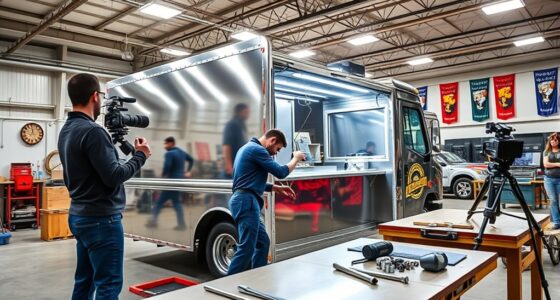
Additionally, the use of STEM principles in designing and building food trucks exemplifies how technology and engineering enhance artistic and functional aspects, making these mobile kitchens even more innovative and sustainable.
Frequently Asked Questions
How Do Mobile Kitchens Influence Local Art Scenes?
You see how mobile kitchens transform local art scenes by turning public spaces into vibrant cultural hubs. They foster spontaneous cultural exchange, inviting artists and communities to collaborate and showcase their creativity. By occupying public space, these kitchens break down barriers, encouraging diverse artistic expressions and interactions. This dynamic environment energizes the local scene, making art more accessible and engaging for everyone involved.
What Are the Main Challenges Artists Face Using Mobile Kitchens?
You face tight space limitations that can drown your creativity in a cramped, cluttered environment. Logistic hurdles like unpredictable schedules and transport issues make it tough to plan shows or exhibitions. The mobile kitchen’s confined area feels like a small stage where every move counts, yet obstacles threaten to block your artistic flow. Maneuvering these challenges demands resilience to turn each limited space into a vibrant canvas.
Can Mobile Kitchens Support Large-Scale Art Installations?
Yes, mobile kitchens can support large-scale art installations by providing portable creativity and facilitating art mobility. You can transform these spaces into dynamic art venues, allowing you to showcase big pieces in various locations. With proper planning, you can harness the flexibility of mobile kitchens to host impactful, large-scale installations that reach wider audiences, making art more accessible and adaptable in diverse environments.
How Do Mobile Kitchens Connect With Community Engagement?
You find that food trucks become vibrant hubs, effortlessly weaving into community life. By showcasing street art and local flavors, you foster connections and spark conversations. These mobile kitchens invite residents to gather, share stories, and celebrate culture together. Through food and art, you create an inviting space where everyone feels seen and valued, turning simple moments into meaningful community bonds.
What Are Successful Examples of Mobile Kitchens as Art Platforms?
You can see successful examples when food trucks transform into art exhibitions, showcasing local artists’ work creatively. For instance, some mobile kitchens host installations or live art performances, turning the truck into a moving gallery. These platforms engage communities by making art accessible and interactive. By combining culinary experiences with visual art, these mobile kitchens create memorable, culturally enriching events that resonate with diverse audiences and foster community connections.
Conclusion
As you see, mobile kitchens blend the everyday with the extraordinary, turning food trucks into art galleries on wheels. They’re not just places to eat but canvases for creativity, where flavors meet visuals in vibrant displays. In this way, a simple meal transforms into an experience, proving that even the most utilitarian spaces can become stages for artistic expression. Embrace this fusion, and you’ll realize art and appetite are more intertwined than you ever imagined.