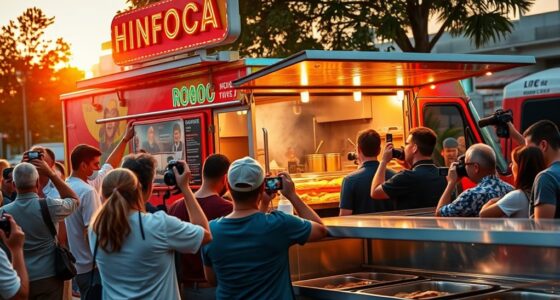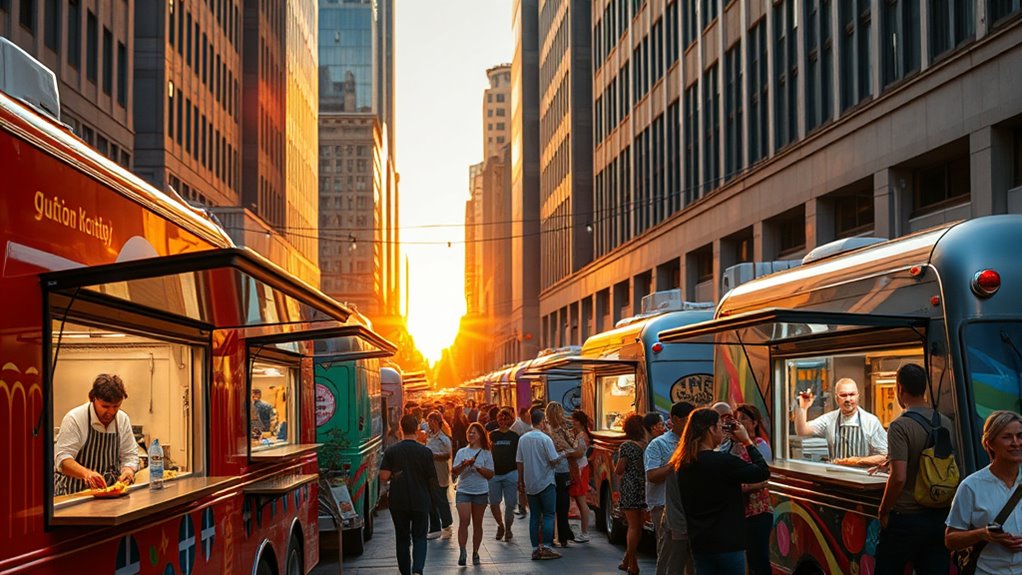

Food trucks can be your launchpad into the restaurant industry, offering an affordable and flexible way to test your menu ideas and build a brand. They let you gather customer feedback, experiment with trending ingredients, and refine your concepts with minimal risk. Plus, operating a food truck helps you gain essential skills in management, marketing, and operations. Keep exploring how this mobile platform can turn your culinary dreams into a full-scale restaurant venture.
Key Takeaways
- Food trucks provide a cost-effective platform for testing new restaurant concepts and building brand recognition.
- They enable real-time customer feedback to refine menus and optimize offerings before opening a permanent location.
- Operating a food truck helps entrepreneurs develop operational skills essential for managing full-scale restaurants.
- Food trucks allow flexible marketing and location strategies to attract diverse customer bases and adapt to trends.
- They serve as a stepping stone, helping aspiring restaurateurs transition from mobile units to permanent brick-and-mortar establishments.
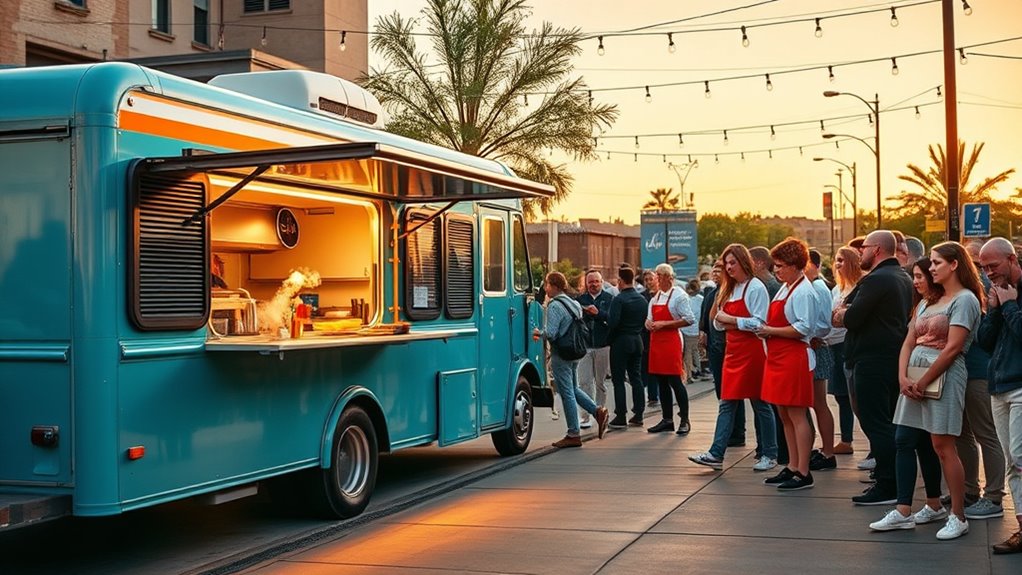
Food trucks are increasingly becoming essential stepping stones for aspiring restaurateurs, offering a low-cost, flexible platform to test concepts and build a customer base. As you consider entering the food industry, leveraging a food truck allows you to experiment with your culinary ideas without the hefty investment of a brick-and-mortar location. One of the key advantages is the opportunity for mobile branding, which helps you establish your identity early on. Every aspect, from your truck’s design to your social media presence, plays a role in creating a recognizable brand that attracts loyal customers. By consistently showcasing your unique style and personality, you build a following that can carry over when you shift to a permanent restaurant space.
Food trucks offer a cost-effective way to test concepts and build brand loyalty early.
In addition to brand-building, food trucks serve as a fertile ground for menu innovation. You get real-time feedback from customers, enabling you to refine dishes and introduce new flavors without the risk associated with traditional restaurants. This agility allows you to experiment with trending ingredients and niche concepts that might be difficult to implement elsewhere. For example, if you’re passionate about fusion cuisine or plant-based options, a food truck provides the perfect testing ground. You can tailor your menu based on what sells best, eliminating waste and optimizing profits. Over time, successful dishes can be expanded into a full restaurant menu, giving you a tested foundation for growth.
Your ability to adapt your menu and branding on the fly helps you stay relevant in a competitive food scene. As trends shift, you can quickly update your offerings and marketing strategies, maintaining customer interest and engagement. This flexibility also extends to your location choices. You might operate in different neighborhoods or events, targeting diverse demographics and expanding your reach. This mobility allows you to gather a broad spectrum of customer insights, shaping your future restaurant’s concept and service style.
Furthermore, the experience gained from managing a food truck—handling operations, marketing, and customer relations—prepares you for the challenges of running a full-scale restaurant. You learn how to optimize workflows, control costs, and create a memorable dining experience. All these skills, combined with successful mobile branding and innovative menus, set a solid foundation for shifting from a food truck to a permanent restaurant. Ultimately, the food truck acts as a launchpad, honing your culinary vision and entrepreneurial skills, making your journey into the restaurant industry both practical and promising. Additionally, understanding local regulations and divorce laws can help you navigate any legal challenges that arise as you expand your business or personal ventures.
Frequently Asked Questions
How Do Food Trucks Influence Local Restaurant Startups?
You see how food trucks influence local restaurant startups by serving as mobile innovation hubs, allowing entrepreneurs to test new concepts with lower risks. They provide opportunities for entrepreneurial mentorship, helping new chefs refine their skills and business models. By offering flexible, accessible platforms, food trucks foster a supportive environment where future restaurateurs can gain real-world experience, build customer bases, and prepare for a brick-and-mortar launch.
What Legal Challenges Do Food Truck Incubators Face?
Like steering through a maze, you face zoning regulations and licensing hurdles that can trip your progress. Legal challenges for food truck incubators include securing proper permits, complying with local zoning laws, and meeting health and safety standards. These obstacles can slow down or block your growth, requiring you to stay adaptable and informed. Overcoming these hurdles is essential to transforming your truck into a stepping stone for future restaurant success.
How Do Food Trucks Select Their Future Restaurant Concepts?
You select future restaurant concepts by focusing on menu innovation and branding strategies. You observe customer preferences, test new dishes, and gather feedback to refine your ideas. Your branding efforts help establish a unique identity that resonates with your target audience. This approach allows you to identify concepts with growth potential, turning a successful food truck into a full-scale restaurant that aligns with your innovative menu and strong brand.
What Funding Opportunities Exist for Food Truck Entrepreneurs?
Imagine transforming your food truck dream into reality—exciting, right? You can explore diverse financing options like small business loans, personal savings, or investor funding. Don’t overlook grant programs designed to support entrepreneurs; they could be your game-changer. Keep an eye out for local grants, industry-specific awards, and government initiatives. With the right funding, you’ll turn your culinary vision into a thriving mobile business—your future starts now.
How Do Food Trucks Impact Community Food Culture?
You influence community food culture by bringing street food directly to neighborhoods, making diverse cuisines accessible. Your food truck promotes cultural exchange, allowing people to experience authentic flavors from around the world. This vibrant street food scene fosters social connections and celebrates local traditions. By offering unique dishes, you help shape a dynamic community food culture that’s inclusive, lively, and ever-evolving, enriching the local culinary landscape with every meal served.
Conclusion
So, as you consider the journey from food truck to full-scale restaurant, remember it’s more of a gentle passage than a leap. These mobile kitchens serve as nurturing grounds, allowing your ideas to blossom softly and thoughtfully. Embrace the process, knowing that every step, even the most delicate, brings you closer to your dream. With patience and persistence, your culinary vision can quietly flourish into something truly remarkable—like a gentle sunrise after a long night.