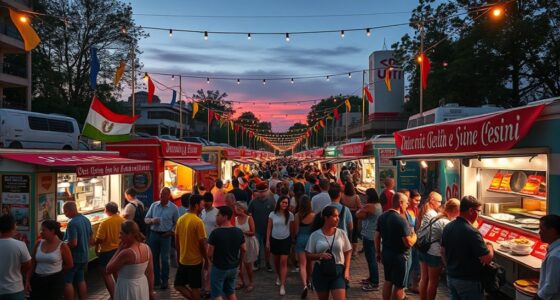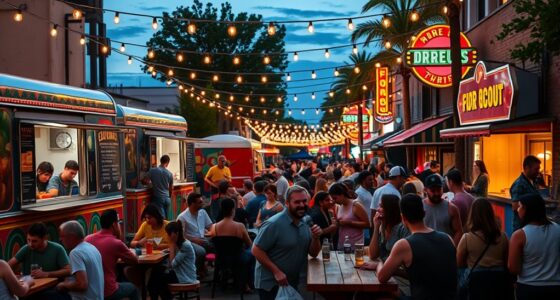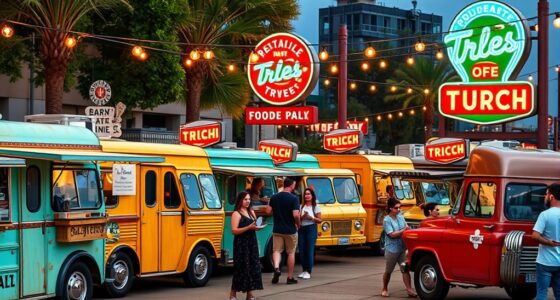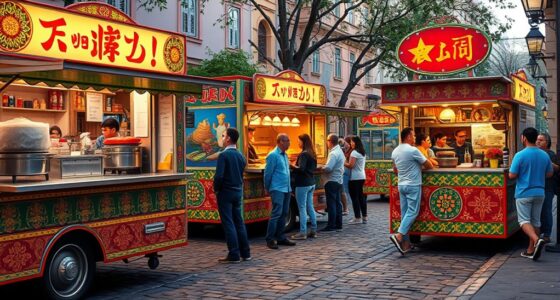
Food trucks started centuries ago with street vendors using pushcarts to sell quick, affordable food to busy city dwellers, blending local flavors and immigrant influences. Over time, technological advances and urban growth transformed these carts into mobile kitchens, reflecting diverse cuisines and cultural traditions. Today’s gourmet food trucks continue this evolution, turning humble beginnings into vibrant culinary hubs. If you keep exploring, you’ll discover how these changes shaped the food scene we enjoy now.
Key Takeaways
- Food trucks originated centuries ago as pushcarts and wagons serving quick, affordable street food for workers and passersby.
- Technological and design advancements evolved early carts into modern, functional mobile kitchens influenced by urban infrastructure.
- Immigrant communities introduced diverse cuisines, transforming food trucks into cultural ambassadors and reflecting multicultural urban life.
- Food trucks shifted from simple carts to vibrant culinary hubs, offering quick, accessible meals and becoming integral to city life.
- The modern gourmet food truck movement grew from these origins, blending tradition, innovation, and diverse flavors into a dynamic cuisine scene.
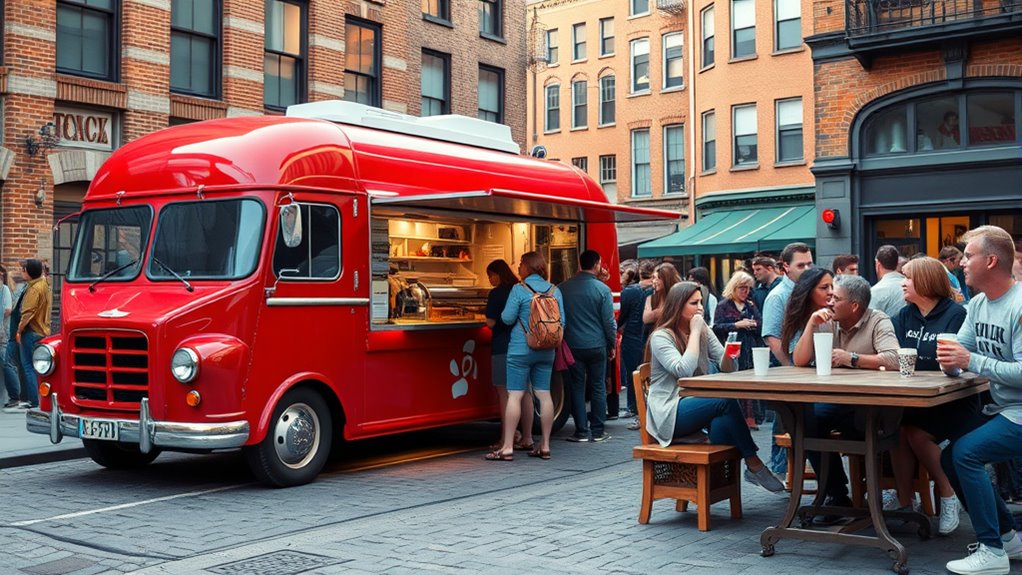
Have you ever wondered how food trucks became a staple of urban cuisine? It all traces back to their vintage origins, which date centuries ago when merchants and street vendors first started selling homemade foods from carts and wagons. These early pushcarts weren’t just about convenience; they reflected a city’s cultural influences and local flavors. For example, in 17th-century London, street vendors sold pies and baked goods from portable carts, blending local recipes with the needs of busy city dwellers. Similarly, in 19th-century America, horse-drawn wagons carried everything from roasted peanuts to ice cream, showcasing regional tastes and immigrant influences. These vintage origins weren’t just about selling food—they were about adapting to the city’s pulse, offering quick, affordable sustenance for workers and passersby. Over time, these humble beginnings laid the groundwork for what would become the modern food truck movement. The technology used in early carts also evolved alongside urban development, influencing how food trucks are designed today.
Cultural influences played an essential role in shaping the evolution of food trucks. Immigrants brought their culinary traditions to new lands, creating a melting pot of flavors on wheels. For instance, Chinese immigrants in California introduced their takeout dishes, which quickly became popular among hardworking residents. Latin American communities in the Southwest popularized tacos and pupusas, turning food trucks into ambassadors of their cultural heritage. These influences helped diversify street food, making it more than just quick bites but a reflection of cultural identity. As cities grew and populations became more multicultural, food trucks adapted, blending traditional recipes with local ingredients and trends. This cultural fusion transformed simple carts into vibrant culinary hubs, showcasing the rich diversity of urban life.
Frequently Asked Questions
What Are the Most Popular Modern Food Truck Cuisines?
You’ll find that modern food trucks excel with popular cuisines like fusion tacos and vegan bites. Fusion tacos combine flavors from different cultures, offering a unique twist on traditional recipes. Vegan bites cater to plant-based diets, making them a hit among health-conscious and ethical eaters. These cuisines stand out because they’re innovative, delicious, and trendy, attracting diverse crowds enthusiastic to try something new on the go.
How Do Food Trucks Impact Local Restaurants?
Did you know that food trucks boost neighborhood revitalization by attracting more visitors? You might notice that they increase local restaurant competition, encouraging traditional eateries to improve their menus and service. Food trucks often complement nearby establishments rather than harm them, creating a lively dining scene. This dynamic benefits both food trucks and local restaurants, fostering a vibrant community where everyone can thrive, drawing in more foot traffic and boosting the local economy.
What Permits Are Required to Operate a Food Truck?
To operate a food truck, you need to complete the permits process and meet licensing requirements. You’ll typically need a business license, health department permits, and a mobile food vendor permit. You might also require fire department approval and parking permits. Check with your city or county regulations, as requirements vary. Ensuring all permits are in place helps you avoid fines and operate smoothly.
How Do Food Trucks Influence Urban Food Culture?
You notice a vibrant street food scene that transforms urban spaces, making them lively and diverse. Food trucks influence urban food culture by bringing street food directly to neighborhoods, fostering cultural identity through diverse cuisines. They create a sense of community, inspire culinary innovation, and reflect local tastes. As you walk past, it’s clear that food trucks are reshaping city life, making it more colorful, accessible, and connected through shared tastes and traditions.
What Are Future Trends in the Food Truck Industry?
You’ll see future food truck trends driven by digital innovation and sustainability initiatives. Expect advanced ordering apps, contactless payments, and real-time tracking to enhance your experience. Trucks will prioritize eco-friendly practices, like using biodegradable packaging and solar power. Additionally, you’ll notice more diverse cuisines and health-conscious options. These trends aim to make food trucks more efficient, environmentally responsible, and better suited to your evolving tastes and convenience needs.
Conclusion
You might be surprised to learn that the food truck industry now generates over $2 billion annually in the U.S. alone. From humble pushcarts to gourmet eateries on wheels, these mobile kitchens have transformed dining experiences everywhere. As you see food trucks pop up in cities worldwide, remember they’re a proof to innovation and adaptability. So next time you grab a taco or burger from a truck, know you’re part of a vibrant, historic culinary movement.