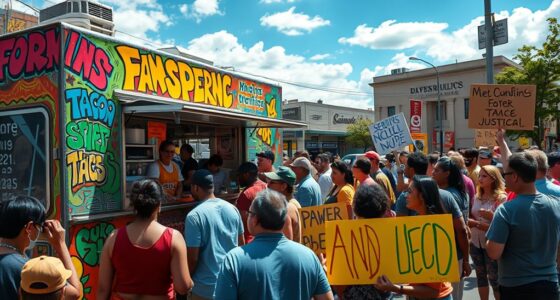

Iconic food trucks show how humble beginnings, resilience, and innovation can turn a simple mobile eatery into a symbol of entrepreneurship and community spirit. Many started with small investments, overcoming city permits and fierce competition through passion and persistence. Their stories of reinvention and connection inspire others to pursue their dreams and create meaningful impact. By exploring these journeys further, you’ll uncover inspiring lessons about turning adversity into success and the power of small ideas.
Key Takeaways
- Iconic food trucks often originate from small investments, showcasing resilience and creativity in transforming simple ideas into symbols of entrepreneurship.
- Many legendary trucks overcame permits, competition, and market challenges through innovation, persistence, and adaptation.
- Successful trucks like Kogi BBQ and The Lobos Truck became community staples, inspiring others with their stories of passion and perseverance.
- Their journeys highlight how street food entrepreneurs leverage unique branding and menu strategies to stand out and grow.
- These iconic trucks exemplify how determination and community connection turn humble beginnings into influential culinary symbols.
Have you ever wondered how a simple food truck can become a source of inspiration? It’s fascinating to see how these mobile eateries transform from humble beginnings into symbols of innovation and resilience. Street food has long been an essential part of urban culture, offering quick, delicious bites to locals and tourists alike. But beyond satisfying appetites, many food trucks serve as platforms for entrepreneurship, empowering individuals to turn their passions into thriving businesses. When you think about iconic food trucks, you’re really looking at stories of determination, creativity, and community impact.
Take a moment to contemplate how these entrepreneurs started. Most didn’t have extensive restaurant experience or hefty investment capital. Instead, they recognized a gap in their local food scene or a niche they could fill with unique offerings. With a small investment, a passion for cooking, and a desire to bring something new to their community, they launched their trucks. It’s a direct, accessible form of entrepreneurship that allows for quick testing of ideas without the overhead of a brick-and-mortar shop. This approach appeals to those who crave independence and want to control their destiny, all while serving up street food that people love.
What makes these stories so inspiring is how many food truck owners have faced obstacles yet refused to give up. They’ve navigated city permits, inconsistent income, and fierce competition. Still, they stay committed to their vision, often adapting their menus or branding to better connect with their audience. Their success proves that entrepreneurship isn’t just about money; it’s about passion, persistence, and a willingness to learn. You see it in their ability to reinvent themselves or pivot during tough times, turning challenges into opportunities to grow.
Many iconic food trucks have become community staples, creating a sense of belonging among their customers. They’ve built reputations not just on tasty food but on personal stories that resonate with people. By sharing their journeys, these entrepreneurs inspire others to pursue their dreams, whether that’s starting a food truck or any small business. They demonstrate that street food isn’t just about quick meals; it’s about fostering a culture of entrepreneurship that sparks creativity and resilience in every city.
In addition, some food trucks have incorporated tuning strategies to enhance their operations, such as improving efficiency or customer experience, which can serve as inspiration for small business owners in any industry. By sharing their journeys, these entrepreneurs inspire others to pursue their dreams, whether that’s starting a food truck or any small business. They demonstrate that street food isn’t just about quick meals; it’s about fostering a culture of entrepreneurship that sparks creativity and resilience in every city.
In the end, these food trucks show you that with determination, innovation, and a passion for what you do, even a simple idea can grow into something iconic. Their stories remind you that entrepreneurship begins with a single step—something as straightforward as rolling up to a corner with a cart or truck and turning your passion into a livelihood. And that’s what makes their inspiring stories truly remarkable.
Frequently Asked Questions
How Do Food Trucks Secure Permits in Different Cities?
You secure permits for food trucks by researching each city’s parking regulations and health inspection requirements. First, you apply for a business license and health department approval, ensuring your truck meets sanitation standards. Then, you identify designated parking zones or obtain special permits for street vending. Staying compliant with local regulations and passing health inspections are essential steps that help you operate legally and smoothly across different cities.
What Are the Startup Costs for Launching a Food Truck?
You’re probably wondering about startup costs. It varies, but expect to invest in the truck itself, which can range from $50,000 to $150,000, depending on size and equipment. Don’t forget regular truck maintenance to keep it running smoothly, and allocate funds for branding strategies to attract customers. Planning carefully guarantees you cover essentials like permits, supplies, and marketing, setting the stage for your food truck’s success.
How Do Food Trucks Choose Their Signature Dishes?
You choose your signature dishes by focusing on menu innovation and customer feedback. Experiment with unique flavors and presentation to stand out, while listening to what your customers love or suggest. Incorporate their preferences to refine your offerings, ensuring your signature dishes reflect your brand’s personality and appeal. This approach helps you create memorable meals that keep customers coming back and spread positive word-of-mouth.
What Challenges Do Food Truck Owners Face Daily?
You face daily challenges like balancing food truck marketing to attract customers and planning a seasonal menu that appeals year-round. Weather can disrupt your schedule, and you must manage limited space for ingredients and equipment. Staying competitive requires innovation and adaptability. You also handle staffing and maintaining quality amidst these pressures, all while ensuring your food stands out. These hurdles test your resilience but also push you to grow and succeed.
How Do Food Trucks Build a Loyal Customer Base?
You build a loyal customer base by focusing on branding strategies that make your food truck memorable and relatable. Use social media engagement to connect with your audience, share behind-the-scenes moments, and promote special deals. Consistency in quality and excellent service also foster trust. When customers feel connected and valued through your branding and online presence, they’re more likely to return and recommend your food truck to others.
Conclusion
As you reflect on these iconic food trucks, remember that their success often comes from perseverance and passion. Some say that great ideas are just waiting for the right moment to shine, and these stories prove it. While not every food truck becomes legendary, those who stay committed turn their dreams into reality. So, trust that with enough dedication, your own inspiring story could be just around the corner, waiting to be written.