
Creating compelling menu names and descriptions allows you to tell a story that sparks guests’ imaginations and sets expectations. By choosing evocative titles aligned with your theme, you transform each dish into a chapter or character, making the dining experience more memorable. Consistent storytelling across your menu helps build an immersive atmosphere that keeps guests engaged and enthusiastic to explore. Keep exploring – you’ll discover how to craft a cohesive narrative that elevates your entire restaurant concept.
Key Takeaways
- Use creative, evocative names that evoke imagery and emotions, enhancing guest anticipation and engagement.
- Maintain thematic consistency across menu items to build a cohesive storytelling experience.
- Incorporate authentic details and cultural references that deepen the narrative and authenticity of dishes.
- Connect dish names to the restaurant’s overall theme or concept to reinforce the story.
- Craft descriptions that complement names, enriching the narrative and sparking guests’ imagination.
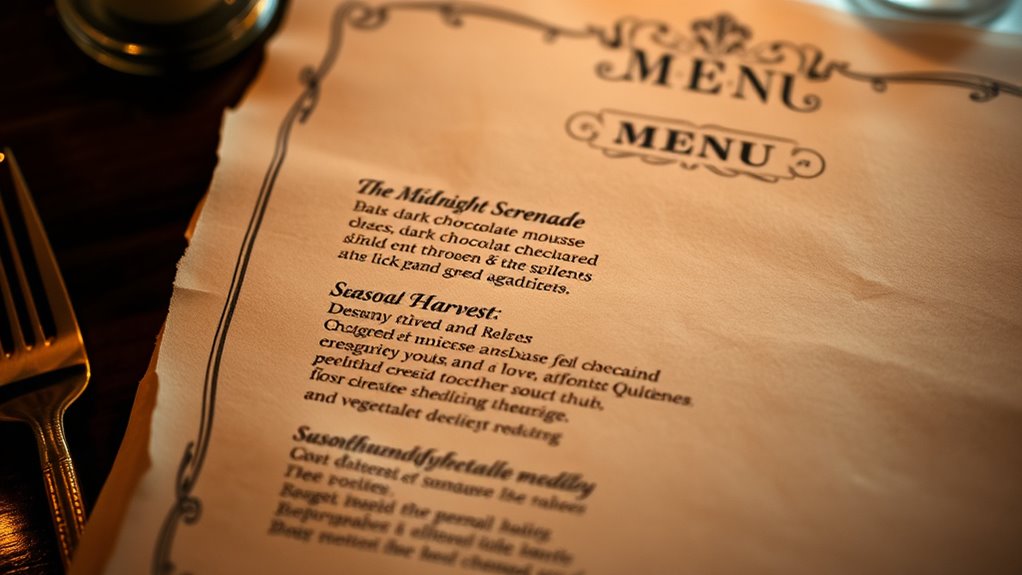
Have you ever noticed how some menus tell a story beyond just listing dishes? It’s like each item hints at a bigger experience, drawing you into a narrative that makes the meal more memorable. The secret lies in creative naming and maintaining thematic consistency throughout the menu. When you put thought into how you name each dish, you’re not just labeling ingredients—you’re crafting a story that engages your guests and sparks their imagination.
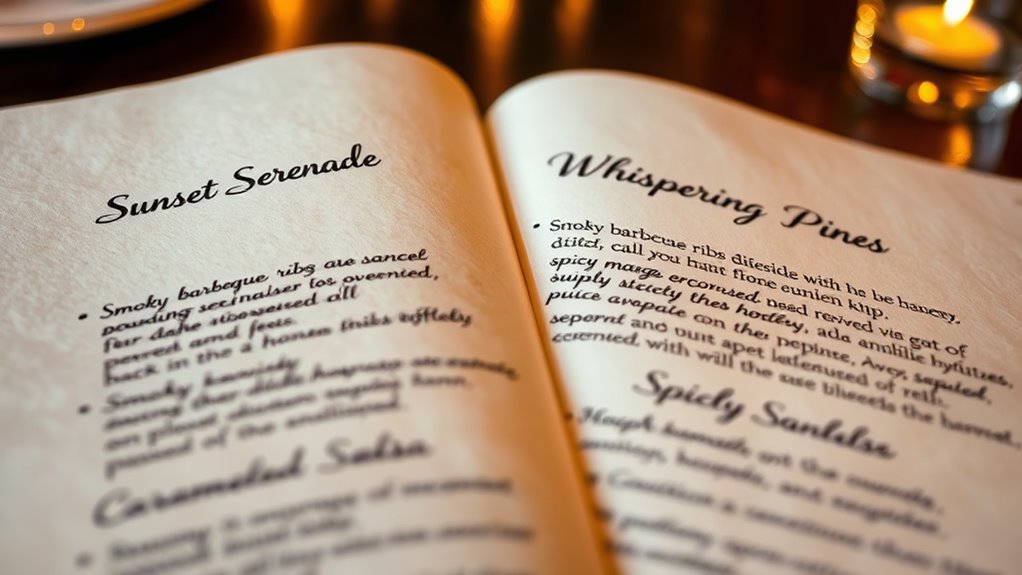
Creative naming is a powerful tool. Instead of simply calling a dish “Chicken Alfredo,” you might opt for a more evocative title like “Sunset Serenade” or “Harvest Moon Chicken.” These names evoke emotions or imagery, making the dish more appealing and memorable. The key is to choose names that complement the theme of your restaurant or the experience you want to create. For example, a seafood restaurant might use names like “Deep Sea Treasure” or “Captain’s Catch,” reinforcing the maritime theme. When your menu’s names resonate with your overall concept, it creates a cohesive story that guides your guests’ expectations and enhances their dining experience.
Creative dish names evoke imagery, making meals memorable and aligning with your restaurant’s theme.
Thematic consistency is equally important. It means maintaining a unified theme across all menu items, from appetizers to desserts. This consistency helps reinforce the narrative you’re trying to tell. If your restaurant has a vintage, speakeasy vibe, your dish names should reflect that era—think “Prohibition Punch” or “Jazz Age Jambalaya.” Every name should contribute to the story, creating a seamless journey from start to finish. This harmony encourages diners to see their meal as part of a larger adventure, rather than just a list of unrelated dishes.
When you combine creative naming with thematic consistency, your menu becomes a storytelling device. It transforms the act of ordering into an immersive experience. Guests don’t just pick a dish—they select a character or a chapter in the story you’re telling. This approach makes your restaurant stand out, offering more than just good food; it provides a memorable experience that guests will talk about long after their plates are cleared. So, next time you design a menu, think beyond ingredients. Think about the story you want to tell, and craft names that invite your diners to be part of it. Incorporating authentic details from the overall theme can further deepen the storytelling aspect.
Frequently Asked Questions
How Can Storytelling Improve Customer Engagement?
Storytelling boosts customer engagement by making your menu memorable and inviting. When you use sensory language, you create vivid images that appeal to taste, smell, and sight, drawing customers in. Maintaining branding consistency throughout your descriptions helps build trust and recognition. This connection encourages customers to try more dishes and share their experience, ultimately strengthening their bond with your restaurant and increasing loyalty.
What Are Common Themes Used in Menu Storytelling?
You often see common themes like local heritage, seasonal ingredients, or cultural stories used in menu storytelling. By using visual storytelling, you can create vivid imagery that connects customers emotionally. Maintaining thematic consistency across menu items helps reinforce your story, making it more memorable. This approach invites diners to explore your culinary narrative, enhancing their overall experience and encouraging them to try more of your thoughtfully crafted dishes.
How Do Cultural Differences Affect Storytelling in Menus?
Cultural differences substantially influence storytelling in menus by shaping cultural symbolism and language nuances. You’ll find that symbols meaningful in one culture might be confusing or misunderstood in another, so you adapt your descriptions accordingly. Using language nuances, such as idioms or local dialects, helps create a relatable experience for diners. By respecting these differences, you craft authentic stories that resonate deeply and celebrate diverse culinary traditions.
Can Storytelling Influence Menu Item Perception and Sales?
Yes, storytelling can profoundly influence your menu item perception and sales. By weaving ingredient narratives and brand storytelling into descriptions, you create an emotional connection that draws customers in. While a simple dish looks appealing, a compelling story makes it memorable, encouraging loyalty and higher sales. You can transform a meal into an experience, making your menu not just about food but about storytelling that resonates and persuades.
What Are Some Pitfalls to Avoid in Menu Storytelling?
You should avoid overly complex storytelling that confuses or overwhelms your diners, making it hard to decide. Steer clear of cultural insensitivity, which can offend or alienate customers. Keep your stories authentic, respectful, and straightforward. Don’t overdo the details, as too much information can detract from the main appeal. Focus on clear, engaging narratives that enhance the dining experience without risking misunderstandings or discomfort.
Conclusion
By crafting menu names and descriptions that tell a story, you create a memorable dining experience that resonates emotionally. Did you know that menus with storytelling elements can increase customer satisfaction by 30%? When you use creative language, you’re not just serving food—you’re inviting your guests into a journey. So, embrace storytelling in your menus and watch your patrons connect more deeply with each bite, turning a simple meal into a memorable story they’ll want to share.