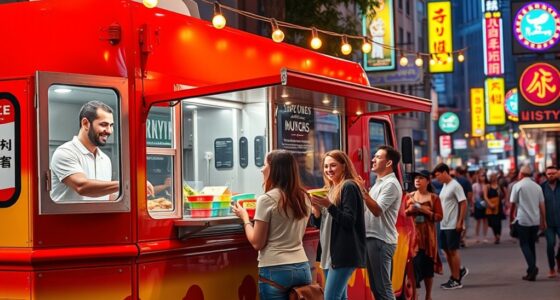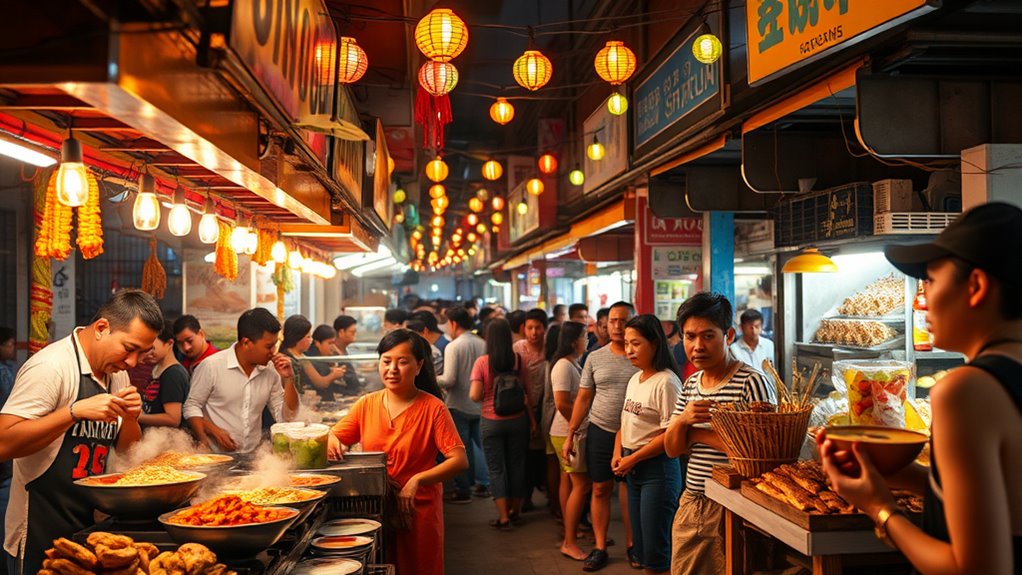
Street food culture around the world is a colorful showcase of local traditions and flavors. As you explore, you’ll discover bustling markets and vibrant festivals that highlight diverse cuisines, from tacos in Mexico to sushi in Japan. Street vendors and food trucks serve as social hubs, offering authentic experiences. Although safety varies, most events follow strict health standards, so you can enjoy the rich culinary scene with confidence. Keep exploring to uncover more about these lively food cultures.
Key Takeaways
- Street food reflects diverse culinary traditions and cultural identities worldwide.
- Food truck festivals showcase multicultural cuisines, fostering community and cultural exchange.
- Regional standards and local practices influence street food safety and hygiene levels globally.
- Street food markets serve as vibrant social hubs, connecting people through shared culinary experiences.
- Personal vigilance and awareness of hygiene practices are essential for safe street food enjoyment worldwide.
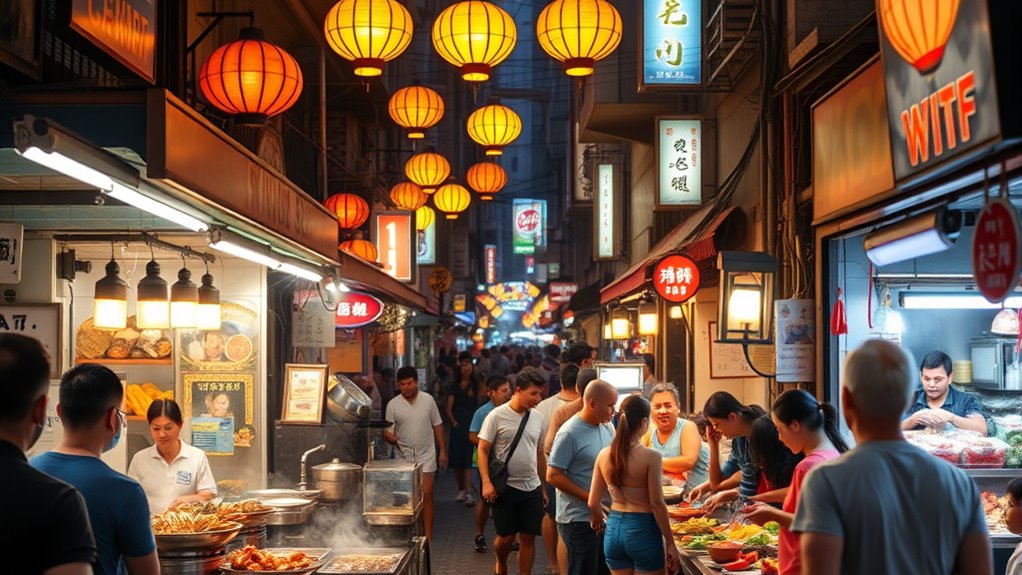
Street food is a vibrant and vital part of urban life across the globe, offering a glimpse into local cultures and culinary traditions. When you explore different cities, you’ll notice how street vendors and food trucks serve as communal hubs where locals and visitors alike gather to enjoy authentic flavors. Food truck festivals, in particular, have gained popularity as lively events showcasing diverse cuisines in one place. These festivals create a festive atmosphere, drawing crowds enthusiastic to sample everything from tacos to gourmet burgers. Attending such events gives you the chance to experience the local food scene in a condensed, energetic setting. However, with the surge of street food options, street food safety becomes a fundamental concern. It’s important that you pay attention to hygiene standards, such as the vendor’s cleanliness, food handling practices, and the freshness of ingredients. When you choose a vendor, look for those with a good reputation, visible food safety practices, and proper food storage methods. This guarantees that your culinary adventure remains enjoyable without risking health issues.
As you wander through bustling markets or line up at food trucks, remember that street food safety isn’t just about hygiene; it’s also about understanding the environment in which your food is prepared. Vendors who maintain clean utensils, use gloves, and cook food at the right temperatures are more likely to serve safe, delicious meals. During food truck festivals, you’ll notice that organizers often enforce health regulations to guarantee a secure experience for everyone. These events typically have health inspections and designated areas for food preparation, which helps protect you from potential foodborne illnesses. Your role is to stay vigilant: avoid food that looks questionable, and trust your instincts when something seems off. If a vendor’s setup appears untidy or if the food smells strange, it’s better to skip that option. Additionally, understanding food safety standards in different regions can help you make more informed choices and enjoy street food with confidence.
In many countries, street food safety standards are strict, and vendors are regularly inspected, but it’s always wise to stay cautious. When you’re at a festival or browsing street stalls, observe how vendors handle their food. Proper temperature control, clean surfaces, and personal hygiene are good signs that your food is safe. Remember, street food is about embracing local culture, so don’t hesitate to ask questions about ingredients or preparation methods if you’re unsure. By staying informed and attentive, you can enjoy the vibrant flavors of street food around the world while keeping your health a priority. Ultimately, street food offers an immersive experience, blending taste, tradition, and community—just make sure that safety is part of your adventure.
Frequently Asked Questions
How Do Street Food Vendors Ensure Food Safety?
You guarantee food safety by strictly following food safety regulations and maintaining high vendor hygiene practices. You wash your hands frequently, keep your workspace clean, and store ingredients properly to prevent contamination. Using fresh, quality ingredients and cooking food thoroughly also helps. Regularly sanitizing utensils and surfaces, wearing clean clothing, and avoiding cross-contamination are essential. These steps protect customers and uphold your reputation as a responsible street food vendor.
What Is the History Behind Popular Street Foods?
You might find that popular street foods have rich food origins, often dating back centuries, showcasing a culinary evolution shaped by local ingredients and traditions. For example, tacos in Mexico or falafel in the Middle East reflect centuries of cultural blending and adaptation. By exploring these foods, you get a taste of history, understanding how communities have preserved their culinary heritage while innovating to meet modern tastes.
Are Street Foods Affordable for Locals and Tourists?
It’s a funny coincidence that street foods are often surprisingly affordable for both locals and tourists. You’ll find that pricing accessibility and cultural affordability make street foods an ideal way to experience local flavors without breaking the bank. Whether you’re grabbing a quick snack or a full meal, the prices are usually budget-friendly, allowing everyone to enjoy authentic cuisine while immersing themselves in the vibrant culture around you.
How Do Street Food Cultures Influence Local Traditions?
You see that street food cultures shape local traditions by strengthening cultural identity and inspiring culinary innovation. When you partake in street food, you connect with community stories and heritage, preserving age-old recipes. Street vendors often experiment with flavors, blending tradition with creativity. This dynamic environment encourages locals and tourists alike to appreciate and carry forward cultural values through food, making it an essential part of a community’s unique identity.
What Challenges Do Street Food Vendors Face Globally?
You face numerous challenges as a street food vendor worldwide. Regulatory hurdles often catch you off guard, making it hard to stay compliant and operate smoothly. Cultural perceptions can also be tricky—some communities might not fully appreciate street food’s value, impacting your business. You constantly adapt, balancing tradition with changing rules, hoping your passion for authentic flavors shines through despite these obstacles.
Conclusion
As you explore street food around the world, you discover a vibrant tapestry of flavors, stories, and traditions shaping communities. From bustling night markets to timeless food stalls, each bite connects you to a culture’s soul—like reading an ancient scroll of flavors. Embrace the adventure, and remember, in this global feast, every street corner is a portal to a new culinary world waiting to be savored. Bon appétit!