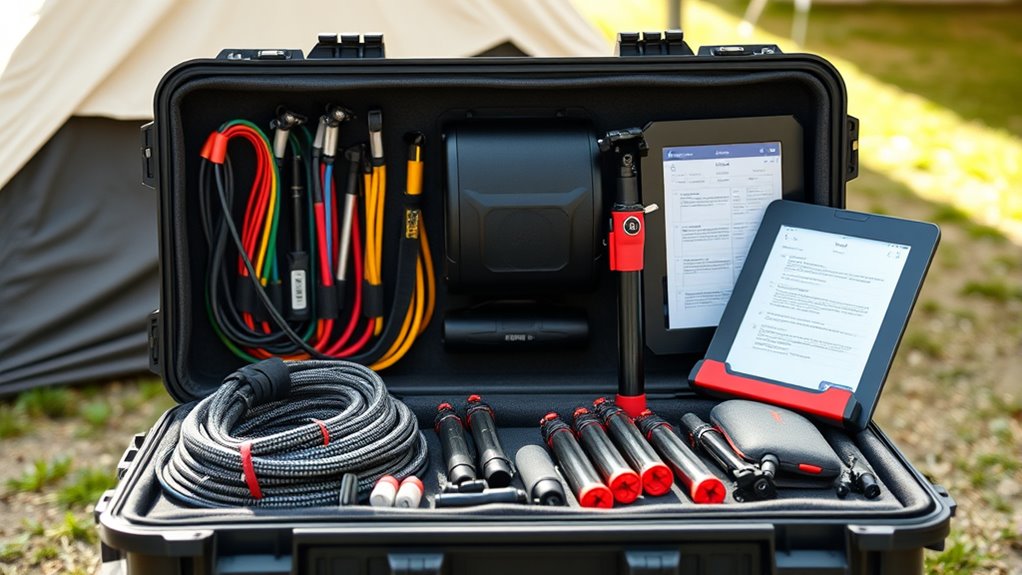

To guarantee your mobile event runs smoothly, create a thorough packing and equipment checklist covering safety gear, signage, technical tools, promotional materials, and personal items. Confirm vehicle availability and transport schedules ahead of time, and double-check everything like first aid kits, security badges, and communication devices. Planning and organizing these details prevent last-minute issues and help your team stay prepared. Keep exploring further to discover detailed strategies for seamless event setup and security.
Key Takeaways
- Create a comprehensive master checklist covering technical gear, signage, safety equipment, and personal items, and regularly cross-check it.
- Include transportation essentials such as vehicle safety features, route plans, and backup options in your packing list.
- Prepare security equipment like barriers, badges, radios, and emergency kits, ensuring all are functional and accessible.
- Brief staff on roles, emergency protocols, and communication devices to ensure coordinated response during the event.
- Incorporate outdoor-specific items like weather gear, scenic signage, and natural environment considerations into your packing plan.

Planning a successful mobile event requires careful preparation, and having detailed packing and equipment checklists is vital to guarantee nothing gets overlooked. When you’re managing a mobile event, every detail counts—especially in areas like event security and transportation logistics. Making sure that your security measures are in place and transportation runs smoothly can make or break the event’s success. That’s why creating detailed checklists helps you stay organized and reduces the risk of missing essential items or steps.
Start by focusing on event security. You’ll want to include all necessary safety gear, such as barriers, signage, and security badges. Confirm that you have enough personnel assigned to different zones and that they’re briefed on their roles. Don’t forget portable communication devices—walkie-talkies or radios—so your team can stay connected throughout the event. A well-prepared security plan also involves emergency protocols, first aid kits, and crowd control supplies. Double-check that all security equipment is functional and accessible. Having a printed or digital copy of your security plan ensures everyone is on the same page and prepared for any situation.
Prioritize security with safety gear, personnel briefing, communication devices, and emergency protocols for a safe event.
Next, pay close attention to transportation logistics. Your checklist should cover the transportation of all equipment, supplies, and personnel. This involves confirming vehicle availability, routes, and parking arrangements at the venue. You’ll want to coordinate with drivers beforehand to ensure they’re familiar with drop-off and pick-up points, especially if the location is tricky or has limited access. Packing a detailed schedule for transportation helps prevent delays, and including backup plans for unforeseen issues like traffic or vehicle breakdowns keeps things running smoothly. Make sure all transport vehicles are inspected and equipped with necessary safety features, such as first aid kits, fire extinguishers, and GPS tracking. Proper transportation logistics minimize downtime and ensure your team can set up and break down efficiently. Incorporating knowledge of scenic views and natural beauty from outdoor settings can also inspire your logistical planning to better accommodate outdoor elements.
Throughout your planning, cross-check your packing list against your equipment list regularly. This helps you catch missing items early and avoid last-minute scrambling. Consider creating a master list that includes everything from technical gear, tools, signage, and promotional materials to personal items for staff. When it comes to event security and transportation, being meticulous with your checklists means you’re prepared for any scenario, safeguarding your event’s success. A well-organized approach not only keeps your team focused but also reassures attendees that everything is under control. Ultimately, thorough planning through detailed checklists enables you to execute your mobile event seamlessly and confidently.
Frequently Asked Questions
How Do I Customize Checklists for Different Event Types?
You customize checklists for different event types using digital tools and checklist templates. Start by selecting a versatile template and tailoring it to suit your specific event needs. Add or remove items based on the event’s requirements, and use digital tools to easily update and share your checklist. This approach guarantees you cover all essentials and adapt quickly for various event types, saving time and reducing errors.
What Are Common Mistakes in Packing for Mobile Events?
Imagine arriving for event setup, only to realize you forgot essential tools—it’s a common mistake. You might overlook staff coordination, leading to chaos or delays. Packing too much or too little causes issues, just like forgetting power supplies or misplacing crucial equipment. Stay organized by double-checking your checklist, ensuring all gear and staff roles are clear. This prevents setbacks, helping your mobile event run smoothly and efficiently from start to finish.
How to Ensure Equipment Safety During Transit?
To guarantee equipment safety during transit, you should focus on vehicle security and packing efficiency. Secure all items with proper padding and tie-downs to prevent shifting, and use locked containers or compartments to deter theft. Plan your packing for quick access to essential gear, minimizing movement. Regularly inspect your vehicle’s locks and security systems, and drive carefully to avoid sudden jolts. This keeps your equipment safe and ready for your event.
What Emergency Supplies Should Be Included in the Checklist?
You should include emergency supplies like first aid kits, flashlights, batteries, fire extinguishers, and basic tools in your checklist. These essentials support emergency preparedness and help you follow safety protocols during unexpected situations. Always guarantee supplies are readily accessible and in good condition. Regularly check and replenish items to maintain readiness, so you’re prepared to handle injuries, power outages, or fire emergencies efficiently and safely during your mobile event.
How Often Should Equipment Maintenance Be Performed?
You should perform equipment maintenance regularly, ideally after each event, to catch issues early. Preventive maintenance and routine equipment inspections help guarantee everything runs smoothly and reduces breakdown risks. Schedule thorough inspections weekly or bi-weekly, depending on usage. Coincidentally, staying proactive prevents costly repairs. By adhering to a consistent maintenance schedule, you keep your gear in top shape, ensuring reliable performance during every mobile event and avoiding unexpected setbacks.
Conclusion
Remember, a prepared event is a successful event. Use your checklists to stay organized and avoid last-minute surprises. Double-check everything before you hit the road, and trust your planning process. As the saying goes, “Failing to plan is planning to fail.” With thorough preparation, you’ll guarantee your mobile event runs smoothly, leaving attendees impressed and stress levels low. Stay vigilant, stay organized, and enjoy the journey!