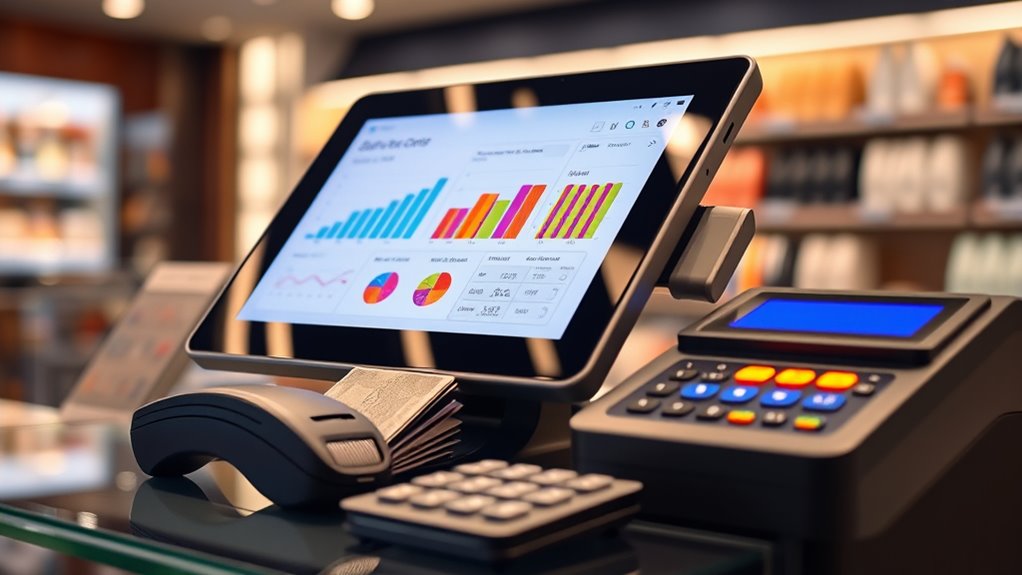

To understand ROI on POS systems and tech, focus on how they boost sales, improve inventory accuracy, and enhance customer engagement. Track metrics like repeat visits, transaction sizes, and customer satisfaction scores. Calculate cost savings from reduced manual work and inventory errors. When your POS tech helps increase profits and efficiency, you see clear returns. Keep exploring how these tools can maximize your business’s potential and turn your investment into measurable growth.

Get kitchen staples and gadgets delivered free with Prime
- Fast, free delivery on millions of items
- Prime Video, Amazon Music and more included
- Member-only deals all year
Key Takeaways
- ROI is measurable through increased sales, customer loyalty, and improved operational efficiency after POS system upgrades.
- Enhanced data collection enables personalized marketing, boosting customer engagement and repeat business.
- Real-time inventory management reduces stock errors, waste, and stockouts, leading to cost savings.
- Automating manual tasks with advanced POS reduces labor costs and minimizes errors, improving profitability.
- Tracking key metrics like transaction size, customer satisfaction, and inventory accuracy helps evaluate POS investment success.
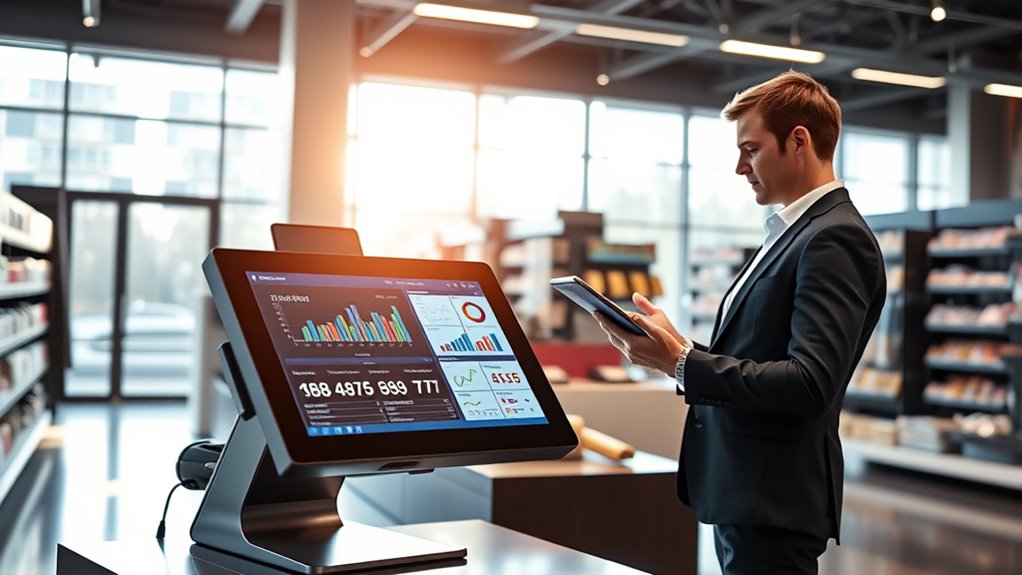
Investing in point-of-sale (POS) systems and technology can substantially boost your business, but understanding the return on investment (ROI) is crucial before making any upgrades. When you implement new POS tools, you’re not just upgrading hardware or software; you’re enhancing how you interact with customers and manage your inventory. These improvements can lead to increased sales, better customer loyalty, and streamlined operations—if you understand how to measure their impact accurately.
One of the biggest ways POS technology influences your business is through customer engagement. Modern POS systems allow you to gather detailed data on customer preferences, purchase history, and shopping habits. This information enables you to personalize the shopping experience, send targeted promotions, and create loyalty programs that resonate with your audience. When customers feel valued and understood, they tend to return more often and spend more per visit. Consequently, the ROI on POS upgrades becomes clear when you track metrics like repeat customer rates, average transaction size, and customer satisfaction scores. The more effectively your POS system helps you foster customer loyalty, the higher your return on that investment.
Modern POS systems enhance customer engagement through personalized data, boosting loyalty and increasing sales.
Inventory management is another critical factor affected by POS technology. Advanced POS systems sync seamlessly with your inventory, providing real-time updates on stock levels, sales trends, and reorder points. This synchronization reduces stockouts and overstock situations, saving you money and freeing up cash flow. Better inventory management also means you can respond swiftly to demand fluctuations, introduce new products efficiently, and minimize waste. When you analyze the ROI, consider how much time and money you save on manual stock counts and how often you avoid lost sales due to inventory errors. Health benefits from improved inventory accuracy can also contribute to a healthier bottom line. The improved accuracy and efficiency translate directly into increased profitability.
POS system with inventory management
As an affiliate, we earn on qualifying purchases.
As an affiliate, we earn on qualifying purchases.
Frequently Asked Questions
How Long Does It Typically Take to See ROI From POS Investments?
You can typically see ROI from POS investments within 6 to 12 months, depending on your payback period and how effectively you implement the system. Your investment timeline varies based on factors like increased sales, improved efficiency, and reduced errors. By tracking these metrics closely and optimizing your processes, you’ll be able to gauge the payback period more accurately and guarantee you’re maximizing your POS system’s value quickly.
What Hidden Costs Should I Consider When Calculating POS ROI?
Think of hidden costs as shadows lurking behind your POS investment. You should contemplate hidden expenses like ongoing maintenance costs, software updates, and potential hardware replacements that can sneak up unexpectedly. These hidden expenses can eat into your ROI if unaccounted for. Keep a close eye on maintenance costs and long-term upgrades to ensure your POS system remains a profitable partner rather than a hidden drain on your resources.
How Do Different Business Sizes Impact POS ROI?
Your business size influences POS ROI because larger businesses face scalability challenges that can increase costs and complicate upgrades. Smaller businesses may see quicker returns but might struggle with limited features. Additionally, vendor support is vital; you need reliable support to minimize downtime and help scale efficiently. Knowing these factors helps you choose a POS system aligned with your growth stage, maximizing ROI and ensuring smooth operations as your business evolves.
Can POS Systems Improve Customer Satisfaction Directly?
Imagine your POS system as a magic wand, instantly pleasing customers, right? Well, it can improve satisfaction directly by streamlining checkouts and reducing errors. You just need to listen to customer feedback and invest in staff training. When your team masters the tech, transactions become smoother, and clients leave happier. So yes, a well-implemented POS system can elevate customer experience, making everyone’s day a little brighter—and more profitable.
What Features Most Influence ROI in POS Technology?
The most influential features on ROI in POS technology include inventory management and employee scheduling. When you optimize inventory management, you reduce waste and stock shortages, boosting profitability. Efficient employee scheduling minimizes labor costs and ensures proper coverage during busy times. By investing in POS systems with these features, you streamline operations, improve service, and increase your overall return on investment.
customer engagement POS software
As an affiliate, we earn on qualifying purchases.
As an affiliate, we earn on qualifying purchases.
Conclusion
By now, you see how investing in POS systems and tech can truly boost your business’s bottom line. Think of it as your modern-day Excalibur—an essential tool that, when wielded wisely, transforms your operations. Don’t let past tech pitfalls hold you back; embrace innovation with confidence. Remember, ROI isn’t just a number, but a proof to smart decisions. So, go ahead—seize the moment and let your tech turn your business into a legend.
As an affiliate, we earn on qualifying purchases.
As an affiliate, we earn on qualifying purchases.
NFL season / tailgating Picks
team gear
As an affiliate, we earn on qualifying purchases.