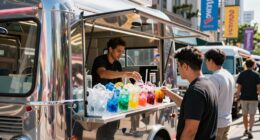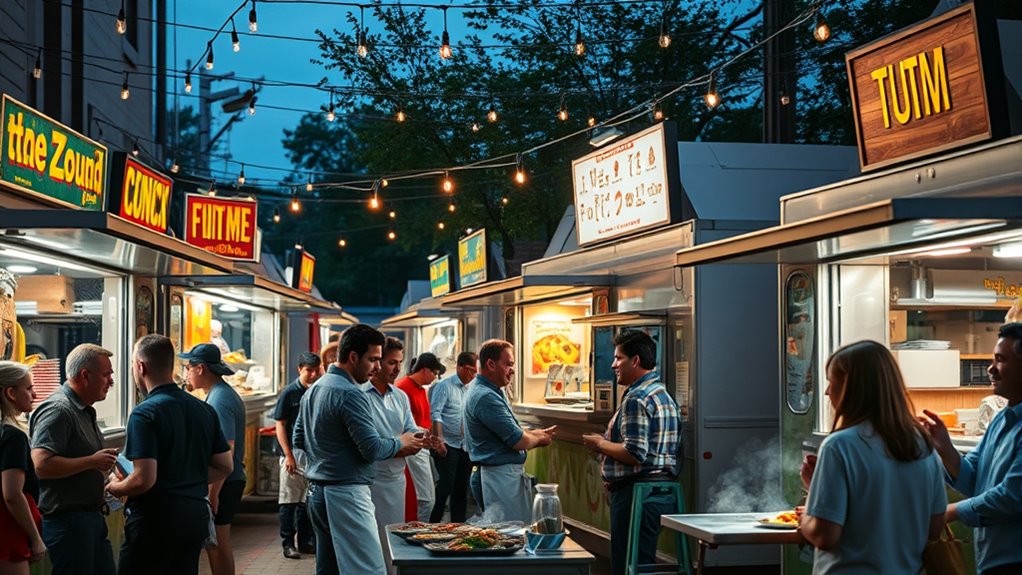

Sharing resources and knowledge among food trucks helps you cut costs, improve inventory management, and boost your marketing efforts. By collaborating with others, you can pool supplies, share tips tailored to your needs, and learn from each other’s successes and mistakes. This teamwork creates a stronger community, sparks innovation, and helps you adapt quickly to market trends. Keep exploring how these strategies can transform your food truck operations and set you apart in a competitive scene.
Key Takeaways
- Food trucks can pool resources like storage and supplies to reduce costs and improve inventory management.
- Sharing marketing strategies and promotional ideas increases visibility and attracts more customers.
- Collaborating on purchasing schedules helps prevent shortages and minimizes waste.
- Exchanging customer feedback and sales data guides menu improvements and promotional efforts.
- Building a community through resource sharing fosters innovation, resilience, and continuous operational improvement.
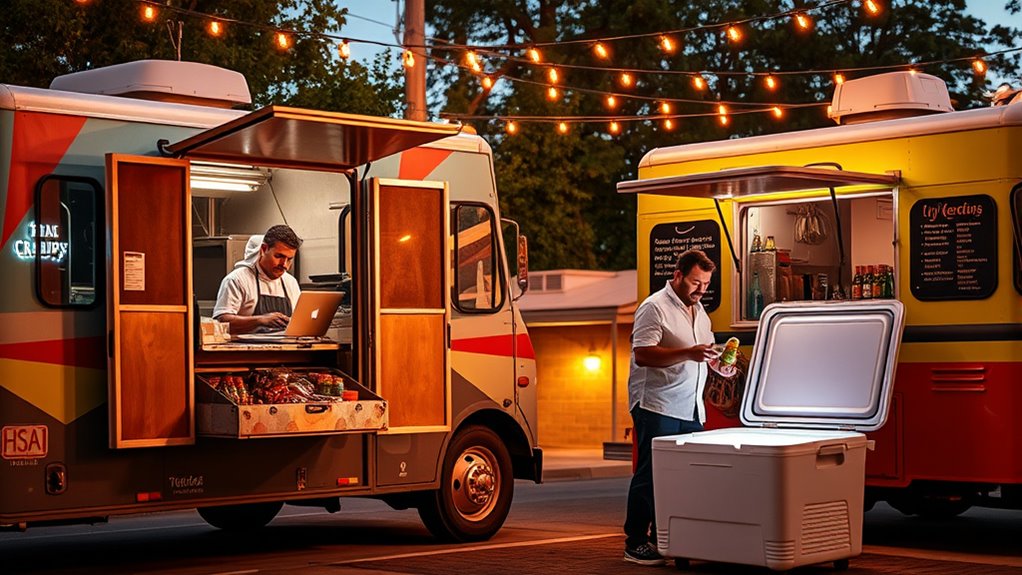
Food trucks often face unique challenges, but by sharing resources and knowledge, they can thrive together. One of the biggest hurdles is managing inventory effectively. Without proper inventory management, you risk running out of popular ingredients or wasting excess stock, which eats into your profits. When food trucks collaborate, they can pool their resources to streamline inventory processes. For instance, sharing storage space for non-perishable items or coordinating purchasing schedules helps reduce costs and prevent shortages. You might also exchange tips on tracking inventory levels or using software tools that make inventory management more efficient. By learning from each other’s experiences, you can avoid common pitfalls and develop systems tailored to your specific needs. Additionally, understanding the importance of drivetrain components can help in maintaining reliable transportation, ensuring your trucks stay on the road and operational at all times.
Marketing strategies are another critical area where collaboration can make a significant difference. The food truck scene is highly competitive, and standing out requires innovative approaches. When you share marketing ideas with fellow operators, you gain access to a wider range of tactics that can boost visibility. For example, you might organize joint promotions or participate in local events together, amplifying your reach. Social media can be a powerful tool, and pooling resources allows you to create more engaging content, run targeted ads, or launch collaborative campaigns that attract larger crowds. Sharing insights about what marketing channels work best in your area or which messaging resonates with customers can help you refine your own approach and improve your return on investment.
Beyond just sharing tactics, discussing customer feedback and sales data can also inform your marketing strategies. If one truck notices that a particular menu item or promotional event generates more buzz, you can adopt similar ideas. Conversely, by exchanging lessons learned from less successful efforts, you avoid repeating mistakes. Building a network of trusted food truck operators means you’re not operating in isolation; you’re creating a support system that encourages continuous improvement. This collective knowledge-sharing fosters innovation and helps each of you adapt quickly to changing customer preferences or market trends.
Frequently Asked Questions
How Do Food Trucks Ensure Sanitary Standards When Sharing Facilities?
You guarantee sanitary standards by following strict cleaning protocols and maintaining storage safety. Regularly sanitize shared equipment and surfaces to prevent contamination. Implement proper storage practices, like using sealed containers and labeling ingredients clearly, to avoid cross-contact. Keep all shared facilities clean, and monitor that everyone adheres to hygiene guidelines. This proactive approach helps protect customers and keeps everyone’s operations compliant with health regulations.
What Legal Considerations Exist for Resource Sharing Among Food Trucks?
Did you know that 60% of food truck disputes involve legal issues? When sharing resources, you need to ensure liability agreements to protect yourself from potential claims. Make sure to review licensing requirements for each vehicle involved, as they vary by location. These legal considerations help prevent disputes and ensure smooth collaborations, so always draft clear agreements and stay updated on local regulations before sharing resources with other food trucks.
How Do Food Trucks Coordinate Shared Marketing Efforts Effectively?
You coordinate shared marketing efforts by planning joint marketing campaigns and leveraging social media collaboration. You can create a unified brand message, share content, and promote each other’s events through cross-posting. Regular communication helps make certain everyone stays aligned, and using shared hashtags or promotional graphics boosts visibility. This approach maximizes reach, attracts more customers, and strengthens your food truck community, making your marketing efforts more effective and memorable.
What Are Common Challenges Faced When Sharing Equipment?
Sharing equipment can feel like juggling flaming torches, but the biggest challenges are equipment maintenance and scheduling conflicts. You might struggle to keep shared tools in top shape or find conflicting times for everyone to use the same items. These issues can lead to delays and frustration, making it vital to establish clear maintenance routines and transparent scheduling to keep things running smoothly and avoid chaos in your busy food truck life.
How Is Profit Shared Among Food Trucks Collaborating Closely?
You typically handle profit sharing among food trucks through a clear agreement on revenue sharing and profit distribution. You determine a fair split based on each truck’s contribution, such as sales volume or effort. You might use a percentage-based system or split profits equally. Regularly reviewing and adjusting the profit distribution guarantees transparency and fairness, helping maintain a strong collaboration and mutual trust among all participating food trucks.
Conclusion
By sharing resources and knowledge, you become the lighthouse guiding fellow food trucks through foggy nights and stormy markets. Your collaboration acts as the steady beam of light, illuminating new ideas and opportunities. Together, you create a vibrant tapestry, each truck a essential thread woven with experience and support. When you lift others, you forge a community that shines brighter than any single beacon, proving that unity is the true compass on your journey to success.