
Handling catering with a food truck gives you serious flexibility and efficiency. You can customize menus based on your event theme, dietary needs, or guest preferences, ensuring everyone gets what they want. The setup is simpler and more cost-effective since a small team can manage everything, from prep to service, without bulky equipment or large staff. Plus, the truck’s mobility lets you adapt to changing conditions easily. Keep exploring to find out how to make it seamless.
Key Takeaways
- Customize menus to match event themes, dietary needs, and guest preferences for a personalized experience.
- Simplify staffing with a small, dedicated team to manage food prep, service, and guest interaction efficiently.
- Leverage the truck’s mobility to strategically position for optimal guest access and minimize wait times.
- Adjust menu items and service flow in real-time based on guest feedback or inventory levels.
- Reduce costs and logistical complexity by eliminating large infrastructure and consolidating operations within the truck.

Handling catering services with a food truck offers a flexible and cost-effective way to serve delicious meals at any event. One of the biggest advantages is menu customization. Unlike traditional catering, where you’re often limited to preset options, a food truck allows you to tailor the menu to fit your specific event theme, dietary needs, or guest preferences. You can work directly with the truck owner or chef to design a selection of dishes that reflect your vision, whether it’s gourmet tacos, gourmet burgers, or vegan options. This personalized approach ensures your guests get exactly what they want, making the experience more memorable and satisfying. Plus, since food trucks are mobile, you can adapt the menu on the fly if needed, adding or removing items based on guest feedback or inventory availability.
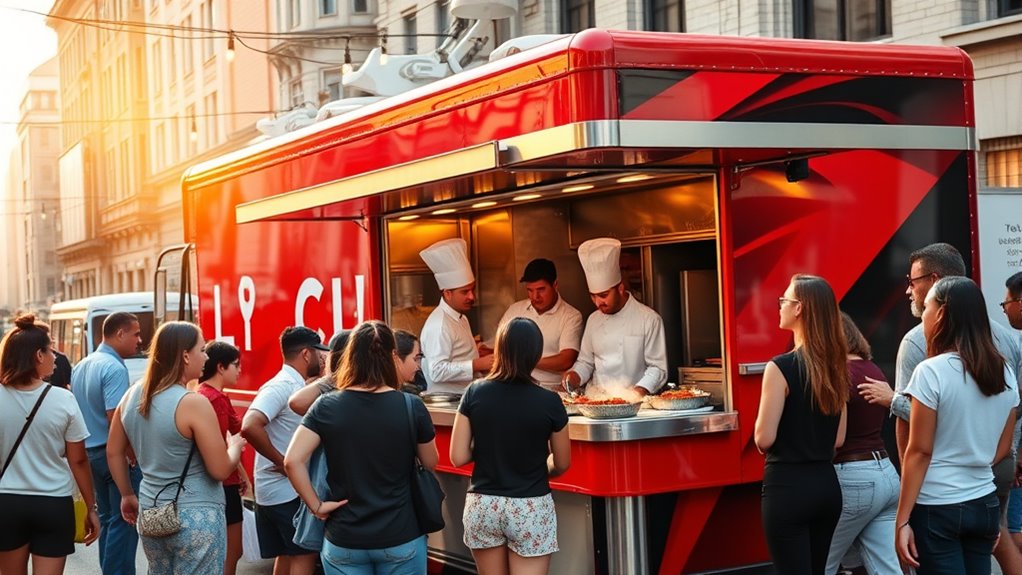
Another critical aspect to contemplate is staffing logistics. When you opt for a food truck, staffing becomes simpler compared to traditional catering setups. Instead of coordinating multiple servers, chefs, and waitstaff, the food truck typically operates with a small, dedicated team—often just a few cooks and servers. This reduces labor costs and simplifies management since everyone’s responsibilities are clear and confined to the truck’s limited space. You don’t need to worry about setting up separate stations or managing large staff rotations. Instead, the truck’s staff handles everything from food preparation to serving, allowing you to focus on other event details. Additionally, because the truck is self-contained, you won’t need to rent extra tables, tents, or stations to support a larger catering crew, which further cuts down on logistical complexity and costs.
With a food truck, you also gain more control over timing and flow. The truck’s mobility means it can be strategically positioned for ideal guest access, reducing wait times and crowding. This flexibility helps you manage staffing more efficiently, as staff can be assigned specific roles without the chaos of a traditional catering setup. Plus, since food trucks often operate on a first-come, first-served basis, you can easily adjust serving times or locations if your event schedule shifts. This adaptability is particularly beneficial for outdoor events or festivals where conditions or guest numbers might change unexpectedly. Additionally, ensuring the power requirements are met is essential for smooth operation, especially if the truck relies on electrical equipment.
Frequently Asked Questions
How Do I Secure Necessary Permits for Food Truck Catering?
To secure permits for food truck catering, you should start by researching local health departments and city regulations. Apply for a food service permit, mobile vendor license, and any necessary zoning approvals. Maintain your food truck with regular food truck maintenance to meet safety standards. Excellent customer service strategies will help you succeed. Always keep your permits up to date and guarantee your truck complies with all health and safety requirements.
What Are the Best Menu Options for Diverse Dietary Needs?
Think of your menu as a vibrant tapestry, woven with diverse dietary needs. You should offer customizable options like gluten-free wraps, vegan bowls, and low-carb salads, making each guest feel like the star of the show. Focus on dietary accommodations by clearly labeling dishes, providing alternatives, and asking guests about their preferences. This approach guarantees everyone finds something delicious, turning your food truck into a welcoming feast for all.
How Do I Manage Power and Water Supply During Events?
To manage power and water supply during events, you should plan for reliable power management by using generators and backup systems. Make certain water logistics are streamlined by bringing sufficient supplies and setting up proper water connections. Regularly monitor power usage and water levels to prevent shortages, and coordinate with event organizers to secure access points. This proactive approach helps maintain smooth operations and keeps your food truck running efficiently throughout the event.
What Insurance Coverage Is Required for Catering With a Food Truck?
You need liability insurance to protect against claims of injury or property damage during your catering events. Additionally, confirm your vehicle coverage includes comprehensive and collision insurance for your food truck. This way, you’re safeguarded against accidents and damages related to your truck’s operation. Having the right coverage not only complies with legal requirements but also gives you peace of mind to focus on delivering excellent service at every event.
How Can I Ensure Timely Delivery and Setup at Venues?
You can guarantee timely delivery and setup by carefully planning your event scheduling to allow ample prep time. Coordinate your staff effectively, assigning specific roles for delivery, setup, and service. Communicate clearly with venue coordinators to confirm access and timing. Use checklists to track progress and anticipate potential delays. Regularly update your team on schedules, and be flexible to adapt if unexpected issues arise, ensuring smooth, punctual catering service.
Conclusion
Handling catering with a food truck can boost your business and delight clients. Did you know that food trucks now make up nearly 50% of all mobile food service revenue? By offering personalized menus and quick service, you’ll stand out and meet the growing demand for convenient, quality catering. So, embrace the flexibility and fun of food trucks—you’re just a few steps away from becoming a go-to catering option for any event.