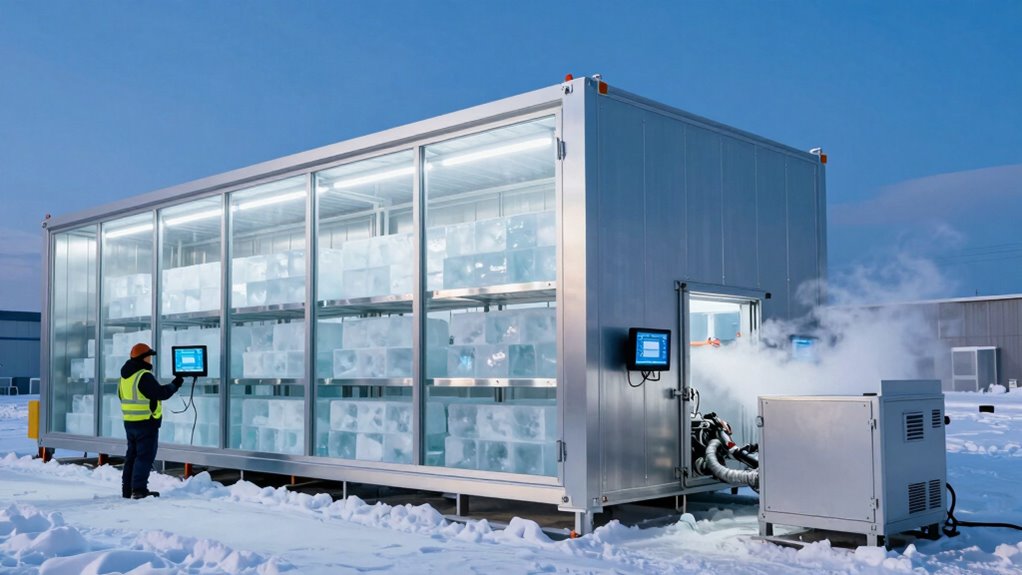
To stop emergency ice runs, analyze your current usage and storage levels regularly, then set clear inventory targets to prevent shortages. Develop a flexible delivery schedule that adapts to demand spikes and maintain strong relationships with reliable suppliers. Use real-time monitoring tools to track supplies and respond swiftly to fluctuations. Planning for unexpected demand and continuous improvements will help you stay ahead. Keep exploring these strategies to build a smarter, more dependable ice management plan.
Key Takeaways
- Implement real-time storage monitoring with sensors and digital dashboards to detect low levels early and prevent shortages.
- Develop flexible delivery schedules based on demand forecasts and peak periods to ensure consistent ice supply.
- Strengthen supplier relationships and maintain open communication for quick updates and priority during high-demand times.
- Establish contingency plans, including stockpiling emergency supplies and backup suppliers, for rapid response to unexpected spikes.
- Regularly review and analyze consumption data to anticipate demand fluctuations and adjust inventory and procurement proactively.
How to Analyze Your Ice Usage and Supply Levels
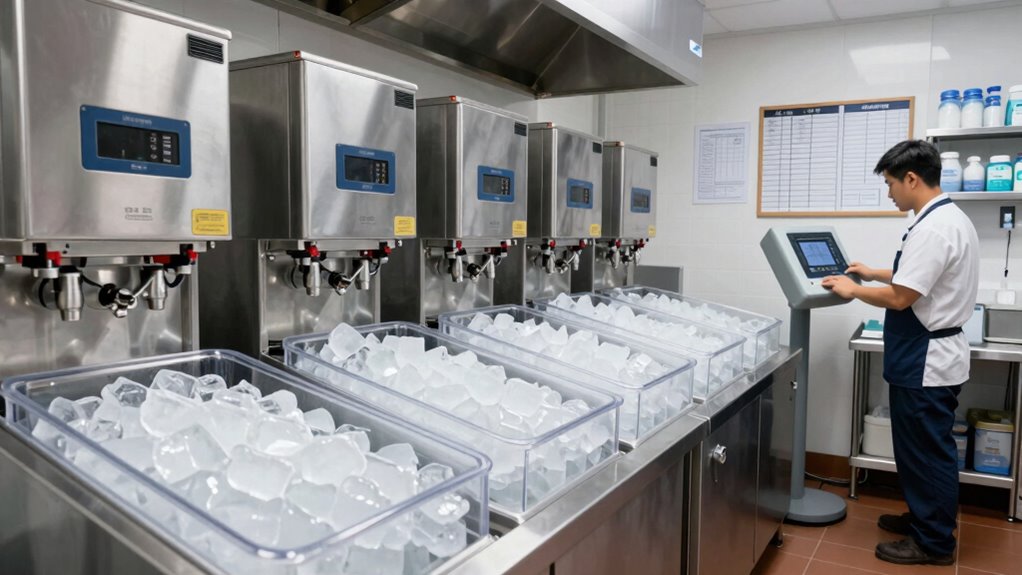
Understanding your ice usage and supply levels is essential for creating an effective emergency ice plan. Start by evaluating your current ice storage capacity and tracking how much ice you typically use daily or weekly. Usage forecasting helps you predict future needs based on past consumption patterns, seasonal fluctuations, and special events. Monitor your ice consumption carefully to identify trends and potential spikes. Keep detailed records of ice purchases, usage rates, and storage levels to spot patterns over time. This data allows you to anticipate shortages before they happen and adjust your supply strategies accordingly. Regularly reviewing your ice usage and supply levels ensures you stay prepared for unexpected disruptions, enabling you to maintain adequate ice reserves when emergencies strike. Incorporating inventory management techniques can further optimize your ice supplies and prevent shortages. Additionally, understanding the importance of seasonal fluctuations can help you plan for periods of increased or decreased demand, ensuring your supplies remain consistent year-round. Being aware of storage conditions is also crucial, as temperature and humidity can significantly impact ice preservation and quality. Paying attention to environmental factors that affect ice storage can help you extend the lifespan and quality of your supplies. Moreover, considering the performance and capacity of your ice supply solutions, such as portable or larger-scale equipment, can improve your overall emergency preparedness.
Set Inventory Targets to Prevent Ice Shortages
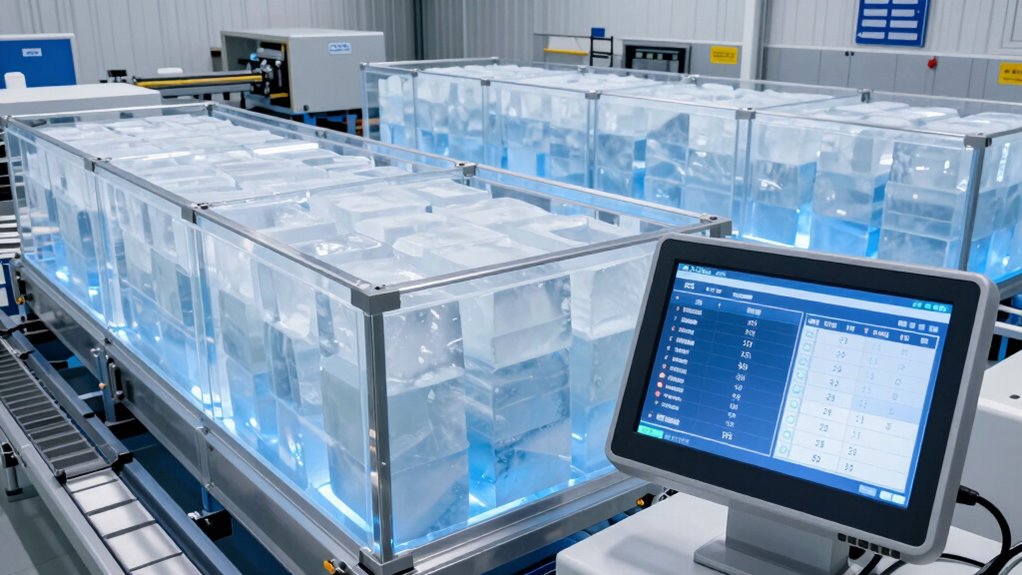
To prevent ice shortages during emergencies, you need to establish clear inventory targets that align with your usage patterns and potential disruptions. Start by analyzing your typical ice storage needs and adjust based on supply forecasting data. Setting specific targets ensures you maintain enough ice to handle sudden spikes in demand or supply chain interruptions. Regularly review and update these targets to reflect changing conditions, such as increased usage during peak periods or supply chain vulnerabilities. Properly calibrated inventory levels help avoid overstocking, which can lead to waste, and understocking, risking shortages. Incorporating storage capacity considerations is essential for designing an effective ice plan. By defining precise ice storage goals, you create a resilient plan that keeps your operations running smoothly even during crises. Additionally, understanding supply chain vulnerabilities helps you anticipate potential disruptions and adjust your inventory accordingly. This proactive approach minimizes emergency ice runs and guarantees reliable supply when it matters most, especially when considering inventory management strategies. Recognizing the importance of flexible planning can further enhance your ability to adapt to unforeseen circumstances and maintain consistent ice availability.
Develop a Flexible Ice Delivery Schedule That Fits Your Needs
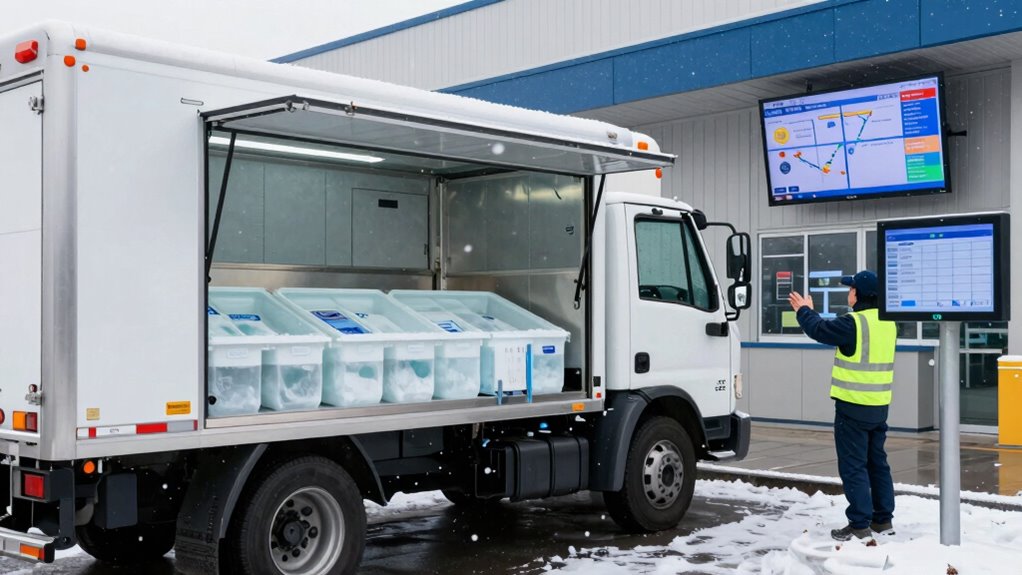
Once you’ve set your inventory targets, the next step is designing a delivery schedule that adapts to your fluctuating needs. A flexible schedule guarantees your ice storage stays stocked without overstocking or running out. Consider these strategies:
- Adjust delivery frequency based on demand patterns, ensuring high-usage periods get more frequent deliveries along optimized routes.
- Plan delivery routes that minimize travel time and fuel costs, while maintaining reliable ice supply.
- Use real-time monitoring of ice storage levels to make timely adjustments, preventing emergency runs.
- Incorporate demand forecasting and activity levels into your planning to better anticipate demand fluctuations and tailor your delivery schedule accordingly. Additionally, understanding seasonal or market trends can help refine your planning, avoiding unnecessary trips and ensuring your inventory remains sufficient during peak periods. Recognizing storage management techniques can further enhance your overall efficiency and reduce the risk of shortages.
Build Strong Relationships With Reliable Ice Suppliers

Building strong relationships with reliable ice suppliers guarantees you get consistent delivery schedules when you need them most. Keep open communication channels to quickly address any issues and stay informed about availability. These connections help you respond swiftly during emergencies and maintain a steady supply. Regularly reviewing your supply chain and understanding logistics operations can further prevent unexpected shortages. Additionally, understanding auditory processing can enhance communication clarity with your suppliers, ensuring smoother coordination. Developing an understanding of large number conversions can also assist in better managing inventory and forecasting needs during peak times. Staying informed about effective communication techniques can further improve negotiations and ongoing partnerships. Being aware of grocery savings strategies can help you optimize your procurement process and reduce costs during high-demand periods.
Consistent Delivery Schedules
Establishing consistent delivery schedules is essential for guaranteeing your ice supply remains reliable during emergencies. When you coordinate regular deliveries, you can better manage your ice storage and avoid shortages. Consistent schedules help you plan around delivery routes, reducing last-minute surprises. To optimize your ice plan:
- Schedule regular deliveries so you always have enough ice in storage, especially during peak times.
- Coordinate delivery routes with your supplier to ensure timely arrivals and avoid overlaps.
- Build strong relationships with your supplier to prioritize your needs during high-demand periods.
- Incorporate AI cybersecurity jobs to protect your supply chain data and ensure smooth, secure operations. Additionally, leveraging supply chain transparency can help you identify potential disruptions early and maintain a resilient ice supply chain.
Open Communication Channels
Maintaining open communication channels with your ice suppliers guarantees you stay informed about availability, potential delays, and special considerations during emergencies. Clear, direct communication helps you avoid communication barriers that can lead to misunderstandings or overlooked details. Regular check-ins and establishing reliable contact points reduce misinformation risks, ensuring everyone is on the same page. By building strong relationships, you create a foundation of trust that makes it easier to coordinate quickly when urgent needs arise. Encourage transparency from your suppliers about their capacity and any potential issues. This proactive approach minimizes surprises and guarantees your ice supply remains steady, even during crises. Open communication isn’t just about exchanging information—it’s about fostering a trusting partnership that supports your emergency planning goals. Incorporating effective filtration systems can further enhance your preparedness by ensuring the quality of your ice supply. Staying informed about supplier reliability through consistent communication helps you adapt to changing circumstances and maintain a resilient ice plan. Additionally, understanding the cultural beliefs surrounding astrology and beauty can influence perceptions of attractiveness, which may be relevant in customer-facing or promotional scenarios.
Use Monitoring Tools to Track Your Ice Supply in Real Time

Using monitoring tools to track your ice supply in real time allows you to respond swiftly to fluctuations and prevent shortages. These tools help you keep a close eye on ice storage levels, ensuring you’re aware of current stock and usage rates. By integrating real-time data, you improve supply forecasting accuracy, so you can anticipate needs before they become urgent.
Real-time monitoring ensures quick responses, prevents shortages, and keeps your ice supply steady and reliable.
Consider these key steps:
- Install sensors in your ice storage to monitor levels constantly.
- Use digital dashboards to visualize data and identify trends quickly.
- Set alerts for when ice levels drop below a critical point, prompting timely replenishment.
With these tools, you stay proactive, avoid last-minute emergency runs, and maintain a steady ice supply.
Plan for Unexpected Demand Spikes With a Contingency Strategy
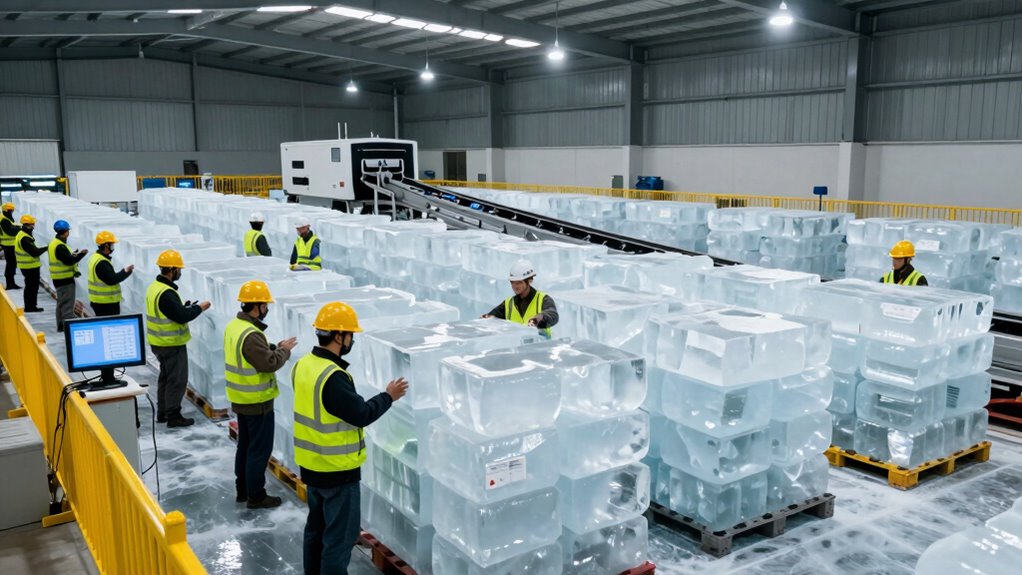
To handle sudden spikes in demand, you need a solid contingency plan. Stockpiling emergency supplies guarantees you’re prepared, while establishing rapid response teams helps you act quickly. Together, these strategies keep your operations running smoothly when demand unexpectedly surges.
Stockpile Emergency Supplies
Unexpected demand spikes can quickly overwhelm your ice supply, leaving you unprepared for sudden surges in customer needs or emergency situations. To stay ahead, you need to stockpile emergency supplies. This means maintaining extra ice in secure, well-organized ice storage, so you’re ready when demand spikes. It also involves managing your supply chain carefully, ensuring reliable vendors and backup sources. Consider these key steps:
- Keep a dedicated reserve of ice that’s easily accessible during high-demand periods.
- Establish relationships with alternative suppliers to prevent shortages.
- Regularly monitor your ice storage levels and adjust stockpiles based on seasonal or forecasted demand.
Having these contingency measures in place guarantees you won’t be caught off guard and can handle unexpected surges smoothly.
Establish Rapid Response Teams
When demand for ice suddenly spikes, having a dedicated Rapid Response Team (RRT) guarantees you can act swiftly and efficiently. This team is vital for managing unexpected demand surges, ensuring your ice storage remains sufficient during peak times. By establishing clear protocols, your RRT can quickly assess current inventory levels and coordinate with reliable suppliers to replenish stock without delay. Prioritizing supplier reliability helps prevent shortages that could lead to emergency ice runs. The team’s agility enables you to adapt plans on the fly, minimizing disruptions and avoiding costly last-minute orders. Regular training and communication ensure everyone understands their role, so when the need arises, your RRT can respond promptly, maintaining a continuous supply of ice and keeping operations running smoothly.
Track Your Results and Continuously Improve Your Ice Plan
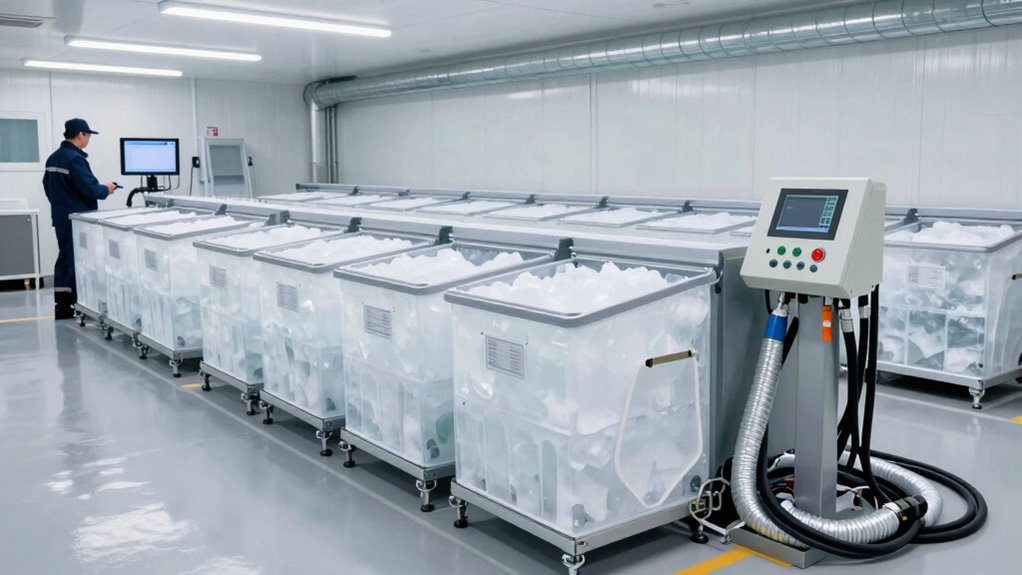
Tracking your results is essential to understanding what’s working and what needs adjustment in your ice plan. By regularly reviewing data, you can identify areas for improvement and guarantee your team stays prepared. Focus on these key actions:
Regularly review data to improve your ice plan and keep your team prepared.
- Collect customer feedback to gauge satisfaction and identify recurring issues.
- Monitor staff training progress to ensure everyone is confident and knowledgeable.
- Analyze response times and ice availability during peak periods to spot patterns and bottlenecks.
Consistently tracking these metrics helps you refine your approach and adapt proactively. Use feedback and performance data to make informed decisions, fostering continuous improvement. This iterative process keeps your ice plan effective, reducing emergency runs and keeping your operations smooth.
Avoid Emergency Ice Runs by Staying Ahead of Demand
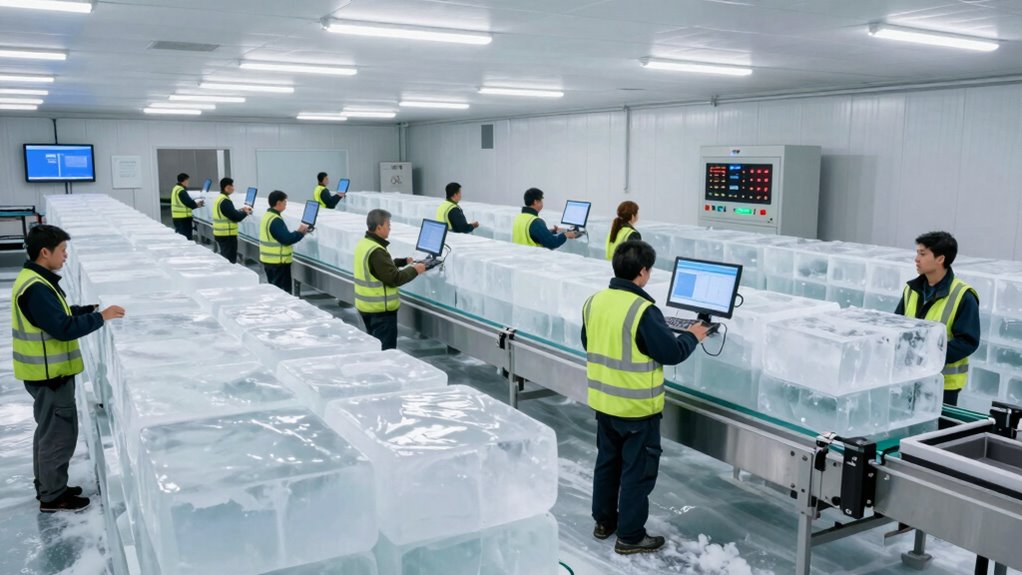
Building on your efforts to monitor and improve your ice plan, staying ahead of demand can prevent emergency runs before they happen. Proper demand forecasting helps you anticipate peak times and adjust your ice storage accordingly. By analyzing past consumption patterns, you can accurately predict when you’ll need more ice, reducing the risk of shortages. Keep an eye on factors like weather, events, or busy seasons that impact demand. Regularly review your ice storage levels and adapt your procurement schedule to match these forecasts. This proactive approach ensures you always have enough ice on hand, avoiding last-minute emergency runs. Staying ahead of demand not only saves time and money but also keeps your operations running smoothly and efficiently.
Frequently Asked Questions
How Often Should I Review and Update My Ice Plan?
You should review and update your ice plan at least quarterly, especially focusing on ice storage and delivery scheduling. Regular checks guarantee your storage conditions remain ideal and deliveries stay on time, preventing emergency ice runs. Adjustments might be needed after seasonal changes or supply disruptions. By staying proactive, you keep your ice supply dependable, streamline delivery schedules, and avoid costly emergencies. Monthly reviews are even better if your operations are high-volume or fluctuating.
What Are the Common Signs of an Impending Ice Shortage?
You’ll notice signs of an impending ice shortage through declining ice storage levels, especially if they drop below your usual safety threshold. Keep an eye on supply forecasting reports and monitor usage patterns closely. If demand increases unexpectedly or weather conditions change, these are clear signals to adjust your ice supply in advance, preventing shortages and emergency runs. Regularly reviewing your supply data helps you stay ahead of potential issues.
How Can Technology Improve My Ice Inventory Management?
Technology can greatly improve your ice inventory management by automating inventory tracking and optimizing ice storage. Using sensors and digital systems, you get real-time data on ice levels, reducing waste and preventing shortages. This allows you to monitor your ice supply efficiently, predict needs accurately, and streamline restocking processes. Implementing these tools keeps your ice storage organized, guarantees availability, and minimizes emergency ice runs, saving time and costs.
What Costs Are Associated With Implementing a Smarter Ice Plan?
Getting a clear picture of costs helps you avoid surprises down the line. You’ll need to take into account expenses for technology upgrades, such as inventory tracking systems, and staff training. Conducting a thorough cost analysis ensures you understand initial investments and ongoing maintenance. While there’s an upfront price, the long-term savings from fewer emergency runs and better stock control make it worthwhile, turning a potential money pit into a smart investment.
How Do Seasonal Changes Affect Ice Demand and Planning?
Seasonal changes substantially impact ice demand and planning. You need to monitor climate patterns and rely on accurate weather forecasts to anticipate fluctuations. During colder months, demand increases, so you prepare more ice in advance. Conversely, warmer periods reduce need, allowing you to scale back. By staying updated on weather trends, you can optimize your ice production, reduce waste, and guarantee you meet customer needs efficiently throughout the seasons.
Conclusion
By following these steps, you’ll keep your ice supply steady like a well-oiled machine, avoiding those stressful emergency runs. Staying proactive and adapting your plan guarantees you’re always prepared, no matter the demand. Think of your ice supply as a garden—you need to tend to it regularly to see it flourish. With a smart plan in place, you’ll keep things cool and smooth, no surprises needed.