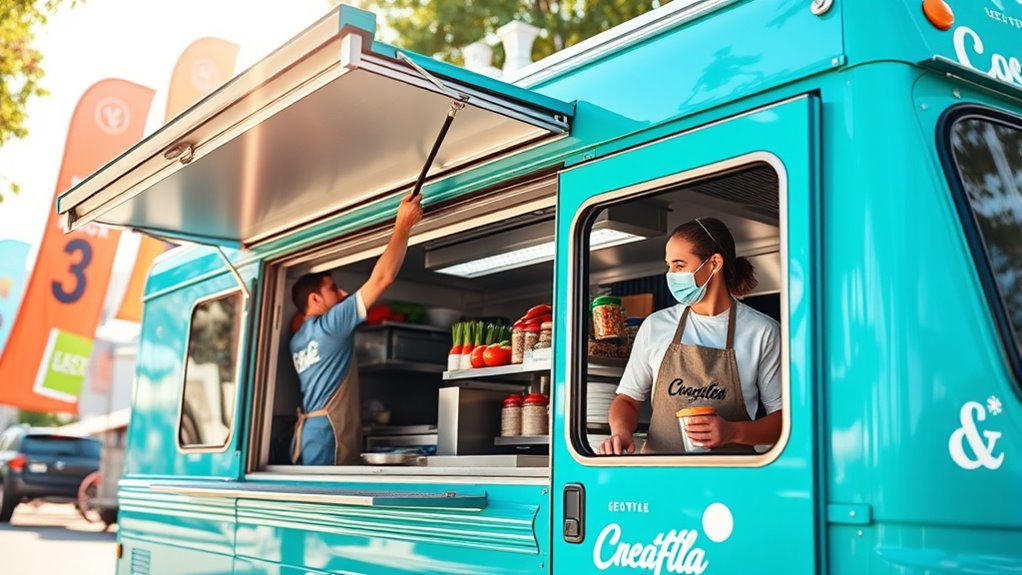

To maintain your food truck inside and out, you should regularly schedule engine check-ups, top off fluids, and listen for odd noises to prevent costly repairs. Keep the exterior clean, address paint chips, and make touch-ups to protect against rust. Daily cleaning of the interior and exterior also helps prevent corrosion and ensures food safety. Monitoring systems and equipment ensures everything runs smoothly. Continue exploring how detailed upkeep can save you time and money long-term.
Key Takeaways
- Schedule regular engine check-ups and fluid top-offs to prevent breakdowns and prolong engine lifespan.
- Perform routine exterior wash and timely paint touch-ups to prevent rust and maintain a professional appearance.
- Clean and sanitize the interior daily, inspecting equipment and surfaces to ensure food safety and equipment longevity.
- Monitor electrical and plumbing systems, addressing issues early to avoid system failures and safety hazards.
- Keep detailed maintenance records and follow a scheduled plan for inspections, repairs, and touch-ups to ensure consistent performance.
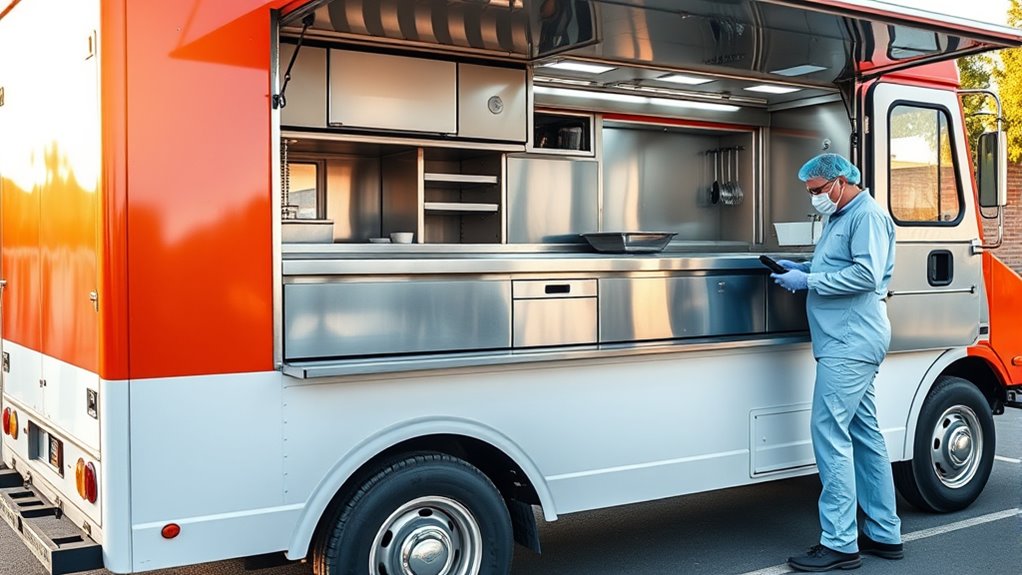
Ever wondered how to keep your food truck running smoothly? The key lies in regular maintenance that covers both the engine and the exterior. One of the most critical aspects is engine repair. Your engine is the heart of your food truck, and neglecting it can lead to costly breakdowns or even complete failure. To prevent that, you should schedule routine engine check-ups, ensure fluids are topped off, and listen for any unusual noises during operation. If you notice anything off—like sputtering, strange vibrations, or a drop in power—don’t delay in getting it inspected by a mechanic. Addressing engine issues early can save you from more expensive repairs down the road and keep your truck on the road longer.
Beyond the engine, paying attention to the truck’s exterior is just as important. The paint on your food truck isn’t just about looks; it’s also a protective layer against rust, weather damage, and general wear and tear. Regular paint touch-ups can prevent chips and scratches from turning into bigger problems. If you spot any peeling or fading paint, touch it up promptly to maintain a professional appearance and extend the lifespan of your truck’s body. Not only does this keep your food truck looking sharp and inviting, but it also helps retain its value. Plus, a well-maintained exterior can draw more customers, as a clean and vibrant appearance signals quality and care.
Cleaning your food truck daily is another simple but effective maintenance step. A clean exterior and interior help prevent corrosion and keep kitchen equipment in top shape. Make it a habit to wash off grease, dirt, and debris, especially after busy service days. Inside, keep appliances and surfaces sanitized to ensure food safety and smooth operation. Regular inspections of the plumbing, electrical systems, and cooking equipment can prevent emergencies and prolong their working life. Also, check tire pressure and brakes frequently. Well-maintained tires improve safety and fuel efficiency, saving you money over time. Staying aware of potential AI vulnerabilities can also help you anticipate and address any unexpected issues that might arise with your equipment or systems.
Finally, don’t forget to keep an organized maintenance schedule. Record all inspections, repairs, and touch-ups to stay on top of what’s been done and what’s upcoming. Staying proactive with your maintenance routine means fewer surprises and more reliable service. When you combine diligent engine repairs, timely paint touch-ups, and routine cleaning, you create a resilient, attractive, and dependable food truck that will serve your business well for years to come.
Frequently Asked Questions
How Often Should I Schedule Professional Inspections for My Food Truck?
You should schedule professional inspections for your food truck at least once every six months. Regular fleet maintenance and safety inspections help catch potential issues early, ensuring your truck runs smoothly and stays compliant with health and safety standards. If you operate in a high-traffic or demanding environment, consider more frequent inspections, like quarterly. Staying proactive keeps your food truck reliable, safe, and ready for any situation.
What Are the Best Cleaning Products for Food Truck Interiors?
Think of your food truck’s interior as a shining star that needs gentle nurturing. You should use eco-friendly products like mild degreasers, disinfectants, and all-purpose cleaners that are safe for food prep areas. Establish consistent cleaning schedules—daily for surfaces and weekly for deeper cleans—to keep everything spotless. These eco-conscious choices not only protect your customers and environment but also guarantee your truck stays fresh and inviting every day.
How Can I Prevent Rust on the Truck’s Exterior?
To prevent rust on your food truck’s exterior, you should regularly perform exterior maintenance by washing and drying the surface thoroughly. Apply a rust prevention coating or paint designed for metal surfaces, and consider using a wax or sealant for extra protection. Keep an eye out for scratches or chips and fix them promptly. Consistent maintenance helps guard against moisture and corrosion, ensuring your truck stays in top condition longer.
What Maintenance Tasks Should I Perform Daily?
Start your day with a diligent daily check—clean, check, and calibrate. Perform preventative measures like inspecting for leaks, ensuring equipment functions properly, and confirming safety protocols are followed. Regularly wipe down surfaces, empty trash, and verify that fire extinguishers and alarms are in place. These routines help prevent problems, promote safety, and keep your truck running smoothly. Consistent care keeps your food truck clean, compliant, and ready for the road!
How Do I Handle Repairs During Busy Operation Hours?
During busy hours, handle repairs swiftly by prioritizing emergency repairs that directly impact customer safety. Keep a toolkit handy for quick fixes and communicate with your team to manage the situation efficiently. If a repair cannot be accomplished safely or quickly, temporarily close that section or redirect customers. Always guarantee safety measures are in place to protect everyone, and follow up with proper repairs as soon as possible to prevent future issues.
Conclusion
Keeping your food truck in top shape is like tending a garden—you must regularly water, prune, and care for it to see it flourish. I once overlooked a small leak, and it turned into a costly repair, teaching me the importance of daily maintenance. Just like a well-kept garden yields the best blooms, a clean, well-maintained truck attracts loyal customers and keeps your business thriving. Stay vigilant, and your food truck will serve up success for years to come.