
To set up your menu for success, focus on clear organization with strategic placement of high-margin and popular items. Use visual cues, appetizing descriptions, and pricing techniques to influence choices and boost sales. Regularly review sales data to refine your offerings, removing underperformers and highlighting specialties. Tailor your menu to your target audience, balancing visual appeal with profitability. Keep optimizing for a seamless customer experience—continue exploring these strategies to maximize your restaurant’s potential.
Key Takeaways
- Organize menu items logically with clear categories to guide customer navigation and highlight profitable dishes.
- Use visual cues like bold fonts, color contrasts, and appetizing descriptions to influence ordering choices.
- Position high-margin and signature dishes at eye level or easy reach to boost sales.
- Incorporate pricing strategies such as bundle deals and psychological pricing to encourage larger orders.
- Regularly review sales data to optimize menu layout, remove underperformers, and introduce popular, profitable items.

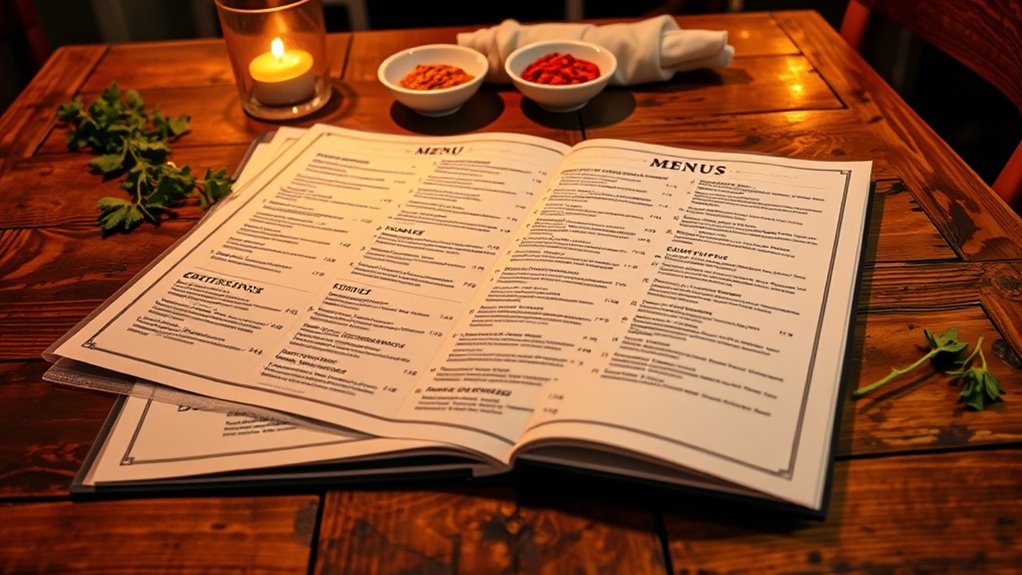
Creating a well-organized menu is essential for guiding your customers and boosting sales. Your menu isn’t just a list of dishes; it’s a carefully crafted tool that influences what your patrons order and how much they spend. When you focus on effective menu design, you help customers navigate their choices effortlessly, encouraging them to explore more options and make satisfying decisions. Good menu design involves thoughtful layout, clear categorization, and strategic placement of items to highlight your most profitable offerings. For instance, placing high-margin dishes at eye level or within easy reach can subtly influence customer choices, leading to increased revenue. Additionally, understanding your target audience and their preferences can help tailor your menu to better meet their expectations. Pricing strategies are equally crucial in setting up your menu for success. You want to strike a balance that entices customers without undervaluing your offerings. Consider using psychological pricing techniques, such as ending prices with .99 or .95, which can make items seem more affordable. Additionally, bundling items into combos or specials can encourage larger orders and increase overall sales. When developing your pricing strategies, keep in mind your target audience and local market conditions. Pricing too high may deter budget-conscious diners, while pricing too low can undervalue your quality or create the impression of lower value. Adjust your prices to reflect the quality of ingredients and the experience you provide, and ensure your menu layout emphasizes your most profitable dishes. Your menu design should also guide customers naturally towards these high-margin options. Use visual cues like boxes, bold fonts, or color contrasts to draw attention to specialty or signature dishes. Incorporate appetizing descriptions that highlight unique ingredients or preparation methods, making items more appealing and justifying their price. By carefully balancing visual appeal with clear, concise descriptions, you can influence customer choices without overwhelming them. Remember that your menu is an evolving tool. Regularly review sales data to identify which items perform best and adjust your menu design and pricing strategies accordingly. Removing underperforming dishes or repositioning them can make space for new, more profitable options. The overall goal is to create a seamless experience where customers feel confident and satisfied with their choices, and your business enjoys increased profitability. When you pay close attention to menu design and Pricing strategies, you set the stage for a successful dining experience that benefits both your customers and your bottom line.
Frequently Asked Questions
How Often Should I Update My Menu Items?
You should update your menu items at least seasonally, incorporating seasonal updates to keep things fresh and exciting for your customers. Regular menu rotation helps you respond to ingredient availability, customer preferences, and trends. Aim for a quarterly review, but be flexible—if certain items aren’t selling or new ideas emerge, don’t hesitate to make adjustments sooner. Consistent updates show you’re attentive and innovative, encouraging repeat visits.
What Are the Best Ways to Price My Menu?
You should use effective pricing strategies like cost-based, value-based, or competitive pricing to find the right balance. Consider menu customization to offer options at different price points, appealing to various customer segments. Test different prices and monitor sales to see what works best. Keep an eye on ingredient costs and market trends, and don’t be afraid to adjust your prices periodically to maximize profitability and customer satisfaction.
How Can I Incorporate Dietary Restrictions Effectively?
You should clearly highlight gluten-free options and vegan substitutions on your menu to accommodate dietary restrictions. Use symbols or labels to make them easy to identify, and train your staff to communicate these choices confidently. Incorporate diverse, flavorful ingredients that cater to various needs without sacrificing taste. Regularly update your menu based on customer feedback to guarantee you’re meeting their dietary preferences and providing a welcoming, inclusive dining experience.
What Design Elements Attract More Customers?
Think of your menu as a storybook—visual hierarchy guides customers effortlessly to what you want them to choose. Use color psychology to evoke emotions; warm tones for comfort, cool shades for freshness. Bright, contrasting elements catch the eye, while clear fonts boost readability. For example, a vibrant red “Specials” sticker instantly draws attention. These design choices attract more customers by making your menu inviting and easy to navigate.
How Do I Train Staff on New Menu Items?
You should conduct thorough staff training focused on menu familiarity, guaranteeing your team understands each new item’s ingredients, preparation, and presentation. Use hands-on demonstrations, tasting sessions, and detailed descriptions to boost confidence. Encourage questions and provide quick reference guides. Regularly review the new menu with your staff, offer ongoing support, and track their knowledge to ensure they can confidently recommend and serve the new items, enhancing customer satisfaction.
Conclusion
Now that you’ve set up your menu thoughtfully, imagine it as a well-organized map guiding your customers effortlessly. Just like a chef carefully selects ingredients to craft perfect dishes, your menu can lead guests on a flavorful journey, boosting their satisfaction and your success. When everything’s in place, your restaurant becomes a vibrant hub where every bite tells a story, and every visit leaves them enthusiastic to return. Your success starts with that first, strategic step.