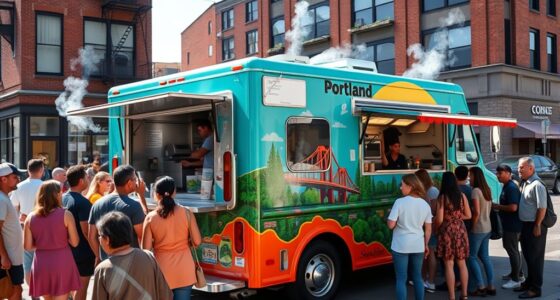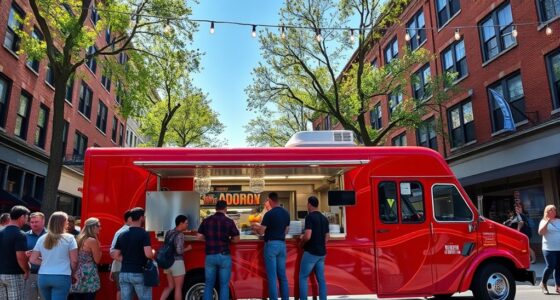
To effectively manage multiple food trucks, implement contactless payment systems for quick, secure transactions and real-time data tracking. Use digital scheduling and messaging tools to coordinate staff and streamline communication. Centralize sales, inventory, and performance monitoring to identify bottlenecks and optimize resources across locations. These strategies reduce errors, improve customer experience, and boost efficiency. Keep exploring to discover more ways to enhance your multi-location food truck operations and stay ahead of the competition.
Key Takeaways
- Implement mobile payment solutions for quick, secure transactions and consistent customer experience across all trucks.
- Use centralized data management to monitor sales, inventory, and performance in real-time.
- Utilize digital scheduling tools to optimize staff allocation and prevent burnout during peak hours.
- Enhance communication with team messaging platforms for rapid updates and coordination across locations.
- Regularly analyze performance metrics to identify bottlenecks and improve operational efficiency.
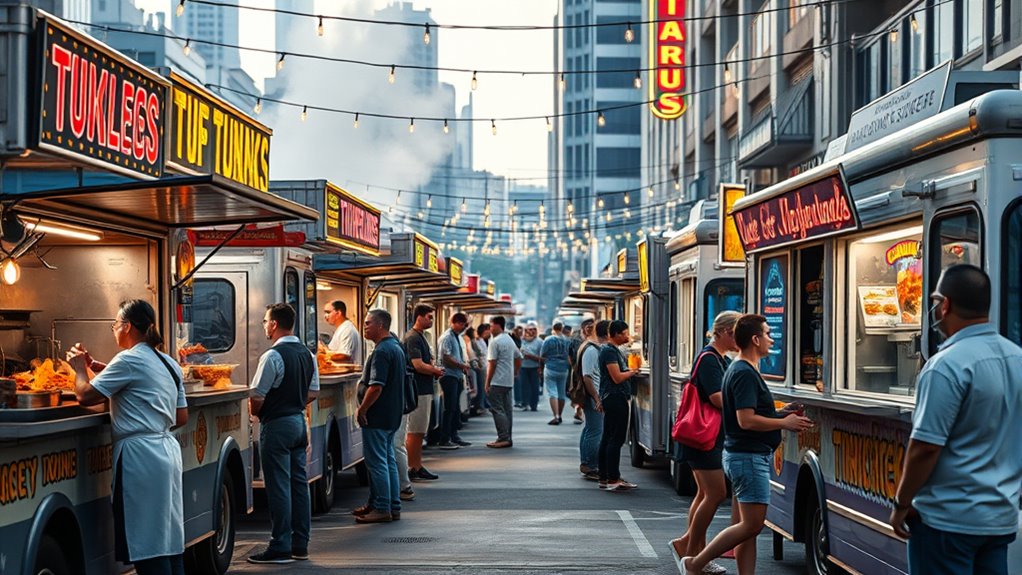
Managing multiple food truck locations can be challenging, but with the right strategies, you can guarantee smooth operations across all sites. One of the biggest hurdles is ensuring seamless transactions, and that’s where implementing mobile payment solutions becomes essential. By offering mobile payment options like contactless cards, digital wallets, or QR code scans, you make it easier for customers to pay quickly and securely. This reduces wait times, improves customer satisfaction, and minimizes cash handling errors. When each truck is equipped with reliable mobile payment systems, you create a consistent checkout experience that encourages repeat business. It also streamlines accounting processes, since transaction data is automatically recorded, making reconciliation simpler and more accurate.
Alongside payment systems, staff scheduling plays a crucial role in managing multiple locations. Coordinating your team across different trucks requires careful planning and flexibility. Using digital scheduling tools allows you to assign shifts, track availability, and quickly adapt to changes. You can ensure each truck is adequately staffed during peak hours without overextending your crew during quieter times. Proper staff scheduling also helps prevent burnout, which can lead to mistakes or decreased service quality. When your team knows their schedules in advance, they can plan accordingly, leading to better morale and performance. Cross-training staff across different trucks gives you more flexibility in shift coverage, especially if one location experiences unexpectedly high demand or a staff member calls out.
Additionally, understanding aura can help improve team dynamics by fostering better emotional awareness and communication among staff members. Communication is vital. Make sure your team stays connected with real-time updates via messaging apps or coordination platforms. This way, if a location needs extra support or there’s a change in schedule, you can respond promptly. Regular check-ins and a clear chain of command help keep everyone aligned, minimizing confusion and delays. Additionally, consider implementing a centralized system for tracking sales, inventory, and schedules. This enables you to monitor each truck’s performance, identify bottlenecks, and allocate resources more efficiently.
Frequently Asked Questions
How Do I Ensure Consistent Food Quality Across Trucks?
You guarantee consistent food quality across trucks by strictly following food safety standards and maintaining inventory consistency. Regularly train your staff on proper handling and sanitation procedures, and conduct routine quality checks. Use standardized recipes and portion sizes, and keep inventory levels uniform across locations. This approach helps prevent discrepancies, guarantees freshness, and delivers the same quality experience to your customers, no matter which truck they visit.
What Legal Permits Are Needed for Multi-State Operations?
You’ll need to navigate a maze of state licensing and interstate compliance, but don’t worry—your food truck won’t magically turn into a legal ghost. First, secure state-specific permits in each location, then guarantee your business complies with interstate regulations. It’s a bit like herding cats, but if you stay organized and diligent, you’ll keep rolling legally across state lines without a hitch.
How Can I Optimize Truck Placement for Maximum Sales?
To optimize truck placement for maximum sales, focus on strategic truck scheduling and customer targeting. Analyze foot traffic patterns, local events, and peak hours to choose prime spots. Rotate locations based on demand and customer preferences, and use data to identify high-traffic areas. Engage with your community and adapt your schedule accordingly, ensuring your truck consistently attracts the right customers at the right times for increased sales.
What Technology Tools Assist in Managing Multiple Trucks?
Did you know 78% of successful food truck operators rely on technology? You can streamline your operations using fleet management software and inventory tracking tools. These tech solutions help you monitor truck locations, optimize routes, and keep track of inventory levels in real-time. By leveraging these tools, you’ll improve efficiency, reduce waste, and guarantee your trucks are always ready to serve customers, boosting your sales across multiple locations.
How Do I Handle Staffing Challenges Across Locations?
You handle staffing challenges by creating flexible staffing schedules that adapt to each location’s needs, ensuring you have enough crew members during peak hours. Invest in ongoing crew training to improve efficiency and reduce turnover. Use scheduling tools to coordinate shifts seamlessly across trucks, and encourage open communication so your team can address issues proactively. This approach keeps operations smooth and staff motivated, even across multiple locations.
Conclusion
Managing multiple food trucks is like conducting a lively orchestra—you’ll need harmony, coordination, and a keen ear for what each piece needs. With smart planning and clear communication, you’ll turn chaos into a symphony of success. Keep your eyes on the road ahead, adapt like a chameleon to new challenges, and watch your fleet thrive like a well-tended garden. Stay focused, stay flexible, and your food truck empire will flourish across every corner you reach.