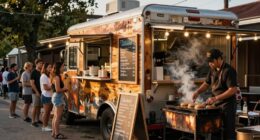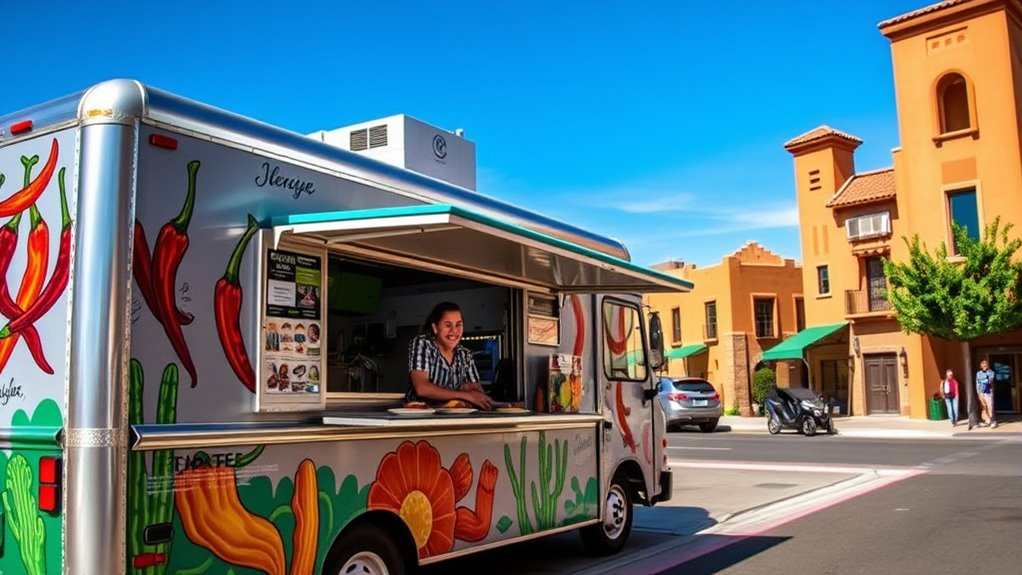

To start a food truck in Albuquerque, NM, you’ll need to understand the local food scene and develop a menu inspired by regional flavors like green chile and carne adovada. You must navigate permits, zoning laws, and health regulations, possibly using shared kitchens for cost efficiency. Budget smartly for vehicle outfitting and insurance, then focus on marketing at popular events and building community connections. If you keep exploring, you’ll discover more strategies to succeed in Albuquerque’s vibrant food scene.
Key Takeaways
- Obtain necessary permits and licenses from Albuquerque city and New Mexico health authorities, ensuring compliance with sanitation and parking regulations.
- Develop a locally inspired menu featuring regional flavors like green chile stew and source ingredients from local farms.
- Secure a suitable vehicle and equip it with durable, efficient kitchen equipment tailored to your menu.
- Create a business plan, explore local grants, and purchase liability insurance to fund and protect your food truck startup.
- Engage with community events, markets, and social media to build brand visibility and customer loyalty in Albuquerque.
Starting With Local Food Scene
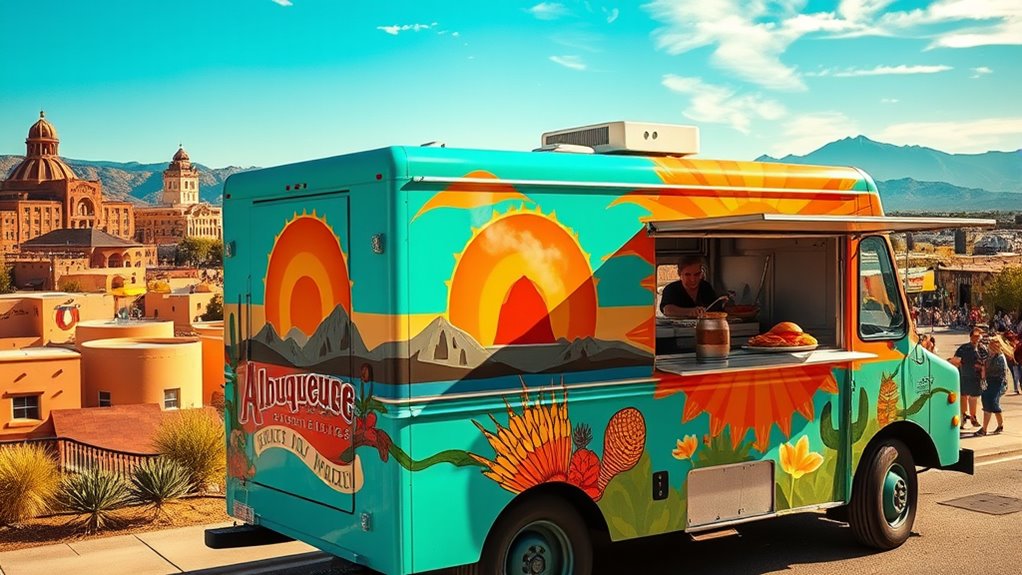
Whether you’re a first-time visitor or a local looking to explore, starting with Albuquerque’s vibrant food scene is a must. The city’s local food trends highlight a mix of traditional New Mexican flavors and innovative culinary twists. Albuquerque cuisine is known for its bold flavors, featuring signature dishes like green chile stew, enchiladas, and carne adovada. To succeed, immerse yourself in the local food culture by visiting farmers’ markets, food festivals, and popular eateries. Pay attention to what locals are ordering and the ingredients they prefer. This knowledge will help you craft a menu that resonates with the community. Embracing Albuquerque’s unique culinary identity can set your food truck apart and attract both curious tourists and loyal residents. Understanding local dining practices can further enhance your ability to connect with the community through your offerings.
Understanding Local Requirements
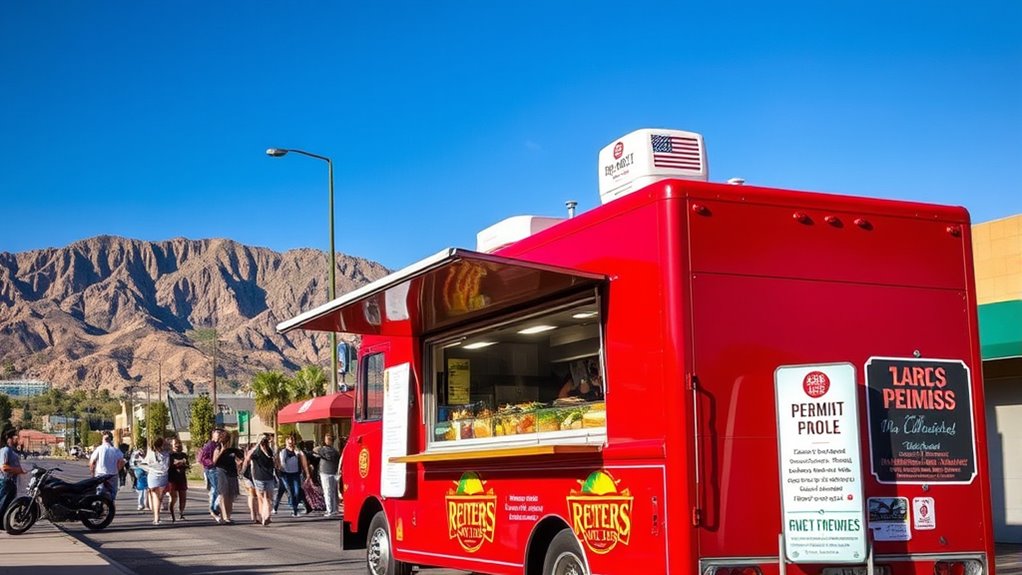
To get started, you need to understand Albuquerque’s food truck permit process and make certain you meet all sanitation standards to pass inspections. It’s also important to know where you can park your truck, as designated zones are strictly regulated. Being aware of these local requirements helps you stay compliant and avoids costly setbacks. Additionally, familiarize yourself with health and safety standards to ensure your food truck operates within local regulations.
State Food Truck Permit Process
Finding your way through the state food truck permit process in Albuquerque requires understanding specific local requirements and applying accordingly. You’ll need to complete licensing procedures that verify your compliance with food safety standards. Start by submitting an application to the New Mexico Department of Health, which oversees food service regulations. You’ll need to demonstrate proper food safety practices, including sanitation and proper storage, to meet state standards. Additionally, the application may include providing proof of liability insurance and vehicle registration. Be prepared for a review process that ensures your truck adheres to all food safety guidelines. Once approved, you’ll receive a state food truck permit that allows you to operate legally within Albuquerque and beyond. Staying compliant with licensing procedures is essential for avoiding penalties and ensuring your business runs smoothly.
Sanitation Standards and Inspection Tips
Once your permit is secured, maintaining proper sanitation standards becomes essential for ongoing compliance and customer safety. To meet Albuquerque’s food safety regulations, follow strict cleaning protocols daily. Regularly sanitize all surfaces, utensils, and equipment to prevent contamination. Keep sinks, storage areas, and food prep zones spotless, and ensure your handwashing stations are stocked and functional. Inspections will focus on your sanitation practices, so document your cleaning routines and logs. Pay attention to trash disposal, pest control, and proper food storage temperatures. Staying proactive about cleanliness not only helps pass inspections but also builds customer trust. Remember, consistent adherence to sanitation standards minimizes health risks and ensures your food truck operates smoothly and safely.
Designated Food Truck Zones
Understanding local requirements for designated food truck zones is essential for operating legally and smoothly in Albuquerque. You need to know where you can park, sell, and promote your food truck without issues. Albuquerque designates specific zones for food trucks, often requiring permits and adherence to city regulations. Proper vehicle customization and clear food truck branding help attract customers and meet local standards. Check city maps and signage to find approved zones and avoid fines. Be aware that some zones may have time limits or restrictions on the type of food served. Staying informed guarantees your food truck runs efficiently and legally. Below is a quick overview of key zone info:
| Zone Type | Location Examples | Restrictions |
|---|---|---|
| Downtown | Civic Plaza, Old Town | Limited hours, permits required |
| Event Spaces | Albuquerque Convention Center | Special event permits needed |
| High Traffic Areas | University Blvd, Central Ave | Parking limits, signage rules |
| Parks | Civic Plaza Park, Albuquerque Botanic Garden | Food truck branding guidelines |
| Commercial Zones | Industrial Districts | Vehicle customization rules |
Setting Up Your Base of Operations
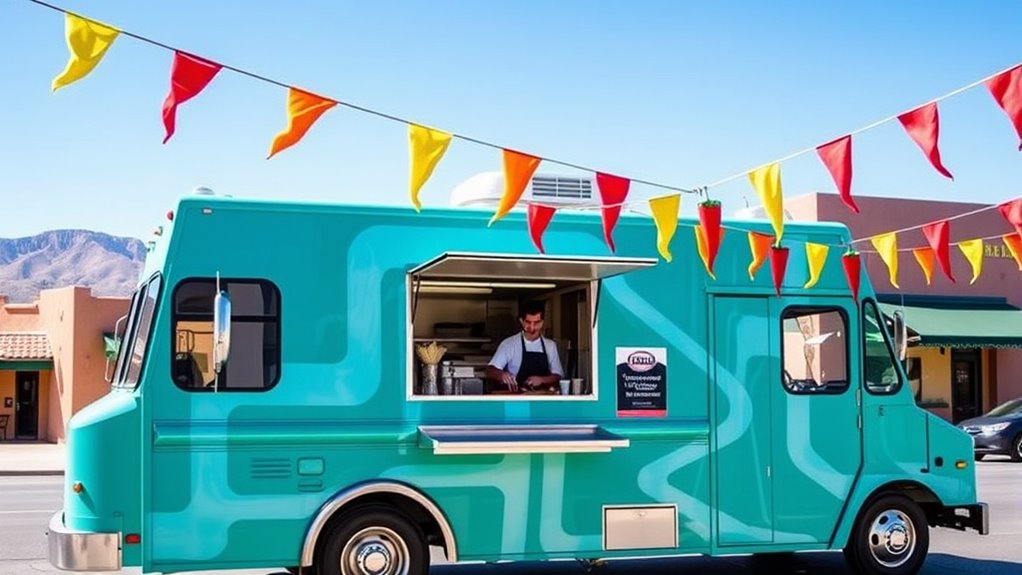
Choosing the right shared kitchen licensing options can save you time and money while meeting local regulations. You should also carefully select custom kitchen equipment that fits your menu and workflow. These decisions are vital for establishing a solid base of operations for your food truck. Incorporating beneficial ingredients like collagen and hyaluronic acid into your preparations can enhance the quality of your offerings and appeal to health-conscious customers.
Shared Kitchen Licensing Options
Setting up your food truck’s base of operations often involves exploring shared kitchen licensing options, which can be a cost-effective and flexible solution. Shared kitchen licensing allows you to operate in a commercial kitchen without the expense of building your own facility, making it ideal for startups. These shared kitchens are designed to meet commercial kitchen regulations, ensuring your food prep space complies with health and safety standards. By renting space in an established kitchen, you avoid lengthy permitting processes and can quickly start serving customers. Be sure to verify that the shared kitchen meets all local licensing requirements and offers the necessary certifications. This approach streamlines your setup process while keeping costs manageable, helping you focus on perfecting your menu and growing your food truck business.
Custom Kitchen Equipment Selection
Have you considered how the right custom kitchen equipment can make or break your food truck’s efficiency? Proper equipment selection tips are essential to optimize your workflow and meet your menu needs. Focus on durability, size, and functionality when choosing your custom kitchen equipment.
- Prioritize appliances that fit your menu, like grills or fryers, to streamline prep.
- Invest in space-saving equipment to maximize limited truck space.
- Choose reliable, easy-to-clean tools to reduce downtime and maintenance issues.
Budgeting and Financing Your Food Truck
To get your food truck rolling, you need to plan for the costs of the initial vehicle and kitchen build. Local small business grants can help ease some expenses, but you’ll also need to budget for liability insurance to protect your business. Being clear about these costs upfront will set you up for a successful start in Albuquerque’s vibrant food scene. Additionally, researching electric vehicle options can offer more cost-effective and eco-friendly alternatives for your food truck.
Initial Vehicle and Kitchen Build
Starting your food truck journey requires careful budgeting and financing to guarantee your initial vehicle and kitchen build stay within your means. First, choose a reliable vehicle that minimizes future vehicle maintenance costs while meeting your space needs. Second, prioritize kitchen safety by installing equipment that adheres to health standards and ensures safe food prep. Third, plan for essential upgrades like ventilation, fire suppression systems, and sanitation stations to prevent costly retrofits later. Keep a close eye on your budget during the build, avoiding overspending on unnecessary features. Remember, a well-maintained vehicle and a safety-focused kitchen are vital for long-term success. By balancing initial costs with quality, you set yourself up for smooth operations and fewer surprises along the way.
Local Small Business Grants
Are local small business grants a viable option to help fund your food truck venture? Absolutely. Local small business grants can provide vital Albuquerque startup funding without the need for repayment, easing your initial financial burden. These grants often target small businesses that contribute to community growth, making your food truck an attractive candidate. To access these funds, research options through Albuquerque’s economic development agencies, city programs, or state initiatives. Keep in mind that applying requires a solid business plan and proof of community impact. While grants won’t cover everything, they can appreciably lower your startup costs and boost your confidence. Securing local small business grants can be a smart move as you launch your food truck, giving you a financial edge early on.
Liability Insurance for Food Trucks
Liability insurance is a critical expense to contemplate when budgeting and financing your food truck, as it protects you from potential lawsuits and claims resulting from accidents or food safety issues. Adequate liability coverage guarantees you’re protected if someone gets hurt or if there’s damage to property. It also helps cover expenses related to insurance claims, reducing your financial risk. To manage this effectively:
- Shop around for the best liability coverage options tailored to food trucks in Albuquerque.
- Understand what your policy includes, especially coverage limits and exclusions.
- Keep documentation of all insurance claims and updates to stay compliant and prepared.
Securing proper liability insurance safeguards your business and ensures you’re prepared for unexpected challenges on the road.
Designing Your Menu and Pricing Strategy
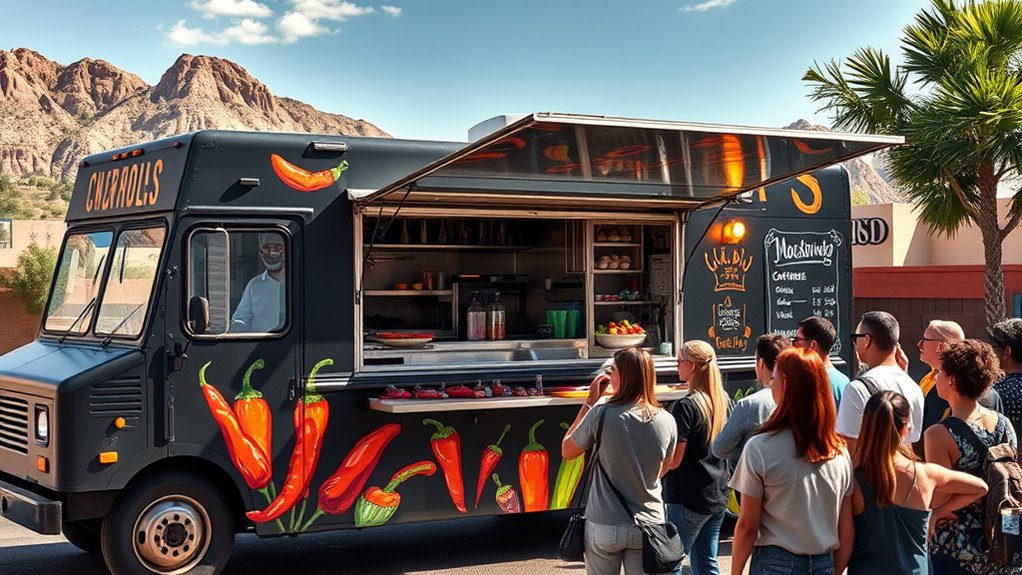
When designing your menu, focus on local flavors that resonate with Albuquerque’s community to attract more customers. Keep a close eye on ingredient costs by sourcing locally and controlling portion sizes to maximize profits. Balancing creativity with cost efficiency guarantees your pricing strategy appeals without sacrificing quality. Being aware of narcissistic traits that might influence customer preferences can help tailor your offerings to meet diverse expectations.
Locally Inspired Menu Curation
Creating a locally inspired menu for your Albuquerque food truck means selecting dishes that highlight regional flavors and ingredients, resonating with both locals and visitors. Focus on showcasing the unique local flavor by sourcing ingredients from nearby farms and markets. This authentic approach not only supports the community but also enhances your menu’s appeal. To curate your offerings effectively, consider these steps:
- Identify popular regional dishes and ingredients that reflect the local flavor.
- Partner with local suppliers to ensure fresh ingredient sourcing.
- Balance traditional favorites with innovative twists to attract diverse customers.
Ingredient Cost Control Techniques
Designing your menu and pricing strategy with ingredient cost control in mind is essential to maintaining profitability in your Albuquerque food truck. Focus on ingredient sourcing by choosing local suppliers that offer quality ingredients at competitive prices. This reduces transportation costs and supports community businesses. Implement portion control to ensure consistency and prevent waste, which directly impacts your food costs. Use standardized recipes to help staff measure ingredients accurately and avoid overuse. Regularly review supplier prices and adjust your menu accordingly to keep ingredient costs in check. By carefully managing sourcing and portion sizes, you can set competitive prices that cover costs while appealing to customers. Balancing quality, affordability, and efficiency is key to long-term success in your Albuquerque food truck venture.
Technology and Operations
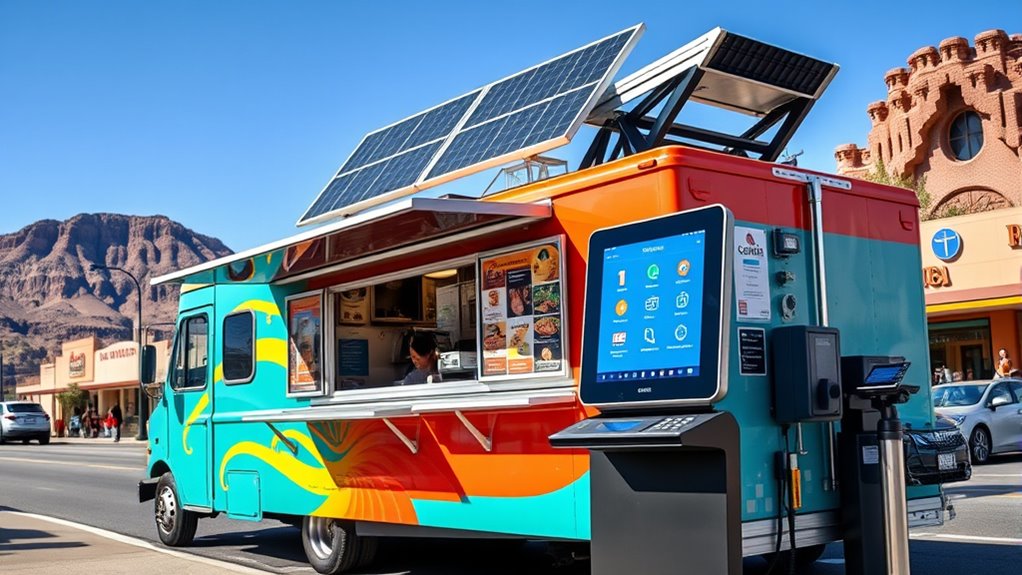
Integrating mobile payment apps makes transactions quicker and more convenient for your customers. Using real-time stock tracking software helps you stay updated on inventory levels and avoid shortages. By leveraging these technologies, you can streamline your operations and improve overall efficiency.
Mobile Payment App Integrations
To streamline transactions and enhance customer convenience, food trucks in Albuquerque are adopting mobile payment app integrations. These systems make it easy for customers to pay using cashless payments and enjoy contactless transactions, reducing wait times and improving efficiency. By integrating popular apps like Apple Pay, Google Pay, or Square, you can offer seamless payment options.
Here are three key benefits:
- Faster checkout process, increasing customer turnover.
- Reduced cash handling, minimizing theft risks.
- Improved hygiene by eliminating physical contact during payments.
Implementing mobile payment app integrations not only modernizes your food truck but also appeals to tech-savvy customers seeking quick and safe transactions. This technological upgrade can appreciably boost your customer satisfaction and sales.
Real-Time Stock Tracking Software
Building on your mobile payment upgrades, implementing real-time stock tracking software can further optimize your food truck’s operations. This technology enhances inventory management by providing instant updates on ingredient levels, reducing waste and preventing shortages. With accurate real-time data, you can automate ordering processes, ensuring you restock supplies before running out. This streamlines your workflow, saves time, and minimizes manual tracking errors. Plus, it allows you to make informed decisions about menu adjustments based on stock availability. By integrating stock tracking with your existing systems, you’ll maintain a seamless operation that adapts quickly to demand fluctuations. Ultimately, real-time stock tracking software keeps your food truck efficient, responsive, and ready to serve customers without delays caused by inventory issues.
Marketing and Growing Your Presence
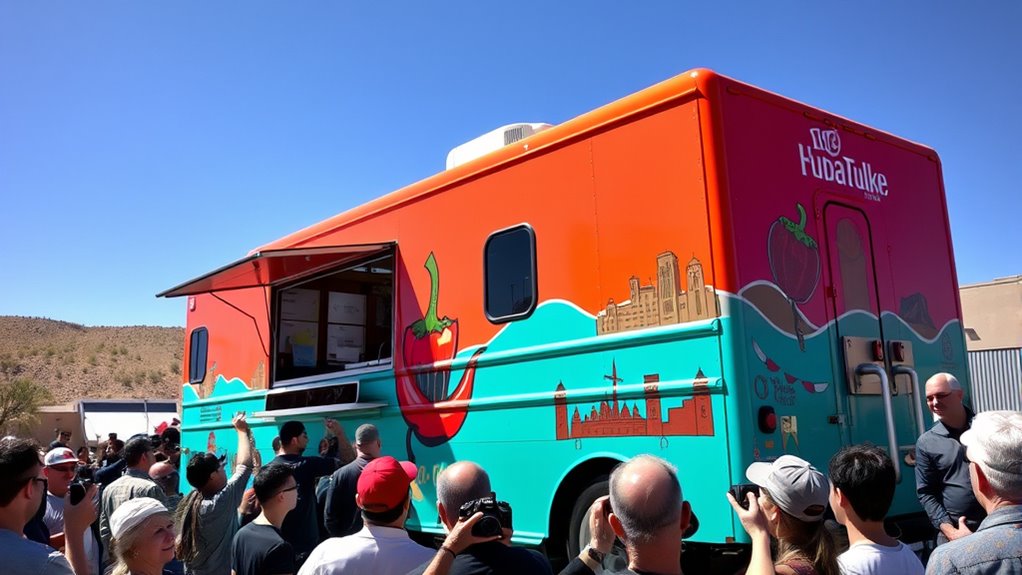
To grow your presence in Albuquerque, focus on hitting popular event and market locations where crowds gather. Offering customer loyalty programs can keep patrons coming back and spread positive word-of-mouth. By combining these strategies, you’ll boost visibility and build a strong local following.
Popular Event and Market Locations
Wondering where to boost your food truck’s visibility in Albuquerque? Focus on popular event and market locations that attract crowds. These spots give you prime opportunities to showcase your food truck decor and enhance your social media branding. Consider these top locations:
- Albuquerque Farmers Market – a bustling spot for locals and visitors alike.
- Albuquerque International Balloon Fiesta – a massive event drawing thousands.
- Downtown Art Walk – perfect for connecting with a vibrant community.
At each location, make your food truck stand out with eye-catching decor that aligns with your brand. Take plenty of photos for social media and engage with attendees. Consistently showing up at these hotspots helps grow your presence and attracts loyal customers.
Customer Loyalty Programs
Implementing a customer loyalty program is one of the most effective ways to grow your food truck’s presence in Albuquerque. By offering customer rewards based on loyalty points, you encourage repeat visits and build a loyal customer base. A simple point system can motivate customers to choose your truck over competitors. Consider rewarding points for every dollar spent, which they can redeem for free items or discounts. Make it easy to track with digital punch cards or apps. To keep things engaging, customize rewards to suit your audience. Here’s a quick example:
| Loyalty Level | Reward |
|---|---|
| 50 points | Free drink or side |
| 100 points | Free main dish |
| 200 points | Exclusive menu item or special discount |
This structure keeps customers coming back for more.
Local Networking Opportunities Await
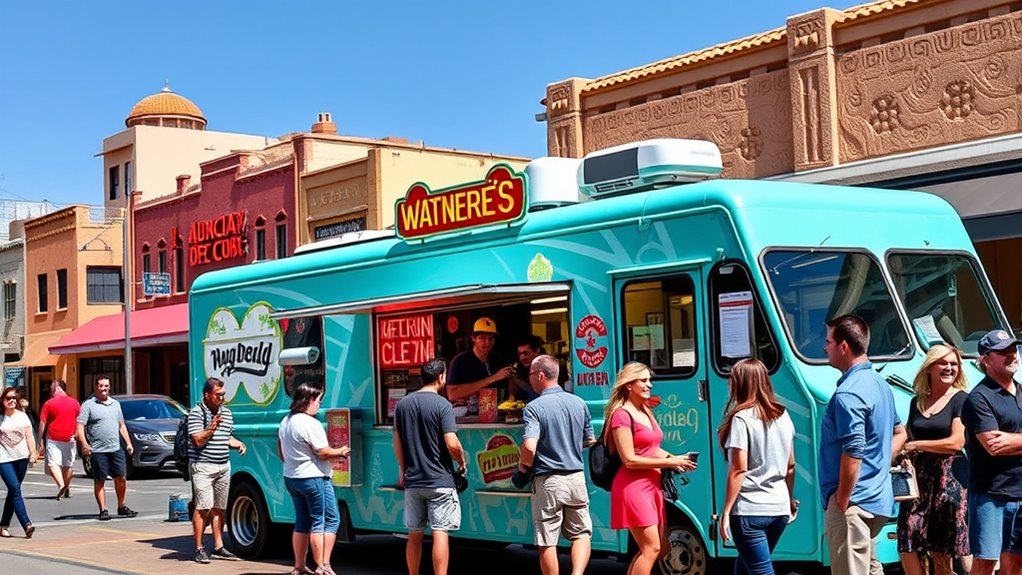
Albuquerque offers vibrant networking opportunities for food truck owners looking to grow their connections and business. By engaging with the local community, you can build valuable relationships that boost your visibility. Participating in community partnerships and local food festivals is a great way to connect with potential customers and other vendors. These events foster collaboration and help you establish a solid reputation in the area. To get started, consider these options:
- Attend local food festivals to showcase your menu and network with event organizers.
- Partner with community organizations to participate in neighborhood events.
- Join business associations or chambers of commerce to meet other food entrepreneurs.
These opportunities can open doors, increase your brand recognition, and create lasting relationships in Albuquerque’s vibrant food scene.
Frequently Asked Questions
What Permits Are Required for Food Trucks in Albuquerque?
To operate a food truck in Albuquerque, you need food truck licensing and mobile food permits from the city. You must register your business, obtain a health department permit, and pass a food safety inspection. Additionally, secure a vendor’s license and parking permits if needed. Make sure to verify with the Albuquerque Environmental Health Department for specific requirements. These steps ensure your food truck complies with local health and safety regulations.
How Does Albuquerque’s Weather Affect Food Truck Operations?
Albuquerque’s unpredictable weather keeps you on your toes, making outdoor seating and a seasonal menu both a blessing and a curse. Bright sun calls for fresh salads, while sudden snow might shut down operations altogether. You’ll need to adapt quickly, embracing the challenge of serving delicious food year-round, no matter the weather. Ironically, the very climate that tests you also sparks creativity—turning every weather hiccup into a chance to shine.
Are There Specific Health and Safety Standards Unique to Albuquerque?
Yes, Albuquerque has specific health codes and safety regulations you need to follow. You’re required to maintain proper food handling, storage, and sanitation standards, and pass regular health inspections. The city emphasizes safe food temperatures and pest control. Stay updated with local health department guidelines to make certain of compliance, and always keep your truck clean and organized. Following these standards helps protect your customers and keeps your food truck running smoothly.
What Are the Best Locations to Park a Food Truck in Albuquerque?
You should target popular food truck spots like downtown Albuquerque, the university area, and near popular events or parks. Always check local food truck parking regulations to guarantee you’re parking legally and safely. Consider high foot traffic areas and events that attract crowds. By focusing on these locations and adhering to parking rules, you’ll maximize your visibility and sales while staying compliant with Albuquerque’s regulations.
How Do Albuquerque’s Local Events Influence Food Truck Scheduling?
Albuquerque’s local event schedules heavily influence your food truck’s timing and locations. You should align your schedule with popular festivals and community gatherings to maximize sales. Partnering with event organizers can secure prime spots and boost visibility. By staying updated on upcoming festivals, you can plan your routes and hours accordingly, ensuring you’re there when crowds gather. This strategic approach helps you capitalize on festival partnerships and attract more customers.
Conclusion
Starting a food truck in Albuquerque is like planting a seed that can grow into a culinary empire. With the city’s vibrant food scene, understanding local rules, and crafting a unique menu, you’re set to make a splash. Use technology, budget wisely, and network actively. Before you know it, your food truck will be as unstoppable as a wildfire, turning heads and filling bellies across this lively city. Get ready to make your mark!