To start a food truck in Philadelphia, you’ll need to obtain the necessary permits and licenses through the city’s online portal, ensuring compliance with health, safety, and zoning regulations. Secure funding through local grants and budget for vehicle insurance and sales taxes. Design a appealing menu with local ingredients, set competitive prices, and incorporate contactless payments. Don’t forget to participate in community events and market yourself via social media. Keep exploring these steps to launch your successful food truck business.
Key Takeaways
- Obtain necessary permits and licenses through Philadelphia’s online portal, ensuring compliance with health, zoning, and signage regulations.
- Secure funding via local small business grants and budget for vehicle insurance and sales tax obligations.
- Develop a menu emphasizing local, sustainable ingredients with clear pricing and contactless payment options.
- Identify legal parking zones, participate in local festivals, and engage community through social media.
- Build a strong online presence with authentic content, customer engagement, and promotional offers to attract loyal customers.
Starting With a Food Truck License
Getting a food truck license is your first step toward launching your mobile eatery in Philadelphia. You’ll need to understand local parking regulations, as they dictate where and when you can operate your truck. Make sure to research designated vending zones and any restrictions that may apply to your chosen locations. Once you obtain your initial permit, keep track of permit renewals to stay compliant. Philadelphia typically requires annual renewal of food truck licenses, so stay organized to avoid any lapses in your ability to operate legally. Ensuring your permits are current helps you avoid fines or penalties, keeping your business running smoothly. Focusing on understanding these licensing essentials early on, and staying aware of local regulations, will help you set a solid foundation for your mobile food venture.
Understanding Local Requirements
To get started, you’ll need to use Philadelphia’s online permit application portal to submit your paperwork. Make sure you understand the city’s sanitation protocols and have all necessary documentation ready. Additionally, familiarize yourself with designated street parking zones to guarantee your truck stays compliant. Consulting local health and safety regulations can help ensure you meet all standards for food trucks in the city.
Online Permit Application Portal
Handling Philadelphia’s online permit application portal is an essential step in starting your food truck business. The permit portal streamlines the process, allowing you to submit your online application efficiently. First, visit the City of Philadelphia’s official website and locate the food truck permit section. Here, you’ll find detailed instructions and necessary forms to complete your application. Be sure to gather all required documentation beforehand, such as proof of insurance and vehicle information. The permit portal’s user-friendly interface guides you through each step, ensuring you provide accurate information. Once submitted, your application will be reviewed, and you may receive notifications or requests for additional details. Using the online application system saves time and keeps everything organized, making your path to launching a food truck smoother.
Sanitation Protocols and Documentation
Understanding Philadelphia’s sanitation protocols is vital for guaranteeing your food truck complies with local health standards. You’ll need to familiarize yourself with specific sanitation protocols, including proper food handling, cleaning procedures, and waste disposal. Meeting documentation requirements is also essential; you must keep detailed records of sanitation practices, employee health certifications, and inspection reports. These documents demonstrate your adherence to health codes during routine inspections. Make sure to regularly review updates from the Philadelphia Department of Public Health, as regulations can change. By maintaining thorough sanitation protocols and accurate documentation, you’ll not only stay compliant but also build trust with your customers. Staying proactive in this area helps prevent violations and guarantees your food truck operates smoothly within city regulations.
Designated Street Parking Zones
Familiarity with Philadelphia’s designated street parking zones is key to legally operating your food truck on city streets. You need to understand the parking regulations specific to each zone, as they dictate where you can park during different times of the day and week. Zone enforcement guarantees these rules are followed, so parking violations can lead to fines or towing. Check city signage carefully to identify your designated zone and its restrictions. Some zones require permits or special authorizations, so verify if your truck qualifies. Staying compliant with parking regulations helps avoid disruptions and keeps your operation running smoothly. Regularly monitor any updates or changes in zone enforcement policies to ensure you remain within legal boundaries. Proper planning will make your food truck business more efficient and compliant with local requirements.
Setting Up Your Base of Operations

To establish your base of operations, you’ll need to take into account shared kitchen licensing requirements in Philadelphia. Planning your kitchen layout carefully ensures it meets health codes and maximizes efficiency. Additionally, understanding the importance of compliance and licensing helps ensure your food truck operates legally and smoothly. By addressing these points, you’ll create a solid foundation for your food truck business.
Shared Kitchen Licensing Requirements
Setting up your base of operations in a shared kitchen requires careful attention to licensing requirements to guarantee your food truck complies with local health and safety standards. To do this, you’ll need to secure shared kitchen licensing, which involves obtaining co-op kitchen permits. These permits ensure your operation meets Philadelphia’s health codes and safety standards.
Be sure to verify that the shared kitchen meets all licensing criteria by:
- Checking that the facility has the necessary health department approvals
- Confirming the kitchen’s permits are current and valid
- Ensuring the space adheres to food safety and sanitation regulations
Custom Kitchen Layout Planning
Designing your custom kitchen layout is a critical step in establishing an efficient and compliant food truck operation. A well-planned kitchen layout ensures smooth workflow, safety, and ideal equipment placement. Start by mapping out your workspace, prioritizing the cooking, prepping, and cleaning zones. Consider the flow of ingredients and staff movement to avoid congestion. Proper equipment placement minimizes cross-contamination and maximizes efficiency. Use the table below to visualize your ideas:
| Zone | Equipment/Features |
|---|---|
| Prep Area | Cutting boards, sinks |
| Cooking Zone | Grills, fryers, stoves |
| Storage | Refrigerators, shelves |
| Cleaning & Waste | Sinks, trash disposal |
Keeping these elements in mind helps you create a functional kitchen layout that meets your operational needs.
Budgeting and Financing Your Food Truck
To get your food truck rolling, you’ll need to budget for vehicle modifications and understand local costs like sales tax and vehicle liability. Look into small business grants in Philadelphia that could help cover some expenses. Planning your finances carefully guarantees you’re prepared for initial costs and ongoing expenses. Additionally, exploring grocery savings strategies can help you allocate more funds toward your startup costs and ensure sustainable operations.
Initial Vehicle Modification Costs
Initial vehicle modification costs can vary widely depending on the size and complexity of your food truck setup, so it is vital to budget carefully. You’ll need to contemplate expenses like branding, equipment, and interior modifications. For example, a vehicle wrap can considerably enhance your truck’s visibility; expect costs between $2,500 and $5,000 for a professional design. Installing custom shelving is indispensable for organization and efficiency, typically costing $1,000–$3,000. Other expenses may include upgrading the plumbing or electrical systems, which can add to your total. Keep in mind that these costs are investments in the truck’s functionality and branding, helping you attract customers and operate smoothly. Planning ahead ensures you’re financially prepared for these initial modifications.
Local Small Business Grants
Securing funding is a key step in turning your food truck idea into reality, and local small business grants can be a valuable resource. These grants often support entrepreneurs working on food truck ventures, helping you cover costs like food truck licensing and initial setup. To find suitable local business grants in Philadelphia, check with city agencies, economic development organizations, and small business associations. Many grants target minority-owned businesses or specific food sectors, so research eligibility carefully. Applying requires a solid business plan, proof of community impact, and financial documentation. While grants don’t need repayment, they can be competitive, so prepare a compelling application. Securing this funding helps you offset startup costs, making your food truck more financially sustainable from day one.
Vehicle Liability and Sales Tax
Understanding vehicle liability and sales tax obligations is essential when budgeting and financing your food truck. Vehicle liability insurance protects you from financial loss if you’re involved in an accident, so make certain you budget for adequate coverage. Sales tax impacts your overall costs, as Philadelphia requires you to collect and remit sales tax on food sales and possibly on the vehicle purchase itself. Keep these points in mind:
- Calculate vehicle liability costs when estimating your startup expenses.
- Register your truck properly to handle sales tax collection and remittance.
- Factor in sales tax on vehicle purchases and ongoing sales to avoid surprises.
Designing Your Menu and Pricing Strategy
When designing your menu, consider using locally sourced ingredients to appeal to customers and support local producers. You also need to set prices that cover your costs without turning customers away, so analyze ingredient costs carefully. Finding the right balance guarantees your menu is both appealing and profitable.
Locally Sourced Ingredients
Using locally sourced ingredients can give your food truck a distinct edge by highlighting fresh, high-quality flavors that resonate with your community. Emphasizing farm to table ingredients not only enhances taste but also builds trust with customers who value sustainability. To succeed, develop strong local farmer partnerships to ensure consistent access to seasonal produce and meats. Consider these strategies:
- Highlight your use of farm to table ingredients on menus to attract eco-conscious diners
- Source ingredients directly from nearby farms to reduce transportation costs and support local economies
- Incorporate seasonal items to keep your menu fresh and adaptable to changing availability
Optimal Pricing Based on Ingredient Costs
Setting your menu prices based on ingredient costs is essential for maintaining profitability and staying competitive. Start with an ingredient cost analysis to understand how much each item costs to produce. This analysis helps you determine a fair and sustainable profit margin. When developing menu pricing strategies, consider your target market, local competition, and perceived value. Aim to keep prices attractive while covering ingredient expenses and operational costs. Remember, pricing too low can hurt your margins, while pricing too high may deter customers. Regularly review ingredient costs to adjust prices accordingly. By balancing ingredient costs with strategic menu pricing, you ensure your food truck remains profitable and appealing to customers in Philadelphia. Staying vigilant about ingredient costs is key to long-term success.
Technology and Operations
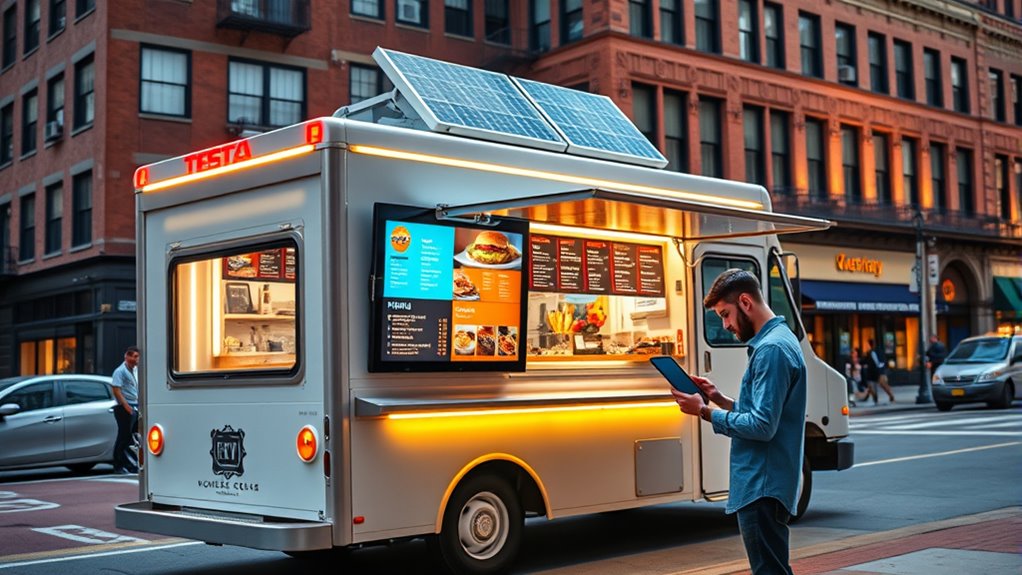
Implementing contactless payment options can speed up transactions and improve customer experience. Using real-time stock tracking software helps you stay on top of inventory and avoid shortages. Embracing these tools keeps your food truck running smoothly and efficiently. Additionally, integrating biodiversity considerations into your operations—such as sourcing ingredients locally and sustainably—can promote environmental health and support local ecosystems.
Contactless Payment Options Available
Since contactless payment options are becoming essential for modern food trucks, adopting these technologies can streamline your operations and improve customer experience. Offering contactless payment methods, like mobile payment apps, makes transactions faster and safer. Customers appreciate the convenience of simply tapping their card or phone to pay without cash or PIN entry. To implement this, consider:
- Using NFC-enabled point-of-sale (POS) systems for quick transactions
- Integrating popular mobile payment platforms such as Apple Pay, Google Pay, or Samsung Pay
- Ensuring your staff is trained to assist customers with contactless payment options
These technologies reduce wait times, minimize contact, and increase sales potential. Embracing contactless payment is a smart move to stay competitive and meet customer expectations in Philadelphia’s vibrant food scene.
Real-time Stock Tracking Software
Real-time stock tracking software is essential for keeping your food truck operations efficient and responsive. It helps you monitor inventory management closely, preventing shortages or overstocking. This software integrates seamlessly with supply chain logistics, ensuring you know exactly when to reorder ingredients. With real-time updates, you can quickly adapt to demand and reduce waste. Here’s a quick look at how it benefits your business:
| Feature | Benefit | Example Use Case |
|---|---|---|
| Inventory Monitoring | Prevent stockouts | Alert when supplies are low |
| Automated Reordering | Save time | Reorder ingredients automatically |
| Supply Chain Integration | Improve logistics | Track shipments in real-time |
| Data Analytics | Optimize stock levels | Adjust inventory based on sales trends |
| Mobile Access | Manage on-the-go | Check inventory from anywhere |
Marketing and Growing Your Presence
Participating in popular weekend food festivals can boost your visibility and attract new customers. Keep your Instagram lively with engaging foodie posts that showcase your dishes and personality. These strategies will help grow your presence and turn casual passersby into loyal fans.
Popular Weekend Food Festivals
Attending popular weekend food festivals in Philadelphia can considerably boost your food truck’s visibility and customer base. These events attract diverse crowds enthusiastic to try new cuisine innovations and appreciate eye-catching food truck design. To stand out, tailor your menu to local tastes, showcase unique dishes, and create a visually appealing truck that draws attention. Consider participating in festivals like the Philadelphia Food Festival or the South Philadelphia Food Fest. Engaging with festival attendees helps build brand recognition and encourages repeat visits. Guarantee your food truck design is inviting and reflects your cuisine style, making it memorable. By consistently showcasing culinary creativity, you’ll attract loyal customers and grow your presence in Philly’s vibrant food scene. Remember, festivals are prime opportunities to test new ideas and connect with your audience.
Engaging Instagram Foodie Posts
Harnessing Instagram to showcase your food truck can considerably boost your visibility beyond festivals and local events. To maximize engagement, post consistently with mouthwatering visuals that highlight your signature dishes. Use relevant Instagram hashtags to reach a broader audience and attract food lovers searching for Philly’s best eats. Incorporate behind-the-scenes shots, customer reactions, and daily specials to create a genuine connection. Tag local businesses and community pages to expand your reach further. Respond promptly to comments and messages to foster loyalty and build relationships. Remember, your goal is to make followers crave your food just by scrolling through their feed. With eye-catching content and strategic hashtag use, you’ll grow your presence and turn casual viewers into loyal customers.
Master Local Food Truck Events
To succeed in the competitive Philadelphia food truck scene, you need to master local food truck events. These gatherings boost your visibility and help you connect with new customers. Focus on effective fleet management to guarantee your truck runs smoothly during busy events, avoiding delays and mishaps. Use social media branding to promote your participation and attract attendees before the event starts.
Consider these strategies:
- Partner with event organizers for prime spots and exposure
- Share behind-the-scenes content to build excitement
- Collect customer feedback to refine your menu and service
Attending local events consistently builds your reputation and expands your customer base. By mastering logistics and leveraging social media, you’ll stand out and thrive within Philadelphia’s vibrant food truck community.
Frequently Asked Questions
What Are the Best Locations to Park My Food Truck in Philadelphia?
You should focus on high-traffic areas like Center City, near stadiums, and popular events, but remember to check food truck zoning and parking regulations first. Look for spots with existing permits or special event zones that allow food trucks. Avoid restricted areas and guarantee you’re compliant with local rules to avoid fines. Planning ahead helps you find the best spots, maximize sales, and stay within Philadelphia’s parking regulations.
How Do I Handle Permits for Special Events and Festivals?
When handling permits for special events and festivals, you should start by registering as a vendor through the event organizer and ensuring your vendor licensing is up to date. For example, a food truck owner successfully participated in the Philadelphia Flower Show by submitting an event registration form early and coordinating with city officials. Always check specific event requirements, obtain necessary permits, and follow health and safety regulations to avoid issues on the event day.
What Insurance Coverage Is Required for Food Trucks in Philadelphia?
You need to have proper insurance coverage for your food truck in Philadelphia, including liability coverage to protect against accidents or damages. The city typically requires proof of general liability insurance with a minimum coverage amount, often around $1 million. Additionally, consider coverage for vehicle insurance, workers’ compensation if you employ staff, and any special event or festival-specific requirements. Always check with local regulations to make sure you meet all insurance requirements.
Are There Any Health Code Restrictions Specific to Philadelphia?
You need to follow Philadelphia’s specific health department regulations, adhere to strict food safety standards, and meet licensing requirements. These restrictions include obtaining permits, passing health inspections, and maintaining proper sanitation and storage practices. Philadelphia emphasizes cleanliness, proper food handling, and equipment standards to protect public health. By staying compliant with these health code restrictions, you’ll guarantee your food truck operates smoothly, safely, and within the city’s legal framework.
How Can I Build Relationships With Local Suppliers and Vendors?
To build relationships with local suppliers and vendors, you should actively engage in supplier networking by attending farmers’ markets, trade shows, and community events. Reach out directly to vendors and establish vendor partnerships through consistent communication and prompt payments. Showing genuine interest in their products, providing feedback, and supporting local businesses will help strengthen your connections, ensuring reliable sourcing and fostering long-term collaborations for your food truck success.
Conclusion
Starting a food truck in Philadelphia might seem intimidating, but with the right planning, you can turn your culinary dreams into reality. From securing licenses to mastering local events, each step builds your path to success. Are you ready to bring your unique flavors to the city’s vibrant streets? If you stay focused and adaptable, you’ll quickly find your niche and thrive in Philly’s bustling food scene. The city’s waiting for your delicious journey—are you prepared to make it happen?