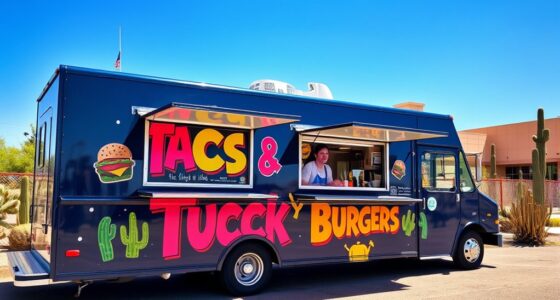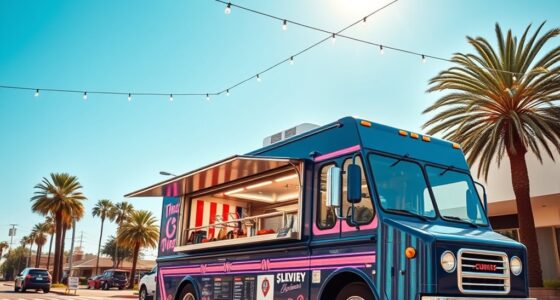

To start a food truck in Pittsburgh, you should explore the local culinary scene to identify trending cuisines and community favorites. Next, familiarize yourself with city permits, health regulations, and parking zones, scheduling inspections early to avoid delays. Develop a clear budget, seek local funding or grants, and choose a permanent base for operations. Invest in attractive branding, technology for efficiency, and engage with community events. Keep going to uncover detailed steps for launching your food truck in Pittsburgh.

Get kitchen staples and gadgets delivered free with Prime
- Fast, free delivery on millions of items
- Prime Video, Amazon Music and more included
- Member-only deals all year
Key Takeaways
- Research Pittsburgh’s local permits and health regulations using the city’s online application portal.
- Identify designated street parking zones and schedule early inspections to ensure compliance.
- Develop a compelling branding strategy and secure funding through grants or small business programs.
- Choose a suitable, compliant kitchen setup, and purchase durable equipment for efficient operations.
- Implement marketing tactics like social media, eye-catching truck aesthetics, and community engagement to attract customers.
Vibrant Pittsburgh Food Scene
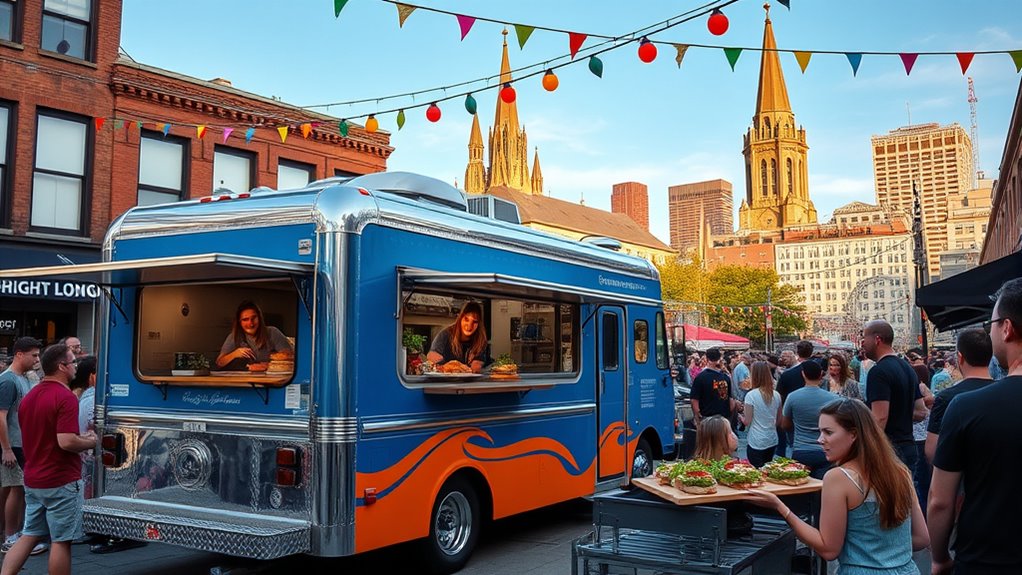
Pittsburgh’s food scene is undeniably lively, offering a diverse array of flavors that reflect its rich cultural heritage. You’ll find local food festivals throughout the year, showcasing regional flavor trends and celebrating the city’s culinary diversity. These events give you a chance to taste everything from classic pierogis to innovative street foods, making the city a hub for food lovers. By participating in these festivals, you can observe current trends shaping Pittsburgh’s cuisine and identify popular dishes to serve in your food truck. The city’s vibrant food scene encourages creativity and adaptation, meaning you can incorporate local ingredients and regional favorites into your menu. Emphasizing cultural diversity in your offerings will resonate with the community and attract a broader customer base. Embracing this energetic culinary environment will help you stand out and connect with a passionate community of food enthusiasts.
Understanding Local Requirements
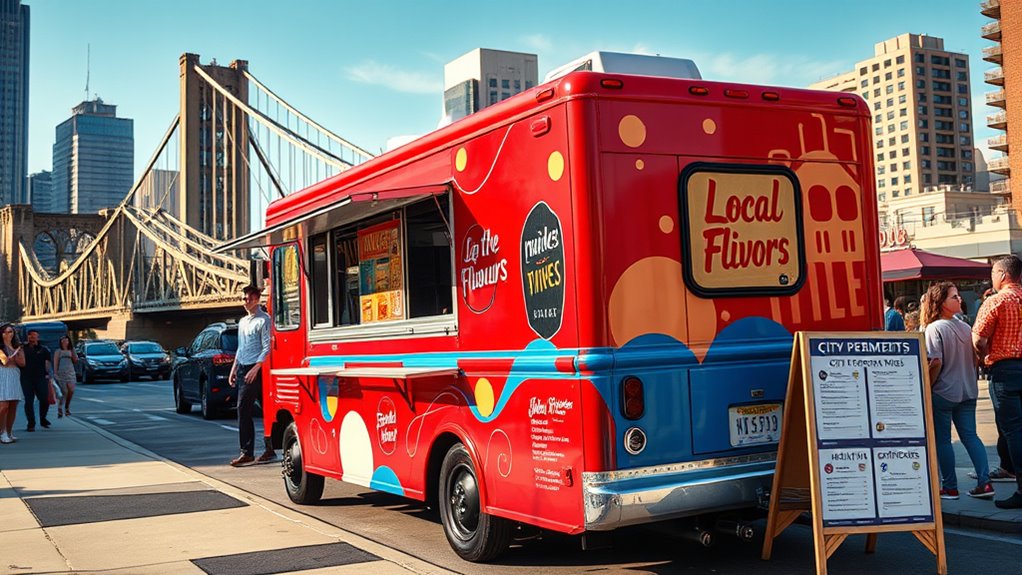
To get started, you should familiarize yourself with Pittsburgh’s online permit application portal, which makes the process more straightforward. It’s also wise to schedule your inspection appointment early to avoid delays. Additionally, knowing the designated street parking zones helps guarantee you comply with local regulations and avoid fines. Considering the importance of food safety, understanding proper food handling practices can help ensure your food truck meets health standards.
Online Permit Application Portal
Guiding the online permit application portal is a crucial step to launching your food truck in Pittsburgh. This application portal simplifies submitting your required documents and fees, making the process more efficient. When you access the online permit, you’ll see a user-friendly interface that guides you through each step. Imagine a dashboard with clearly labeled sections:
| Step | Description | Status |
|---|---|---|
| 1 | Fill out application | Pending |
| 2 | Upload documents | In Progress |
| 3 | Pay fees | Not Started |
| 4 | Submit for review | Complete |
This visual helps you track your progress and stay organized. Using the online permit application portal ensures you comply with local requirements swiftly, moving closer to your Pittsburgh food truck debut.
Schedule Inspection Appointment Early
Scheduling your inspection appointment early is vital to guarantee you meet all local requirements without delays. In Pittsburgh, you’ll need to coordinate with the health department to schedule your food safety and health inspection before opening. Doing this early allows ample time to address any issues identified during the inspection and ensures your food truck complies with all safety standards. Remember, a successful health inspection is essential for passing permits and avoiding costly setbacks. Prepare by reviewing Pittsburgh’s specific food safety regulations and ensuring your truck meets sanitation and safety protocols. By scheduling your inspection in advance, you can plan your launch smoothly, avoid last-minute surprises, and demonstrate your commitment to maintaining high standards of food safety to both regulators and customers.
Designated Street Parking Zones
Understanding designated street parking zones in Pittsburgh is crucial for operating your food truck legally and efficiently. You must familiarize yourself with local parking regulations and pay attention to street signage indicating permitted areas. City officials designate specific zones where food trucks can park, often marked by signs or pavement markings. Ignoring these zones can lead to fines or towing. Here’s a quick overview:
| Zone Type | Allowed Hours | Special Notes |
|---|---|---|
| Residential | 8 am – 6 pm | Check signage for restrictions |
| Commercial | 7 am – 7 pm | Often near businesses |
| Downtown | 9 am – 9 pm | Pay attention to street signage |
| Event Zones | Varies | Temporary parking only |
Always verify signage before parking to stay compliant with parking regulations and avoid penalties.
Setting Up Your Base of Operations
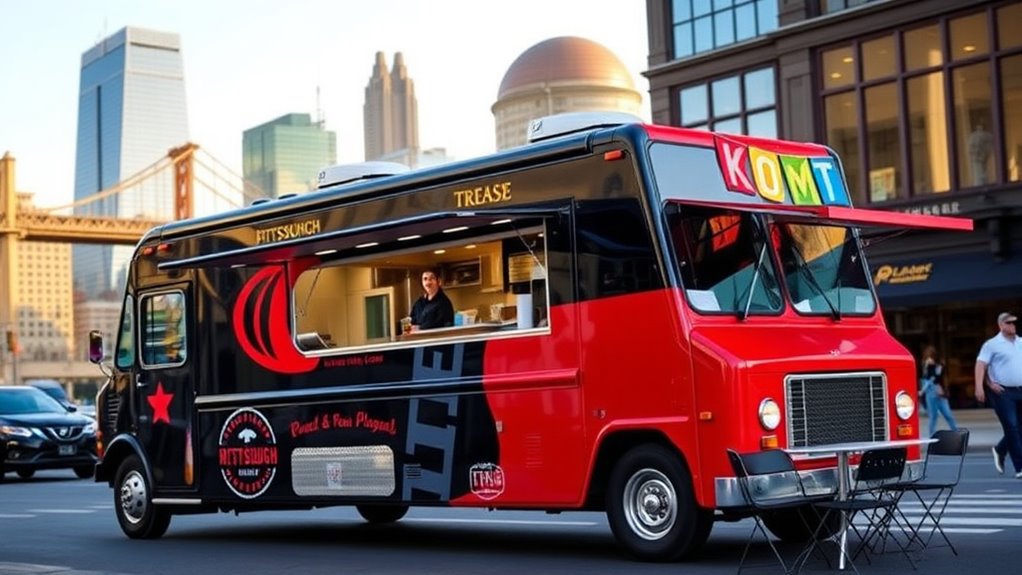
Choosing the right shared kitchen license options can save you time and money as you start. You’ll also need to select custom kitchen equipment that fits your menu and space constraints. Understanding these key points helps you set up a practical and compliant base of operations. Considering alternative investments like Gold IRA options can also provide additional financial security for your business future.
Shared Kitchen Licensing Options
Setting up your food truck often starts with finding a shared kitchen that meets your licensing requirements. Shared kitchen options are popular because they can simplify compliance with shared kitchen regulations and licensing requirements. These facilities are licensed by local health departments and typically comply with all safety standards, making it easier for you to operate legally. When choosing a shared kitchen, verify that it’s approved for commercial food prep and adheres to Pittsburgh’s health codes. Using a shared kitchen can also reduce startup costs and provide access to necessary equipment. Be sure to review their licensing status and ensure it aligns with your specific food truck plans. This ensures you stay compliant and ready to serve customers without unnecessary delays.
Custom Kitchen Equipment Selection
Once you’ve secured a shared kitchen that meets licensing standards, the next step is selecting the right custom kitchen equipment to turn that space into a fully operational base. Focus on choosing durable, high-quality custom kitchen appliances suited to your menu. Consider appliances like grills, fryers, and prep stations that fit your space and workflow. Investing in reliable equipment reduces downtime and simplifies equipment maintenance, saving you money in the long run. Opt for energy-efficient models to lower operating costs. Remember, well-chosen equipment enhances efficiency and ensures consistent food quality. Properly maintained custom kitchen appliances are essential for smooth daily operations. Take the time to research options, compare warranties, and prioritize longevity. This strategic approach sets a solid foundation for your Pittsburgh food truck’s success.
Budgeting and Financing Your Food Truck
When planning your food truck, you’ll need to consider costs like vehicle branding and securing financing options such as local small business grants. It’s also essential to budget for liability coverage to protect your business. Understanding these expenses early helps you create a solid financial plan for your venture. Additionally, researching best colognes for men can help you present a professional image when engaging with customers.
Initial Vehicle Branding Costs
Initial vehicle branding costs typically range from $3,000 to $10,000, depending on the complexity of your design and the size of your food truck. Your branding costs mainly cover custom vehicle wraps, which are vital for attracting customers and establishing your brand identity. High-quality vehicle wraps can be customized with vibrant graphics, logos, and contact information, making your truck stand out on Pittsburgh’s streets. Keep in mind that simpler designs generally cost less, while intricate artwork or specialty finishes increase expenses. Investing in professional installation ensures a polished look and durability. Remember, branding is an essential marketing tool, so allocate enough budget to create an eye-catching design that reflects your concept and appeals to your target audience.
Local Small Business Grants
Local small business grants can be a valuable source of funding to help cover your food truck’s startup costs, from vehicle purchase to equipment and branding. These grants are often offered by city agencies, economic development organizations, and private foundations to support entrepreneurs like you. Exploring local small business grants provides access to startup funding opportunities without the burden of repayment, making them ideal for new food truck operators. To find these grants, check Pittsburgh’s business development resources, attend local workshops, and stay updated on grant announcements. Keep in mind that applying requires a solid business plan and clear goals, but securing a grant can considerably ease your financial load and boost your chances of launching successfully.
Liability Coverage for Food Trucks
Securing the right liability coverage is a key step in budgeting and financing your food truck. Proper insurance requirements protect you from potential legal and financial risks, helping you stay afloat if accidents happen. When choosing liability coverage, consider coverage limits that fit your operation’s size and scope. It’s essential to understand local insurance requirements to guarantee compliance with Pittsburgh regulations.
Key points to focus on include:
- Making certain your liability coverage includes bodily injury and property damage
- Verifying coverage limits meet or exceed legal insurance requirements
- Considering additional coverage like product liability for food-related incidents
Having all-encompassing liability coverage helps you manage risks efficiently, making your financial planning more secure and reliable.
Designing Your Menu and Pricing Strategy
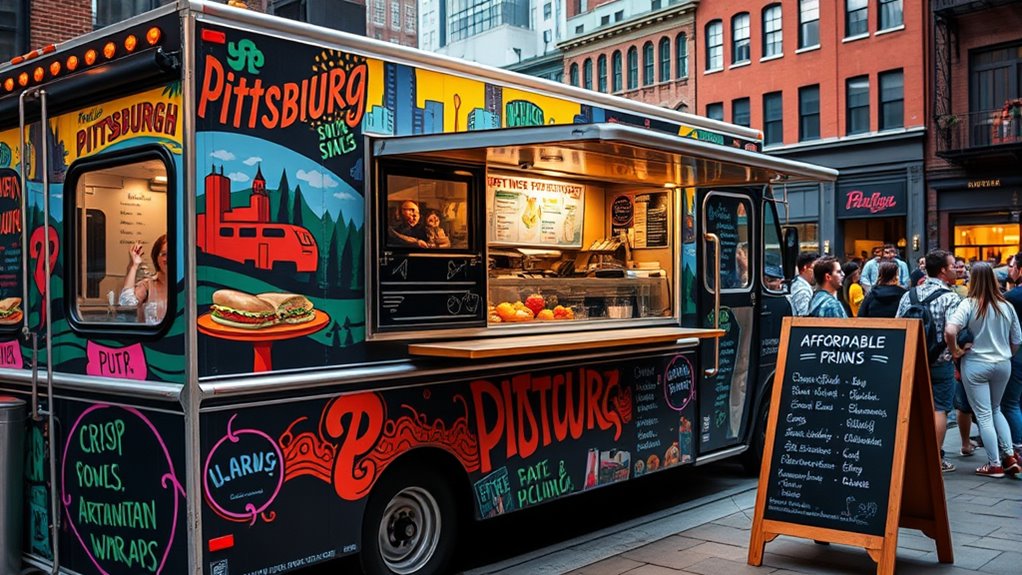
When designing your menu, consider sourcing unique local ingredients to stand out and appeal to Pittsburgh’s community. Calculating the cost per dish helps you set prices that cover expenses while remaining competitive. Balancing quality and affordability guarantees your menu attracts customers and keeps your business profitable. Utilizing reliable electric bike conversion kits can also facilitate quick and eco-friendly deliveries, enhancing your operational efficiency.
Unique Local Ingredient Sourcing
Incorporating unique local ingredients into your food truck menu can set you apart and attract loyal customers. By focusing on local farm sourcing, you guarantee freshness and support Pittsburgh’s agricultural community. Artisanal ingredient procurement allows you to highlight quality and craftsmanship, elevating your dishes. To make the most of these resources, consider:
- Building relationships with local farmers for seasonal produce
- Sourcing specialty cheeses, meats, and baked goods from Pittsburgh artisans
- Incorporating foraged ingredients from nearby parks or forests
This approach not only enhances your menu’s authenticity but also resonates with customers seeking genuine, locally connected flavors. Leveraging local ingredients helps you craft a distinctive menu that champions community support and culinary excellence.
Cost per Dish Calculation
Calculating the cost per dish is a crucial step in designing your menu and setting the right prices for your food truck. Start by carefully portioning each dish to ensure consistency and control ingredient costs. Accurate dish portioning helps you determine how much of each ingredient you need, directly impacting your expenses. Next, track ingredient costs meticulously, including bulk purchases and waste. Add up the total ingredient costs for each dish, then divide by the number of servings to find your cost per dish. This calculation allows you to set prices that cover expenses and generate profit while staying competitive. Regularly review your ingredient prices and portioning to adjust your pricing strategy as needed, maintaining profitability and customer satisfaction.
Technology and Operations
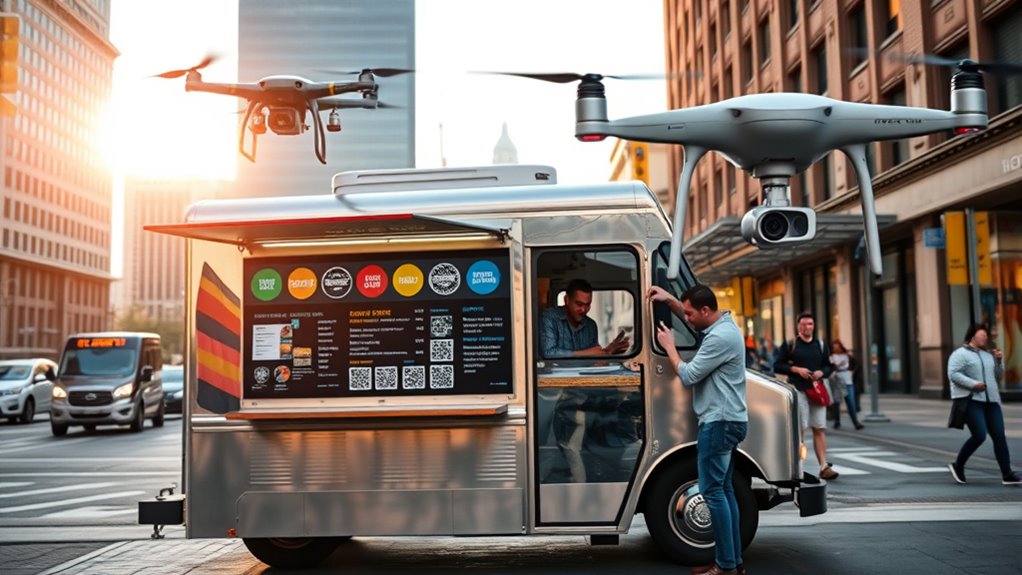
To run your food truck smoothly, you’ll want reliable technology like portable card readers that accept multiple payment methods. Mobile inventory tracking apps help you stay on top of stock levels and reorder supplies efficiently. These tools streamline operations, so you can focus on serving great food to your customers.
Portable Card Reader Options
Choosing the right portable card reader can markedly streamline your food truck’s payment process, making transactions quicker and more secure. With cashless payments becoming standard, wireless terminals provide flexibility and convenience. These devices allow you to accept credit and debit cards on the spot, reducing wait times and improving customer satisfaction. When selecting a portable card reader, consider options that support contactless payments like Apple Pay or Google Pay. Here are some top choices:
- Square Reader for magstripe and contactless payments
- PayPal Zettle card reader
- Clover Go mobile point-of-sale device
All these options enable seamless transactions and support a variety of payment methods, helping you operate efficiently in Pittsburgh’s vibrant food scene.
Mobile Inventory Tracking Apps
Integrating mobile inventory tracking apps into your food truck operations can substantially boost efficiency and accuracy. These apps streamline inventory management by providing real-time stock updates, so you always know what’s available. You won’t waste time manually tracking supplies or running out of key ingredients unexpectedly. With features like barcode scanning and automatic alerts, you can quickly update stock levels as you use ingredients, reducing errors. This real-time data helps you make informed decisions about purchasing and menu adjustments, minimizing waste and maximizing profits. Mobile inventory tracking apps also allow your team to stay connected, ensuring everyone is on the same page. By adopting these tools, you’ll improve operational flow, reduce downtime, and maintain a consistent customer experience.
Marketing and Growing Your Presence
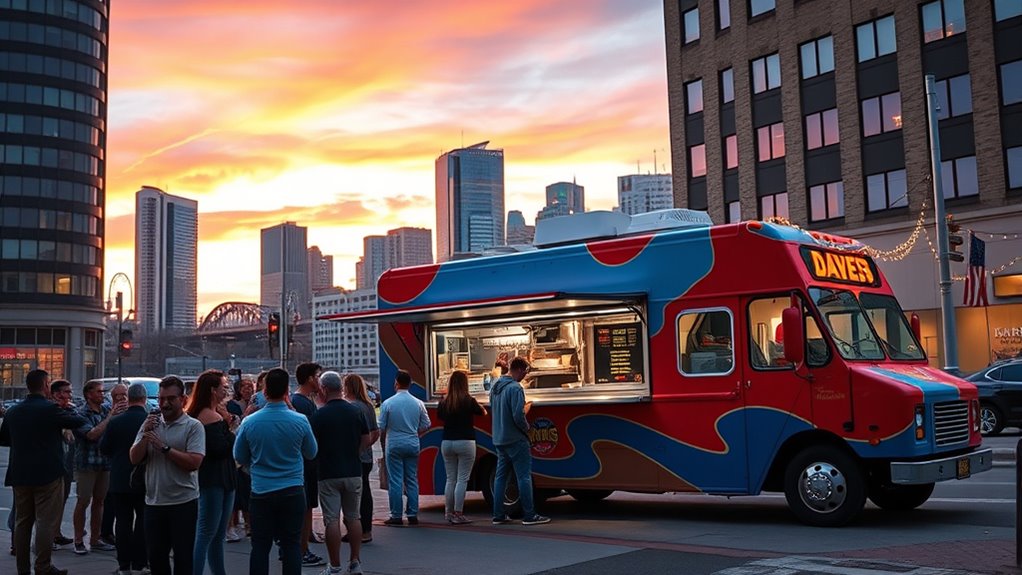
To boost your food truck’s visibility, take advantage of popular local event schedules to attract crowds. Implement customer loyalty programs to keep regulars coming back and spread positive word-of-mouth. These strategies help grow your presence and build a loyal customer base in Pittsburgh.
Popular Local Event Schedules
Have you ever wondered which local events are best for boosting your food truck’s visibility in Pittsburgh? Attending popular food truck festivals and street food events can substantially increase your exposure and attract new customers. These events draw large crowds enthusiastic to try diverse cuisines, making them ideal for marketing your truck.
Some key events to watch for include:
- Annual Pittsburgh Food Truck Festival
- Downtown Street Food Nights
- Summer Food Truck Thursdays
Participating in these events helps you build a local customer base and establish your brand presence. Plus, they’re great opportunities to network with other vendors and gain insights into what works best in Pittsburgh’s vibrant food scene. Make sure to check event schedules regularly to maximize your visibility.
Customer Loyalty Programs
Participating in popular events can boost your food truck’s visibility, but turning those new customers into loyal patrons requires an ongoing strategy. Customer loyalty programs are essential. Digital punchcards and loyalty apps make it easy to reward repeat customers and encourage return visits. You can offer discounts, free items, or exclusive deals through these platforms, making it simple for customers to track their rewards. Consider creating a tiered program to motivate higher spending. Here’s an example:
| Reward Type | Benefits |
|---|---|
| Digital punchcards | Quick, eco-friendly, easy to use |
| Loyalty apps | Customizable rewards, push notifications |
| Referral bonuses | Bring in new customers |
| Special occasion perks | Celebrate birthdays or anniversaries |
| Exclusive offers | Reward top customers |
These tools help grow your presence and build lasting relationships in Pittsburgh.
Navigating Pittsburgh’s Food Scene
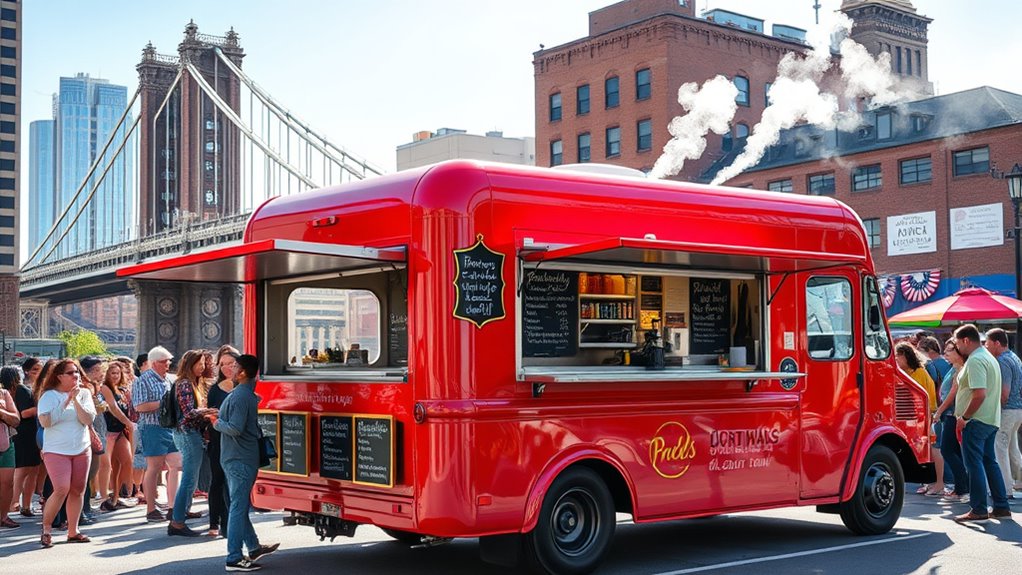
Exploring Pittsburgh’s vibrant food scene can feel overwhelming, but with a little guidance, you’ll discover a rich tapestry of flavors waiting to be explored. To stand out, focus on your food truck aesthetics—eye-catching designs attract more customers. Use social media marketing to build buzz and connect with local food lovers. Visit popular spots like the Strip District or Lawrenceville to understand the local palate. Attend food festivals to network and observe competitors. Keep an eye on trending cuisines and incorporate them into your menu. Engaging visuals and consistent branding on your social platforms will help you grow a loyal following. Maneuvering Pittsburgh’s diverse food scene takes effort, but it’s an exciting journey that’ll pay off as you carve out your niche.
Frequently Asked Questions
What Permits Are Needed for Overnight Parking of Food Trucks in Pittsburgh?
You’ll need to obtain overnight permits for parking your food truck in Pittsburgh, as parking regulations restrict overnight parking without proper authorization. Contact the Pittsburgh Department of Mobility and Infrastructure to apply for these permits, ensuring you comply with local rules. Make sure to review specific parking zones and restrictions, as not all areas allow overnight parking. Securing the right permits helps you avoid fines and keeps your operations running smoothly.
How Do I Find Reliable Food Truck Maintenance Services Locally?
Finding reliable food truck maintenance services is like searching for a needle in a haystack, but you can start by checking local directories and reviews. Look for shops specializing in truck repairs and offering maintenance contracts tailored for food trucks. Ask fellow vendors for recommendations, and visit the shop to see their work firsthand. This way, you’ll keep your truck running smoothly and your business thriving.
Are There Any Local Food Festivals or Events for Food Trucks in Pittsburgh?
Yes, Pittsburgh hosts several food truck festivals and local food events throughout the year. You can check out events like the Pittsburgh Food Truck Festival and local city calendars for upcoming food truck festivals. Attending these festivals helps you network with other vendors, showcase your truck, and attract customers. Keep an eye on social media and community boards for updates on food truck festivals and local food events happening near you.
What Are the Best Locations for Food Trucks to Maximize Foot Traffic?
Did you know that high-traffic areas can boost your sales by up to 40%? To maximize foot traffic, focus on popular food truck locations like downtown Pittsburgh, near universities, and at major event venues. Conduct foot traffic analysis regularly to identify peak times and spots. By targeting these busy areas, you’ll attract more customers and grow your business quickly. Stay adaptable and keep an eye on evolving hotspots for the best results.
How Can I Connect With Other Pittsburgh Food Truck Owners for Support?
You can connect with other Pittsburgh food truck owners through food truck associations and social media groups. Join local industry groups to share advice, experiences, and support. Attend meetups and events organized by these associations to network in person. Engage actively on social media platforms like Facebook or Instagram, where many owners exchange tips, collaborate, and promote each other. Building these relationships can boost your business and provide valuable support.
Conclusion
Starting your food truck in Pittsburgh is like planting a seed in a city bursting with flavor. With passion and perseverance, you’ll turn your culinary dreams into a thriving reality amidst the vibrant streets. Embrace every challenge as a stepping stone, and watch your venture blossom like the city’s iconic bridges. Before long, you’ll be serving up delicious moments that leave a lasting impression—fueling your journey with the spirit of Pittsburgh’s unstoppable energy.
Halloween Picks
halloween
As an affiliate, we earn on qualifying purchases.