
To start a food truck in Sacramento, CA, you’ll need to research local permits, licenses, and health requirements. Engage with the vibrant food scene by attending festivals and collaborating with local chefs. Develop a menu highlighting regional flavors and seasonal ingredients. Budget for equipment, permits, and marketing, and choose reliable shared kitchens if needed. Building a strong brand and community presence is essential for growth. Exploring these steps further will help you turn your food truck dream into reality.
Key Takeaways
- Research Sacramento’s local food scene, attend festivals, and engage with the community to shape your menu and brand presence.
- Understand and comply with city permits, health regulations, and designated parking zones for legal operation.
- Secure licensed shared kitchen space and schedule health inspections to meet local requirements.
- Invest in essential, high-quality equipment tailored to your menu and optimize your limited truck space.
- Develop a detailed budget, explore SBA loans, and obtain appropriate insurance to ensure financial stability and compliance.
Starting With Local Food Scene

To successfully launch your food truck in Sacramento, immersing yourself in the local food scene is essential. Attend local food festivals to get a feel for popular flavors and emerging trends, and to connect with fellow vendors and potential customers. These events let you showcase your culinary style and gather valuable feedback. Additionally, consider collaborating with local chefs to create unique menu items that appeal to the community’s tastes. Chef collaborations can boost your credibility and introduce you to wider audiences. Engaging with Sacramento’s vibrant food scene helps you build a strong network, stay inspired, and tailor your offerings to what locals crave. By immersing yourself in these experiences, you’ll set a solid foundation for your food truck’s success. Incorporating market research into your planning can help identify what dishes are in high demand and how to position your brand effectively.
Understanding Local Requirements

To operate legally in Sacramento, you need to navigate online permit application portals and make certain you meet sanitation standards and recordkeeping requirements. You also have to park your truck in designated zones approved by the city. Understanding these local rules helps you avoid fines and keeps your food truck running smoothly. Additionally, familiarizing yourself with essential oils for various health concerns, such as respiratory health, can be beneficial for maintaining overall well-being while operating your business.
Online Permit Application Portals
Finding your way through Sacramento’s online permit application portals is a vital step in starting your food truck business. These portals streamline the process by allowing you to submit online permits and digital applications quickly and efficiently. Sacramento’s city website provides a user-friendly platform where you can access all necessary forms and detailed instructions. By completing online permits, you avoid delays caused by in-person visits and ensure your application is submitted correctly. Be sure to review the specific requirements for mobile food vendors and upload any supporting documents electronically. Using these digital applications helps you stay organized and track your permit status easily. Navigating these portals may seem challenging at first, but once you get familiar with the process, it simplifies starting your food truck venture.
Sanitation Standards and Recordkeeping
Understanding Sacramento’s sanitation standards and recordkeeping requirements is essential for ensuring your food truck meets local health regulations. Proper record management helps track food safety practices, maintain cleanliness, and pass inspections smoothly. Sacramento requires you to keep detailed logs of cleaning schedules, temperature checks, and pest control efforts. Additionally, you must regularly document food safety training for staff. Here are three key points to remember:
- Keep records of daily cleaning and sanitation routines.
- Log temperature readings for refrigeration and cooking equipment.
- Maintain documentation of food safety training and certifications.
Designated Truck Parking Zones
Proper parking arrangements are vital for operating your food truck smoothly in Sacramento. You need to identify designated parking zones that comply with local regulations, ensuring your truck is legally parked during business hours. Sacramento’s zone regulations specify where food trucks can park, often restricting parking to certain areas or requiring permits. Familiarize yourself with city ordinances and look for designated parking areas approved for food trucks. Parking outside these zones can lead to fines or towing, disrupting your operations. Some zones may have time limits or specific hours, so plan your schedule accordingly. By adhering to designated parking rules, you avoid legal issues and create a positive reputation with customers and city officials. Always stay updated on any changes to zone regulations to keep your food truck business compliant.
Setting Up Your Base of Operations
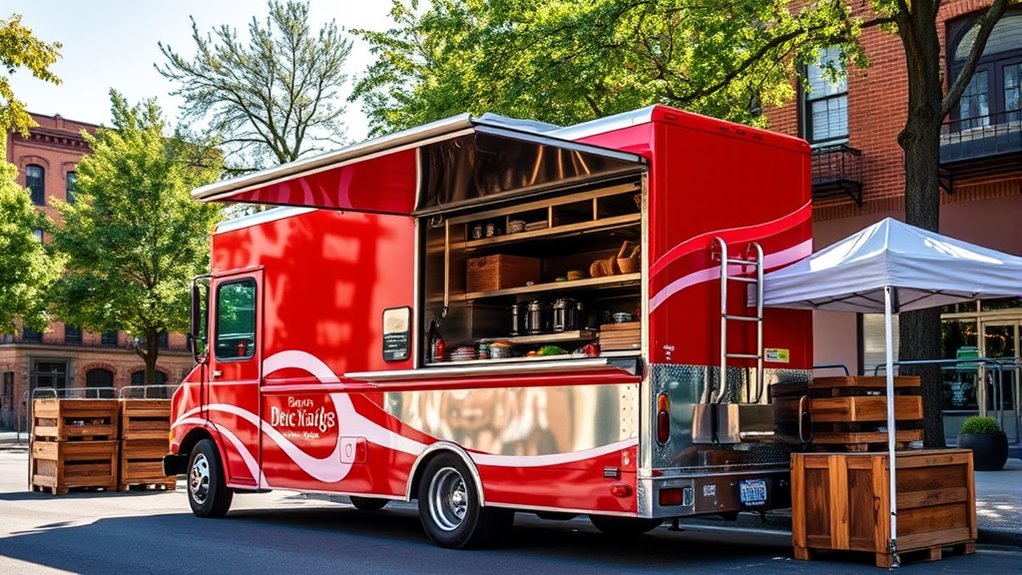
To set up your base of operations, you’ll need to understand shared kitchen licensing requirements in Sacramento and choose the right custom kitchen equipment. Ensuring your space complies with local health codes is essential for smooth operation. Carefully selecting equipment that fits your menu and budget will streamline your setup process. Additionally, incorporating rustic decor elements can help create an inviting atmosphere that aligns with a farmhouse aesthetic, appealing to customers seeking a unique food experience.
Shared Kitchen Licensing Requirements
Setting up your food truck in Sacramento often involves using a shared kitchen to meet health and safety standards efficiently. To operate legally, you’ll need to secure shared kitchen licensing and obtain the necessary health department permits. Here’s what to keep in mind:
- Make certain the shared kitchen has valid licenses and complies with local health codes.
- Submit an application for shared kitchen licensing through the Sacramento health department.
- Schedule inspections to verify that the facility meets sanitation and safety standards.
Custom Kitchen Equipment Selection
Choosing the right custom kitchen equipment is essential for optimizing your food truck’s operations and ensuring you meet health standards. When considering equipment selection, focus on functionality, durability, and space efficiency. Your custom kitchen should include essential appliances like ovens, refrigerators, and prep stations tailored to your menu. Think about how each piece fits into your workflow, minimizing movement and maximizing productivity. Prioritize high-quality, easy-to-clean equipment that withstands daily use. Proper equipment selection not only improves efficiency but also helps you stay compliant with health regulations. Invest in versatile, space-saving solutions to make the most of your limited truck footprint. By carefully choosing your custom kitchen equipment, you set a solid foundation for smooth operations and long-term success.
Budgeting and Financing Your Food Truck

Getting your food truck off the ground requires careful planning of your budget and financing options. You’ll need to take into account initial equipment costs, explore small business loans, and make sure you have adequate liability coverage. Addressing these points early will help you build a solid foundation for your food truck business. Incorporating efficient systems, such as climate control, can also improve comfort and operational efficiency in your workspace.
Initial Equipment Purchase Costs
Purchasing the right equipment is a crucial step in launching your food truck, and understanding the costs involved can help you create a realistic budget. Your initial equipment purchase costs include essential items needed to operate smoothly. First, you’ll need a commercial kitchen setup, which can range from $20,000 to $50,000, depending on the size and quality. Second, consider purchasing cooking appliances like grills, fryers, and ovens, which may cost between $10,000 and $30,000. Finally, don’t forget safety and sanitation equipment, such as fire suppression systems and refrigeration units, typically adding another $5,000 to $15,000. Knowing these costs helps you plan financially and avoid surprises when investing in your food truck’s initial equipment.
Small Business Administration Loans
Are you aware of how Small Business Administration (SBA) loans can help finance your food truck? These loans offer accessible funding options to cover startup costs, including vehicle purchase, equipment, and initial branding efforts. With SBA loans, you can invest in strong food truck branding that attracts customers and builds recognition. Plus, you’ll have resources to develop effective social media marketing strategies, helping you reach your target audience and boost sales. Securing an SBA loan can ease your budgeting process and provide the capital needed to launch confidently. Be prepared to present a solid business plan and demonstrate your repayment ability. This support can make turning your food truck dream into reality more manageable, ensuring you have the funds to promote your unique offerings and grow your presence in Sacramento.
Liability Coverage for Food Trucks
Liability coverage is a crucial aspect of budgeting and financing your food truck because it protects your business from costly legal claims and damages. Without adequate liability insurance, a single accident or complaint could threaten your financial stability. To guarantee proper protection, consider these key points:
- Determine appropriate coverage limits to safeguard against potential claims, balancing affordability with sufficient protection.
- Understand what your liability insurance covers, including property damage, bodily injury, and legal fees.
- Regularly review and update your coverage to match your business growth and changing risks.
Designing Your Menu and Pricing Strategy
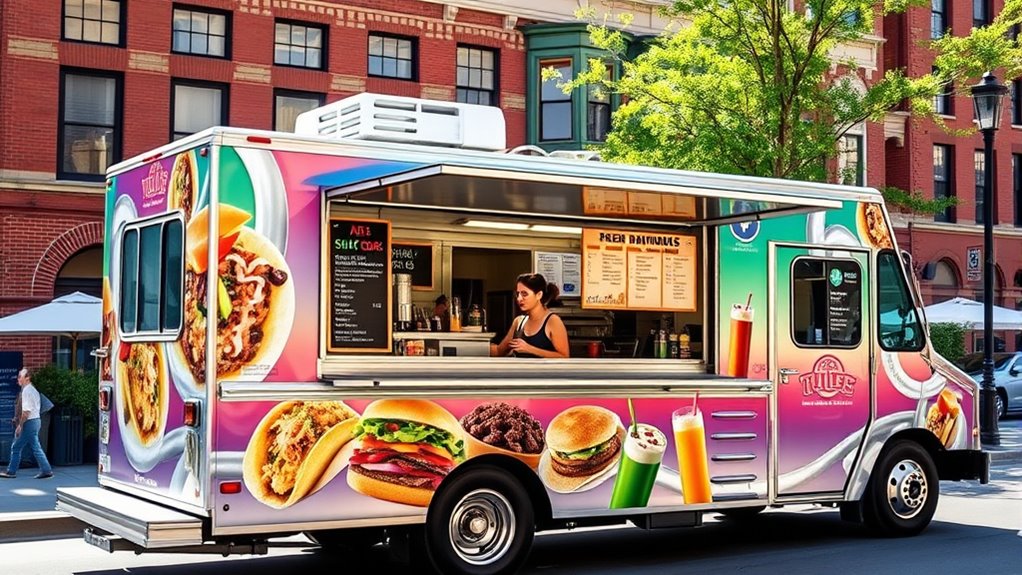
When designing your menu, consider using locally sourced ingredients to attract health-conscious customers and support local farms. Calculating the cost per serving helps you set competitive prices while maintaining profitability. Balancing quality and affordability is key to creating a menu that appeals to Sacramento’s diverse food scene. Incorporating flavor variations can also help cater to different tastes and dietary preferences.
Locally Sourced Ingredient Integration
Incorporating locally sourced ingredients into your menu not only boosts freshness and flavor but also appeals to customers who value community support and sustainability. To succeed, focus on ingredient sourcing that emphasizes quality and seasonality. This approach allows you to create menu innovation by highlighting regional flavors and unique dishes. Consider these tips:
- Build relationships with local farmers and vendors to ensure fresh, reliable ingredient sourcing.
- Design dishes that adapt to seasonal availability, keeping your menu exciting and sustainable.
- Emphasize the story behind your ingredients to connect with customers and reinforce your commitment to community support.
Cost per Serving Calculation
Understanding your cost per serving is the foundation for designing a menu that’s both appealing and profitable. Start by conducting a thorough cost analysis, accounting for ingredients, labor, and overhead. Portion control is key—you want consistent servings that optimize ingredient use without sacrificing quality. By accurately calculating the cost per serving, you can set prices that cover expenses and ensure a profit margin. This also helps you identify high-cost items and adjust recipes or portion sizes accordingly. Keep detailed records of ingredient costs and portion sizes to refine your pricing strategy over time. Regularly reviewing your cost analysis allows you to stay competitive in Sacramento’s vibrant food scene while maintaining healthy profit margins. Ultimately, precise cost per serving calculations keep your food truck sustainable and financially successful.
Technology and Operations
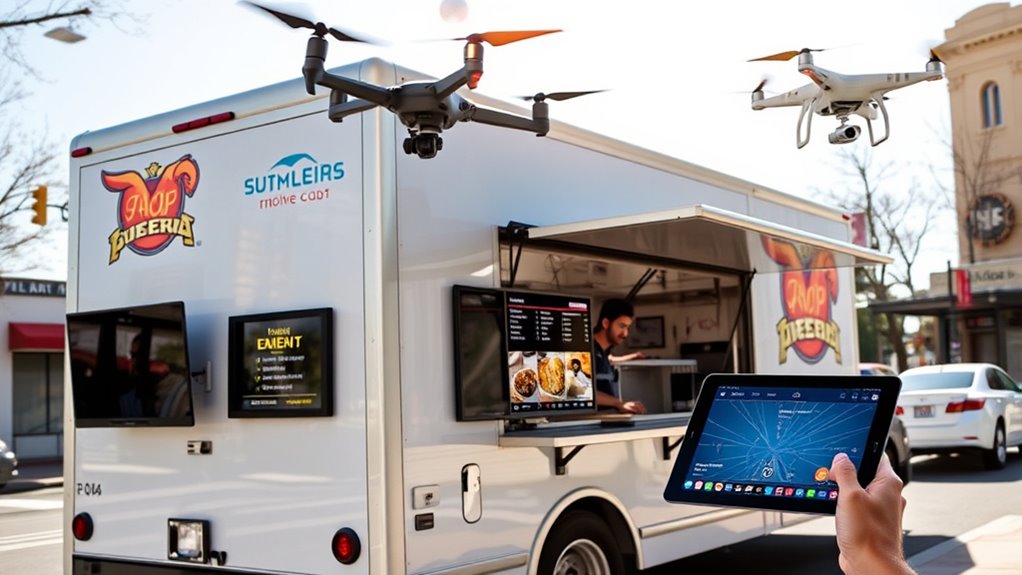
You need reliable technology to keep your food truck running smoothly, starting with wireless card readers that process payments quickly. A mobile POS system helps you manage sales on the go, while stock tracking tools ensure you stay on top of inventory. Integrating these technologies simplifies operations and keeps your business efficient.
Wireless Card Readers Integration
Integrating wireless card readers into your food truck’s operations streamlines payment processing and enhances customer experience. With this technology, you can offer fast, secure cashless payments and enable contactless transactions, reducing wait times and physical contact. This upgrade helps you stay competitive and caters to customer preferences for quick, hygienic transactions. Here are three benefits:
- Faster checkout times, keeping lines moving smoothly
- Increased security for card information during contactless payments
- Flexibility to accept various payment methods, including mobile wallets
Mobile POS and Stock Tracking
Implementing a mobile POS system combined with stock tracking can substantially enhance your food truck’s efficiency. With a mobile POS, you can process payments quickly and accurately while updating sales data in real-time. Stock tracking helps you monitor inventory levels, prevent shortages, and reduce waste. Combining both tools means you’ll always know what’s available and can restock before running out. To illustrate, here’s how mobile POS and stock tracking work together:
| Feature | Benefit | Impact |
|---|---|---|
| Real-time updates | Accurate inventory management | Less waste, better profit |
| Easy sales processing | Faster customer service | Increased customer satisfaction |
| Automatic alerts | Restock reminders | No more stockouts |
Using these technologies streamlines operations, saves time, and boosts your bottom line.
Marketing and Growing Your Presence

To grow your food truck’s presence, focus on scheduling your appearances at popular events when food trucks draw the biggest crowds. Posting engaging and mouth-watering photos on Instagram can turn followers into loyal customers. By combining strategic event planning with eye-catching social media content, you’ll boost visibility and attract more fans.
Popular Event Scheduling Tips
Scheduling your food truck at the right events can substantially boost your visibility and sales. To do this effectively, focus on strategic event scheduling and smooth vendor coordination. First, research local festivals, farmers’ markets, and community gatherings that attract your target audience. Second, plan your calendar well in advance, ensuring you don’t double-book or miss prime opportunities. Third, communicate clearly with event organizers to confirm details like setup times, parking, and permits. These steps help you maximize exposure and avoid last-minute surprises. By honing your event scheduling and coordinating seamlessly with organizers, you’ll build a strong presence in Sacramento’s vibrant food scene and attract loyal customers. Consistent, well-planned participation makes all the difference.
Engaging Instagram Foodie Posts
Since Instagram is a visual platform, creating eye-catching, high-quality photos of your food is essential to attract followers and potential customers. Focus on good food photography by ensuring proper lighting, appealing angles, and vibrant colors that make your dishes pop. Consistent, visually appealing posts help build your brand and engage your audience. Use hashtag strategies to increase your reach—combine popular hashtags like #FoodTruckLife with niche tags specific to Sacramento or your cuisine. Don’t forget to include location tags to target local foodies. Engaging captions, behind-the-scenes shots, and showcasing customer interactions also boost engagement. The more visually appealing and strategic your posts are, the more likely you’ll attract followers, generate buzz, and grow your food truck’s presence on Instagram.
Master Local Food Trends
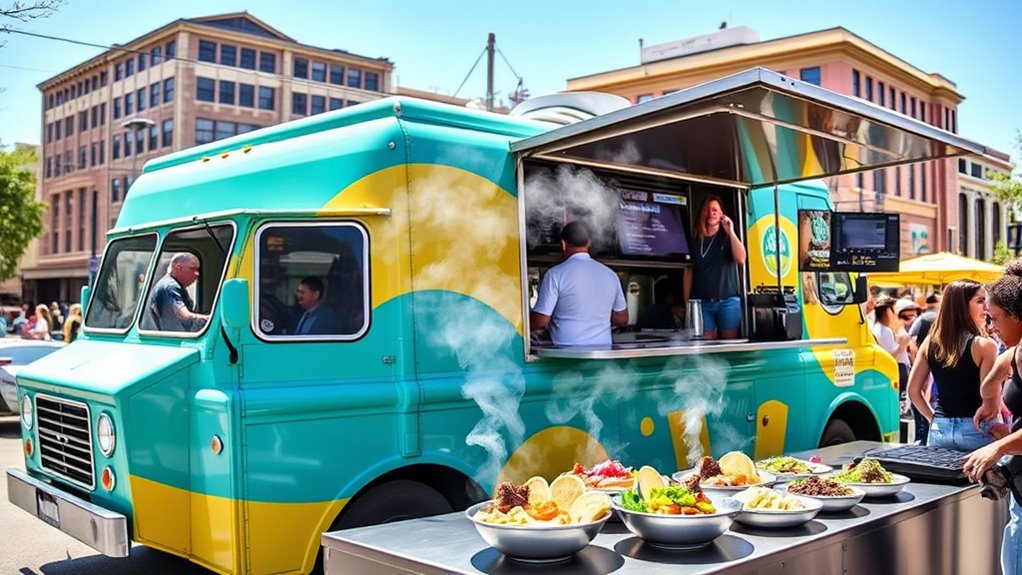
Understanding and mastering local food trends is essential for your food truck’s success in Sacramento. Staying ahead means embracing cultural fusion, which resonates with the city’s diverse community. Incorporate seasonal ingredients to keep your menu fresh and exciting, aligning with local preferences. To do this effectively, consider these key tips:
- Follow local food events and festivals to spot emerging trends.
- Experiment with dishes that blend different cultural influences, appealing to adventurous eaters.
- Source seasonal ingredients from nearby farmers to guarantee freshness and support local businesses.
Frequently Asked Questions
What Are the Best Locations to Park a Food Truck in Sacramento?
You should target high-traffic areas like Downtown Sacramento, Midtown, and near popular parks or events. Check food truck zoning and parking regulations before setting up to avoid violations. Busy spots such as the Sacramento Riverfront or near tourist attractions often draw crowds, boosting sales. Always obtain necessary permits, and consider partnering with local businesses for exclusive parking rights to maximize visibility and compliance.
Are There Specific Health Codes Unique to Sacramento for Food Trucks?
You’ll need to follow Sacramento’s specific health codes, like guaranteeing your food safety regulations meet city standards. For example, during the health inspection process, inspectors check your truck’s cleanliness, proper food storage, and sanitation. Sacramento requires a permit and adherence to their local health department guidelines, which might differ slightly from other cities. Staying compliant ensures smooth operations and helps you pass inspections, avoiding costly delays.
How Do Sacramento’s Weather Conditions Affect Food Truck Operations?
Sacramento’s weather can be hot in summer and rainy in winter, affecting your food truck operations. You should plan a seasonal menu to accommodate changing conditions and keep customers happy. Also, consider regular vehicle maintenance to prevent breakdowns during extreme weather. By preparing for these conditions, you’ll ensure smooth operations year-round and provide a great experience regardless of the weather.
What Permits Are Required for Nighttime Food Truck Vending?
You need to obtain specific food truck permits for nighttime vending in Sacramento, including a mobile food facility permit and health department approval. Additionally, you must follow nighttime vending regulations, such as curfew hours and location restrictions. Make sure to verify with local authorities for any additional permits or restrictions to ensure compliance. Securing these permits and understanding regulations helps you operate smoothly and legally during nighttime hours.
How Can I Partner With Local Sacramento Events or Festivals?
Did you know over 70% of Sacramento’s events seek local food vendors? To partner, focus on event sponsorship and community collaborations. Reach out directly to event organizers with a proposal highlighting your food truck’s unique offerings. Attend local festivals and networking events to build relationships. Offer to sponsor or provide catering, enhancing your visibility. This proactive approach helps you connect with the community, boosting your food truck’s reputation and customer base.
Conclusion
Starting a food truck in Sacramento means embracing the vibrant local scene and staying true to what customers crave. With the right planning, branding, and passion, you can turn your culinary dreams into a thriving business. Are you ready to hit the streets and make your mark? Remember, success comes from blending your unique flavor with Sacramento’s diverse food culture. So, why wait? Your food truck adventure starts today—are you prepared to serve up something special?