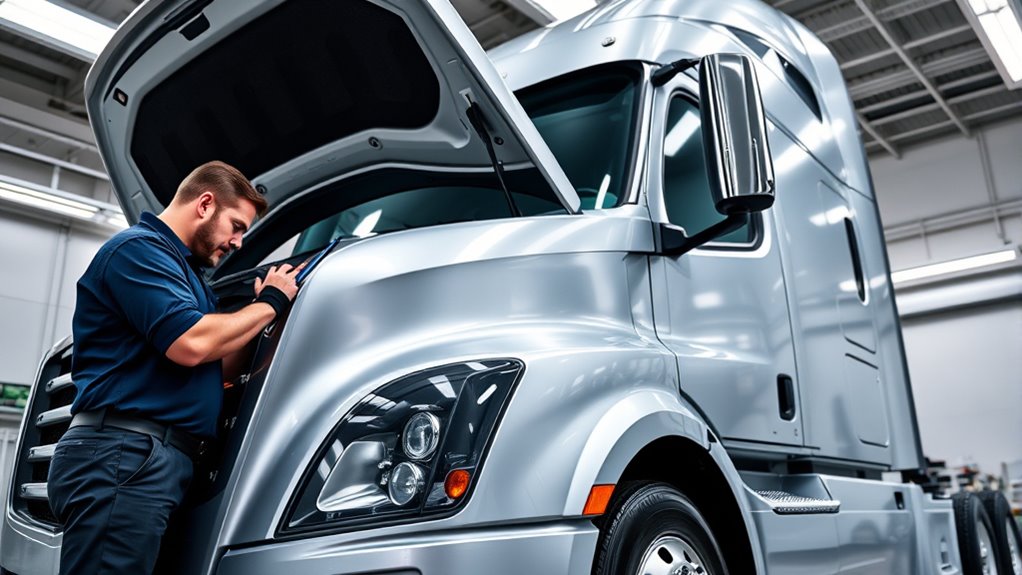

Getting your truck inspected and certified is essential for safety, legal compliance, and avoiding costly fines. You should make certain that your truck’s brakes, lights, tires, and emissions systems are in good shape before the inspection. Passing the safety tests and emissions evaluation leads to certification, which you’ll need for registration, sale, or commercial use. Maintaining your truck regularly keeps it roadworthy. Keep going to learn more about the process and tips to make inspections smoother.
Key Takeaways
- Schedule a certified inspection with authorized testing facilities to assess safety features and emissions compliance.
- Prepare your truck by checking brakes, lights, tires, and exhaust system to ensure it meets safety standards.
- Address any mechanical issues or warning lights before the inspection to increase chances of passing.
- Submit necessary documentation of maintenance or repairs during the inspection process.
- Obtain the certification upon passing, which is required for registration renewal, commercial use, or sale.

Getting your truck inspected and certified is a essential step to guarantee it meets safety standards and complies with legal requirements. When you bring your vehicle in for inspection, one of the primary focuses is ensuring that your truck adheres to safety regulations designed to protect you and everyone on the road. These regulations cover everything from brake performance and tire condition to lights and steering. Passing these safety checks confirms your truck is roadworthy and helps prevent accidents caused by mechanical issues. It also guarantees you’re not risking fines or penalties for operating an unsafe vehicle.
Ensuring your truck passes safety inspections prevents accidents and legal penalties.
Beyond safety, vehicle emissions play a pivotal role in the inspection process. Environmental standards are continuously tightening to reduce pollution, so your truck must meet specific emissions criteria. During the inspection, technicians check your vehicle’s exhaust system for leaks, proper functioning of emission control devices, and overall compliance with environmental regulations. If your truck exceeds emission limits, you’ll need to repair or replace components like the catalytic converter or oxygen sensors. Keeping emissions in check isn’t just about legality; it also helps protect the environment and promotes cleaner air in your community.
The process of inspection typically involves a thorough assessment of both safety features and emissions systems. You’ll need to provide documentation proving your truck has undergone any required maintenance or repairs. Many inspection stations use specialized equipment to quickly evaluate emissions levels and identify issues. If your truck passes, you’ll receive certification showing it meets all safety and environmental standards. This certification is often required for registration renewal, commercial operations, or when selling the vehicle. Failing the inspection means you’ll need to address the identified problems before returning for a re-inspection. Regular maintenance and staying informed about safety regulations can help you stay compliant and avoid surprises during inspections.
Preparing your truck ahead of time can make the process smoother. Check your brakes, lights, tires, and steering components. Make sure your exhaust system is intact and functioning properly. Address any warning lights on your dashboard, as these often indicate issues that could cause failure. Regular maintenance, like oil changes and filter replacements, can also prevent problems that might lead to a failed inspection. Staying proactive not only saves you time and money but guarantees your truck remains compliant with safety regulations and emission standards.
Frequently Asked Questions
How Often Should My Truck Be Inspected?
You should schedule vehicle maintenance inspections based on your truck’s usage and manufacturer recommendations, typically every 12 months or 12,000 to 15,000 miles. Inspection frequency can vary if you frequently haul heavy loads or drive in challenging conditions. Regular inspections help catch issues early, ensuring safety and compliance. Always stay proactive with your truck’s maintenance schedule, and consult your owner’s manual or a professional mechanic for personalized advice.
What Documents Are Required for Certification?
To get your truck certified, you need to bring registration paperwork and proof of your vehicle’s history, including maintenance records. Make sure you also have your driver’s license and proof of insurance. The inspection station will review these documents to verify your truck meets safety and emissions standards. Having everything organized and ready helps streamline the process, ensuring you get your certification without delays.
Are There Any Costs Associated With Inspections?
Sure, inspection costs aren’t exactly a bargain, but hey, your truck’s safety is priceless, right? You’ll face fee structures that vary depending on your location and vehicle type. Some places charge a flat fee, while others have a tiered system. Expect to pay for the inspection itself, and possibly for any repairs needed to meet standards. Budget accordingly, because skipping inspections isn’t just reckless—it’s costly in more ways than one.
Can I Perform the Inspection Myself?
Yes, you can perform a DIY inspection, but it won’t substitute for professional certification. While you can check basic safety features yourself, a certified inspector verifies everything meets legal standards. To ascertain your truck passes inspection and is properly certified, it’s best to have a professional conduct the inspection. Doing so guarantees compliance, avoids potential fines, and keeps your truck road-ready. Always follow local regulations for specific requirements.
What Happens if My Truck Fails the Inspection?
If your truck fails the inspection, it feels like the end of the world, but don’t panic! An inspection failure means you must address the specific issues highlighted, starting the repair process. You’ll need to fix the problems, then schedule a re-inspection. Until then, your truck can’t be driven legally. Stay proactive, get those repairs done promptly, and you’ll be back on the road faster than you think!
Conclusion
Remember, regular truck inspections aren’t just about compliance—they help prevent costly breakdowns and keep you safe on the road. Did you know that trucks with up-to-date certifications are 30% less likely to experience roadside failures? Staying on top of inspections guarantees your vehicle runs smoothly and legally, saving you time and money in the long run. Keep your truck certified and road-ready; it’s a smart move for your business and your safety.