

To effectively monitor expiration dates with FIFO, organize your inventory so older stock is always used first. Place new shipments behind existing items, and regularly review stock levels and expiry dates. This systematic approach encourages you to prioritize using products before they expire, reducing waste and maintaining freshness. Consistent stock rotation supports safety standards and improves overall efficiency. Keep applying these practices to guarantee your inventory stays up-to-date and compliant—continue to explore how it all works.
Key Takeaways
- Organize inventory so older stock is accessed first, ensuring expiration dates are monitored effectively.
- Regularly review inventory and expiration dates to identify products nearing expiry for timely use.
- Label stock with clear expiration dates to facilitate easy tracking and adherence to FIFO principles.
- Implement systematic stock rotation by placing new items behind older ones to prevent expired products.
- Use inventory management software to track expiration dates and automate alerts for items approaching their expiry.
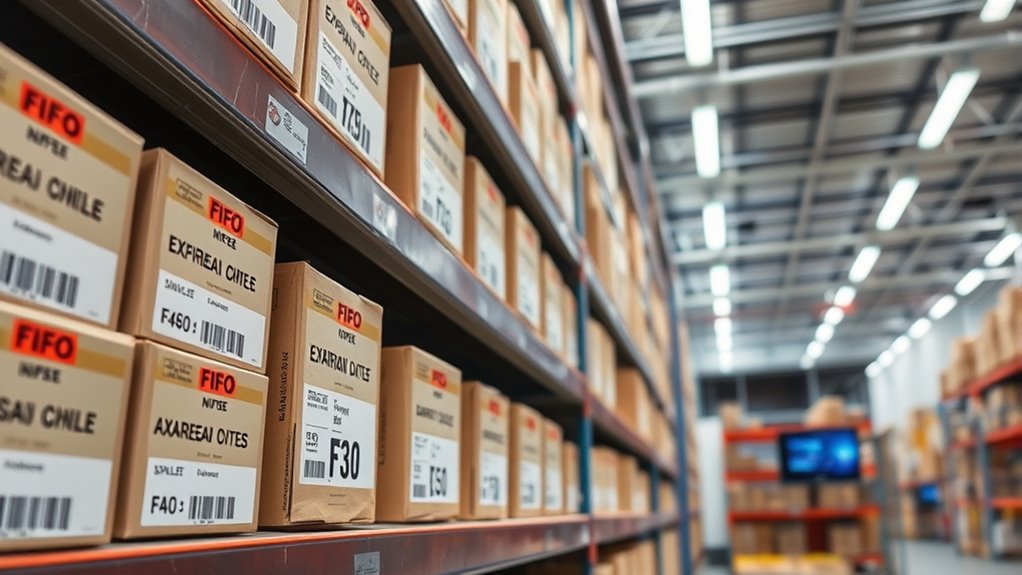
Monitoring expiration dates is essential to guarantee product quality and safety, and using the FIFO (First-In, First-Out) method makes this process more effective. When you prioritize FIFO, you ensure that older stock is used first, reducing waste and preventing expired products from lingering in storage. This approach directly influences your inventory turnover rate, helping you maintain a fresh stock that meets safety standards. The faster your inventory turns over, the less likely you are to face spoilage or obsolescence, which saves you money and improves overall efficiency.
Implementing FIFO requires diligent stock rotation. You need to organize your inventory so that new stock is placed behind older items, making it easier to pick the oldest products first. This systematic approach minimizes the risk of expired products remaining unnoticed. As you receive new shipments, you should always stock them behind existing inventory rather than in front. This simple step ensures that your team naturally pulls the oldest stock during regular operations, maintaining a smooth stock rotation process. Additionally, proper stock management is crucial for sustaining an effective FIFO system and ensuring compliance with safety standards.
By actively managing inventory turnover with FIFO, you keep your stock fresh and aligned with expiration dates. Regularly reviewing your inventory levels and expiration dates helps you identify items that need to be prioritized for use. This proactive approach reduces the chance of selling or using expired products, which can damage your reputation and incur financial losses. Furthermore, maintaining good stock rotation practices streamlines your workflow, making it easier for your team to stay organized and avoid confusion.
In addition, applying FIFO effectively can improve your overall inventory management. It encourages more accurate record-keeping and better planning for future stock orders. When you understand how quickly your inventory turns over, you can adjust your purchase quantities and reorder points to match demand, preventing overstocking or shortages. Proper stock rotation also makes it easier to conduct stock audits and ensure compliance with safety standards.
Ultimately, monitoring expiration dates through disciplined stock rotation and FIFO principles helps you deliver quality products consistently. It safeguards your reputation and ensures that your customers receive items that are safe and fresh. By focusing on inventory turnover and maintaining a rigorous stock rotation system, you optimize your storage, reduce waste, and keep your operation efficient. This method not only simplifies day-to-day tasks but also supports a more sustainable, profitable business in the long run.
Frequently Asked Questions
How Does FIFO Compare to Other Inventory Management Methods?
FIFO guarantees better inventory accuracy and effective stock rotation, making it superior to methods like LIFO or average cost. By selling oldest stock first, you reduce waste and prevent expired products. This system simplifies tracking expiration dates, especially in perishable items, and keeps your inventory fresh. Compared to other methods, FIFO helps you maintain product quality, optimize stock levels, and enhance overall inventory management efficiency.
What Industries Benefit Most From FIFO Monitoring?
Think of your inventory as a ticking clock—industries handling perishable goods, like food, pharmaceuticals, and cosmetics, benefit most from FIFO monitoring. You keep your inventory turnover swift, ensuring fresh products reach customers and reduce waste. By prioritizing the oldest stock first, you prevent expiration issues, save money, and maintain quality. FIFO acts like a vigilant guardian, helping you stay ahead in industries where freshness and safety matter most.
Can FIFO Be Integrated With Digital Inventory Systems?
Yes, FIFO can be integrated with digital inventory systems. You benefit from seamless digital integration that automates tracking of expiration dates and stock movement, reducing manual errors. Automation benefits include real-time updates, better inventory accuracy, and streamlined stock rotation. By combining FIFO with digital systems, you guarantee products are used in order, minimize waste, and optimize inventory management effectively.
What Are Common Challenges in Implementing FIFO?
Implementing FIFO can feel like juggling flaming torches—you risk losing track of inventory accuracy if not careful. Common challenges include maintaining consistent staff training, so everyone follows procedures precisely, and ensuring accurate inventory data to prevent expired stock. Without proper oversight, your inventory could become a ticking time bomb. To succeed, you need diligent staff training and regular audits, making sure your inventory stays fresh and well-managed.
How Does FIFO Help Reduce Product Waste?
Using FIFO helps you reduce product waste by ensuring perishable goods are sold or used before they expire. It promotes proper stock rotation, meaning older items are prioritized for sale, minimizing spoilage. By consistently applying FIFO, you prevent expiration dates from passing unnoticed, which keeps your inventory fresh and reduces waste. This approach ultimately saves money and maintains quality, making your operations more efficient and sustainable.
Conclusion
By mastering FIFO, you’re fundamentally tending to a garden where each item is a bloom waiting to be enjoyed at its peak. When you monitor expiration dates diligently, you’re nurturing the life of your inventory, ensuring nothing withers away unnoticed. Think of FIFO as your guiding star, illuminating the path to freshness and efficiency. Embrace this method, and you’ll keep your shelves vibrant and your customers satisfied, like a well-tended garden in full bloom.