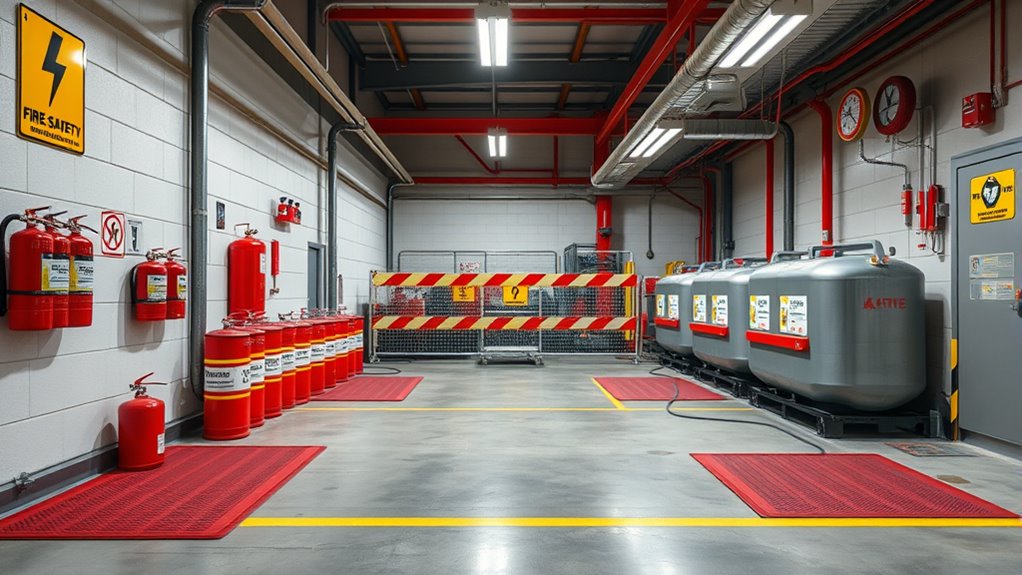

To guarantee safe fuel handling and prevent fires, control sparks by maintaining electrical systems and using non-sparking tools. Store flammable liquids in approved containers, in well-ventilated and cool areas, away from heat sources. Keep your workspace tidy, avoid static buildup, and transfer liquids carefully with grounding techniques. Have fire extinguishers ready and follow safety guidelines. Staying vigilant and prepared helps you reduce risks—continue exploring how to implement these safety measures effectively.
Key Takeaways
- Store flammable fuels in approved containers and keep storage areas cool, ventilated, and away from heat sources.
- Use proper grounding and bonding techniques to prevent static electricity buildup during fuel handling.
- Maintain electrical systems with hazard-rated equipment and avoid frayed wires or exposed circuits.
- Keep workspaces tidy, transfer fuels carefully, and enforce no-smoking policies to minimize fire risks.
- Equip areas with appropriate fire extinguishers and train personnel in emergency response and spill cleanup procedures.
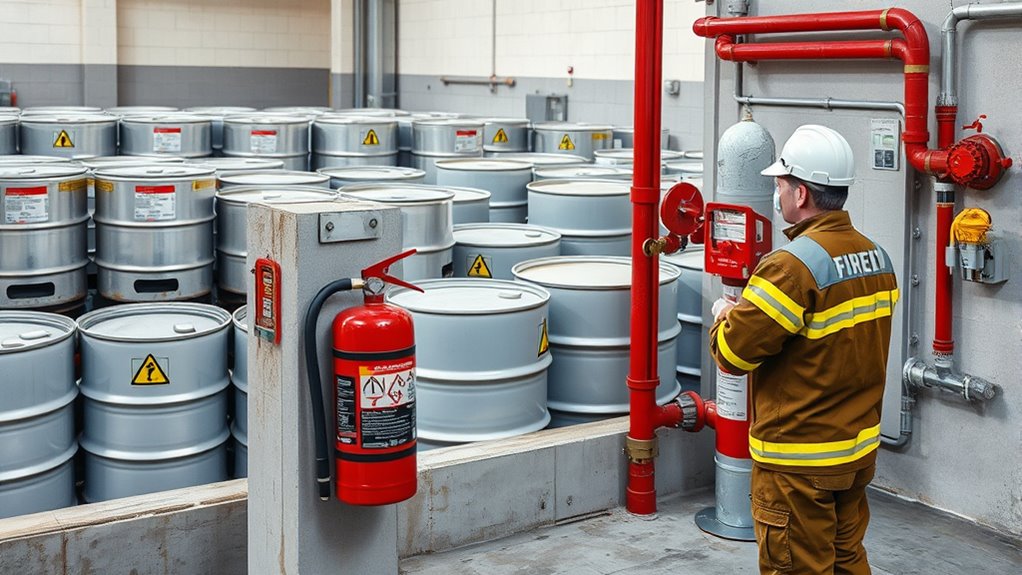
Fuel safety and fire prevention are vital for protecting lives and property, especially when handling flammable substances. When working with flammable liquids, it’s essential to understand that even small spills can lead to dangerous situations if not managed properly. Flammable liquids, such as gasoline, diesel, or certain solvents, are highly combustible and can ignite easily if exposed to heat, sparks, or open flames. That’s why you need to be vigilant about potential spark hazards in your environment. Sparks can come from many sources—static electricity, electrical equipment, or even accidental friction—so controlling these hazards is fundamental to preventing fires.
Fuel safety and spark control are essential to prevent fires when handling flammable liquids.
To minimize spark hazards, you should guarantee all electrical systems are properly grounded and maintained. Avoid using electrical devices that aren’t rated for hazardous environments, and never operate equipment with frayed wires or exposed circuits. When handling flammable liquids, always use non-sparking tools, which are designed specifically to prevent the generation of sparks. Keep portable electrical equipment away from areas where flammable liquids are stored or used, and consider installing spark-proof ventilation systems to reduce the risk of ignition from static buildup.
Proper storage plays a vital role in fuel safety. Store flammable liquids in approved containers and in well-ventilated, cool areas away from direct sunlight or heat sources. Use clearly labeled containers to prevent accidental mixing or misuse. Keep these storage areas equipped with fire extinguishers appropriate for flammable liquids, such as Class B extinguishers, and ensure everyone knows how to use them. Regularly inspect storage containers for leaks or damage, and clean up any spills immediately using appropriate absorbents. Never use water to extinguish fires involving flammable liquids, as it can spread the flames. Additionally, understanding safety standards and adhering to regulations can greatly reduce risks.
Workspaces should also be kept tidy and free of clutter that can trap static electricity or obstruct quick evacuation. When transferring flammable liquids, do so slowly and carefully to avoid splashing or creating static sparks. Use grounding and bonding techniques—connecting containers with conductive wires—to equalize electrical charge and prevent static buildup. Implementing strict no-smoking policies and banning open flames in areas where flammable liquids are present are essential safety measures.
Frequently Asked Questions
How Often Should Fire Extinguishers Be Inspected?
You should inspect fire extinguishers monthly to confirm they’re in working order. Follow your inspection schedule closely and include a thorough check on your maintenance checklist, verifying pressure gauges, seals, and accessibility. Regular inspections help catch issues early, preventing failures during emergencies. Additionally, have a professional inspect and service your extinguishers annually or as recommended by the manufacturer to keep them fully operational and compliant with safety standards.
Are Certain Fuel Types More Fire-Resistant Than Others?
Think of fuel properties like armor—some fuels, like ethanol, are more fire-resistant than gasoline, which is highly flammable. Certain fire-resistant materials can help contain fires caused by more volatile fuels. For example, using fire-resistant containers for storing fuels reduces risk. Some fuels are less likely to ignite or spread flames, making them safer choices, especially when combined with appropriate fire-resistant materials. Always select fuels with properties suited for your safety needs.
What Are the Signs of Fuel Leaks?
You’ll notice signs of fuel leaks through a strong fuel odor around your equipment or vehicle. Look for visible stains or puddles of fuel beneath it, which indicate a leak. You might also see wet spots or discoloration on surfaces near the fuel lines or tank. If you detect any of these signs, it’s essential to address the issue immediately to prevent fire hazards or further damage.
How Does Weather Affect Fire Risk With Fuels?
A stitch in time saves nine, and understanding weather’s impact on fire risk is essential. You see, weather patterns influence fuel volatility, making fuels more prone to ignition during hot, dry, or windy conditions. When the weather is dry and windy, the fire risk increases because fuels ignite more easily and spread faster. Staying aware of these conditions helps you prevent fires before they start, keeping everyone safer.
Can Fire Prevention Measures Be Automated?
Yes, fire prevention measures can be automated. You can install automated sprinklers and fire detection systems that activate as soon as they detect smoke or heat. These systems work proactively to suppress fires before they spread, providing vital extra time for evacuation and response. Automation reduces reliance on manual intervention, ensuring constant protection, especially in high-risk areas, and helps you maintain a safer environment with minimal delay.
Conclusion
By following these fuel safety and fire prevention measures, you’re not just protecting your home—you’re building an impenetrable fortress against disaster! With every careful step you take, you’re warding off catastrophe that could turn your life upside down in an instant. Think of it as your superhero shield, guarding your loved ones and your valuables from fiery destruction. Stay vigilant, stay safe, and remember: a small caution now saves you from a blazing catastrophe later!