
To effectively stock first aid kits and establish emergency protocols, organize supplies with clear labels and regular checks for expired items. Keep kits accessible in central locations and guarantee they include essentials like bandages, antiseptics, gloves, and tools. Combine this with proper training so you know how and when to use each item confidently. Prioritize readiness to respond quickly in emergencies. If you want to learn more about creating a thorough plan, keep exploring for detailed guidance.
Key Takeaways
- Organize supplies with clear labels and compartments for quick access during emergencies.
- Regularly check and replenish first aid kits to ensure all items are current and fully stocked.
- Store kits in central, accessible locations for immediate use when needed.
- Provide ongoing emergency training to ensure proper use of supplies and effective response.
- Integrate supply readiness with staff training to enhance overall emergency preparedness and response efficiency.
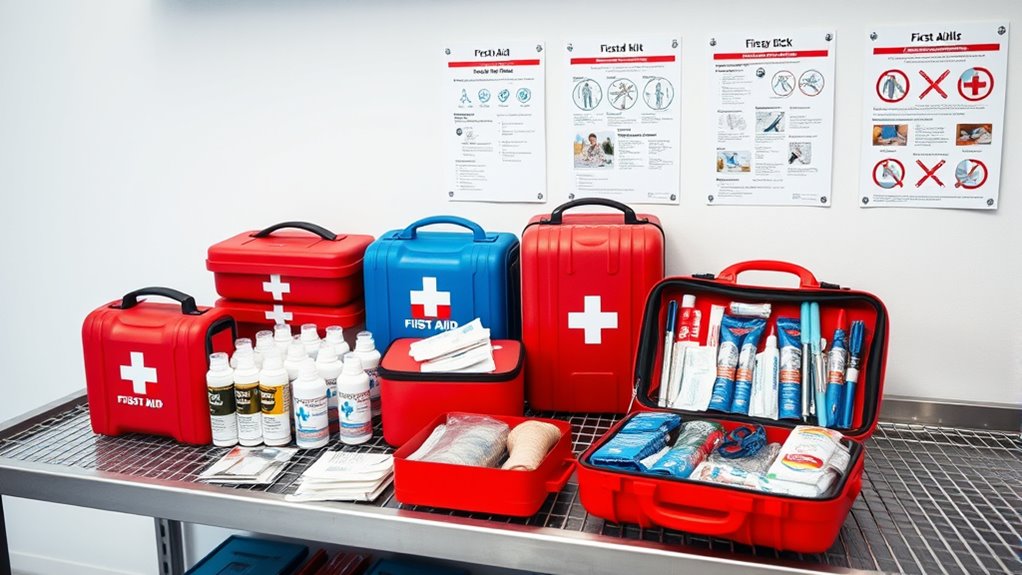
Having a well-stocked first aid kit and clear emergency protocols can make all the difference in critical situations. When an accident occurs, your ability to respond quickly hinges on how well you’ve organized your supplies and prepared yourself through emergency training. Proper supply organization ensures that essential items are easy to find and accessible, minimizing delays during urgent moments. Start by categorizing your supplies—bandages, antiseptics, gloves, and tools—so you can quickly locate what you need without rummaging through clutter. Use labeled containers or compartments within your first aid kit to keep everything orderly. This not only speeds up response time but also reduces the risk of missing crucial supplies when every second counts.
Organize your first aid supplies to respond quickly and efficiently in emergencies.
Equally important is investing in emergency training. Knowing how to properly administer first aid boosts your confidence and effectiveness during emergencies. Training helps you understand which supplies to use for specific injuries, how to prioritize actions, and the correct techniques to prevent further harm. Regularly practicing these skills ensures they become second nature, so you’re ready to act swiftly when the pressure is on. It’s also wise to keep your training up to date, as guidelines and best practices can evolve over time. Many organizations offer courses that cover basic first aid, CPR, and more advanced procedures, giving you practical experience that complements your supplies.
Additionally, understanding the importance of juice cleansing and detox principles can inform how you care for yourself after emergencies, promoting faster recovery and overall wellness. Combining supply organization with ongoing emergency training creates a reliable safety net. When your supplies are well-organized, you save precious seconds locating what you need. When you’ve received proper training, you’re more confident in using those supplies effectively. For example, knowing how to properly clean and dress a wound prevents infection, and understanding how to perform CPR can be life-saving. Keep your first aid kit in a central, accessible location, and regularly check its contents to replace expired or used items. Pair this with scheduled training sessions or refreshers, so your skills stay sharp. This proactive approach ensures that, in an emergency, you’re not scrambling for supplies or second-guessing your actions.
Ultimately, the combination of supply organization and emergency training empowers you to respond promptly and competently. It turns a potentially chaotic situation into one where you can provide effective aid, potentially saving lives. Preparedness isn’t just about having the right tools; it’s also about knowing how and when to use them. By maintaining an organized kit and staying trained, you’ll be ready to handle emergencies confidently, calmly, and efficiently.
Frequently Asked Questions
How Often Should First Aid Kits Be Restocked or Updated?
You should perform a regular first aid kit inspection at least once a month to guarantee all supplies are present and in good condition. After each use, promptly renew your emergency supply to replace any used or expired items. Additionally, conduct a thorough update annually, checking expiration dates and updating contents as needed. Staying proactive helps maintain an effective first aid kit ready for any emergency.
What Are the Legal Requirements for Workplace First Aid Kits?
You need to follow your local regulations, which often require workplaces to have adequately stocked first aid kits and trained personnel for emergency response. While legal standards vary, maintaining liability insurance can protect you if an injury occurs. Regularly reviewing and updating your first aid supplies demonstrates your commitment to safety and compliance, ensuring you’re prepared to respond effectively and minimize legal risks if an emergency arises.
How Can I Train Staff Effectively on Emergency Protocols?
To train staff effectively on emergency protocols, you should incorporate role-playing exercises to simulate real scenarios, helping them practice responses confidently. Use visual aids like charts and videos to reinforce key steps and confirm understanding. Encourage active participation and ask for feedback to identify gaps. Regular refreshers keep everyone prepared, making your team more confident and capable when emergencies happen.
Are There Specific First Aid Kits for Different Environments?
You might think one size fits all, but environment-specific first aid kits exist for a reason. Customization is key—you tailor the kit to address common injuries in that setting. Whether it’s a construction site, office, or outdoor adventure, having environment-specific first aid supplies ensures you’re prepared for unique risks. So, don’t undervalue the power of kit customization; it’s your best bet for effective emergency response.
What Signs Indicate a Need to Upgrade or Replace First Aid Supplies?
You should upgrade or replace your first aid supplies when you notice expired supplies or visible damage, such as torn packaging or broken containers. Expired items may not work effectively, and damaged supplies can compromise safety. Regularly check your kit’s contents, and if you find any expired or damaged items, replace them promptly to guarantee your kit remains reliable in emergencies. Keeping supplies up-to-date is essential for effective first aid response.
Conclusion
Now that you know what to stock and how to prepare, imagine a situation where every second counts. Will your kit have what’s needed to save a life? Can you stay calm when chaos unfolds? The next step is yours—double-check your supplies and review your protocols. Because when disaster strikes, your quick actions could be the difference between panic and hope. Are you ready to face the unexpected? The time to act is now.