
To guarantee safe transportation of food and supplies, you must maintain proper temperature control with insulated containers, refrigerated trucks, or coolers, depending on the item. Use strong, leak-proof packaging and label everything clearly with handling instructions and expiration dates. Regularly monitor transit conditions to catch any deviations early, and select the right transport environment for sensitive goods. Following these best practices helps keep products fresh and safe—continue to explore for detailed tips and strategies.
Key Takeaways
- Maintain proper temperature conditions using insulated or refrigerated containers to prevent spoilage and ensure safety.
- Use robust, leak-resistant packaging like vacuum seals to prevent contamination and physical damage.
- Clearly label all packages with contents, handling instructions, and expiration dates for efficient and safe handling.
- Regularly monitor and record transit conditions to detect and address temperature deviations promptly.
- Choose suitable transportation modes and environmental controls to preserve food quality throughout the journey.
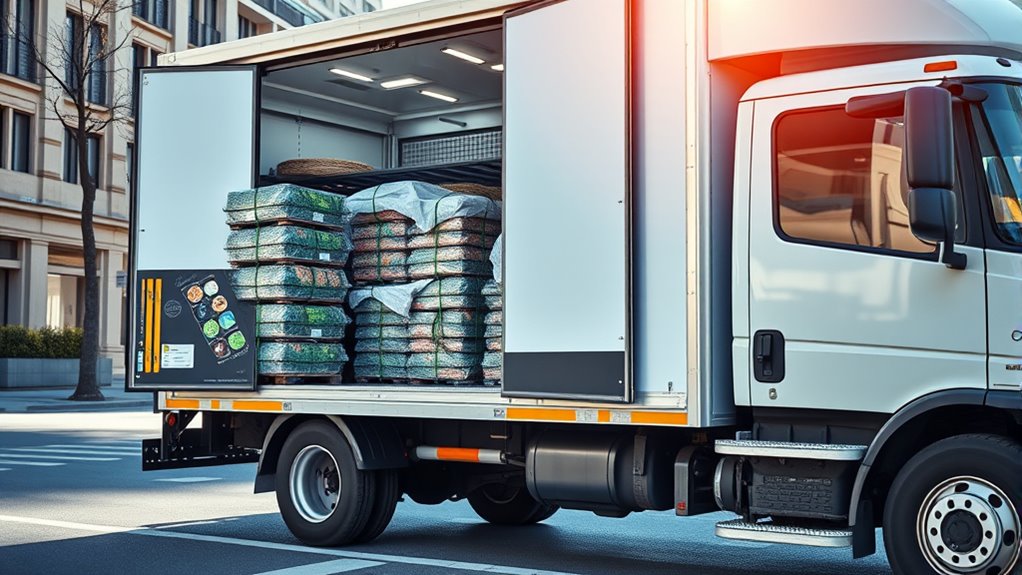
Transporting food and supplies safely is fundamental to guarantee contamination doesn’t occur and that they arrive in good condition. When you’re on the move, maintaining proper temperature control is your top priority. This means using insulated containers, coolers, or refrigerated trucks to keep perishable items at the right temperature throughout transit. Cold foods, such as dairy, meats, and seafood, must stay below 40°F (4°C) to prevent bacteria growth. Conversely, frozen goods need to stay below 0°F (-18°C) to remain safe and quality intact. For hot foods, maintaining temperatures above 140°F (60°C) is essential to inhibit microbial activity. Proper temperature regulation not only preserves food safety but also extends shelf life, reducing waste and ensuring customer satisfaction.
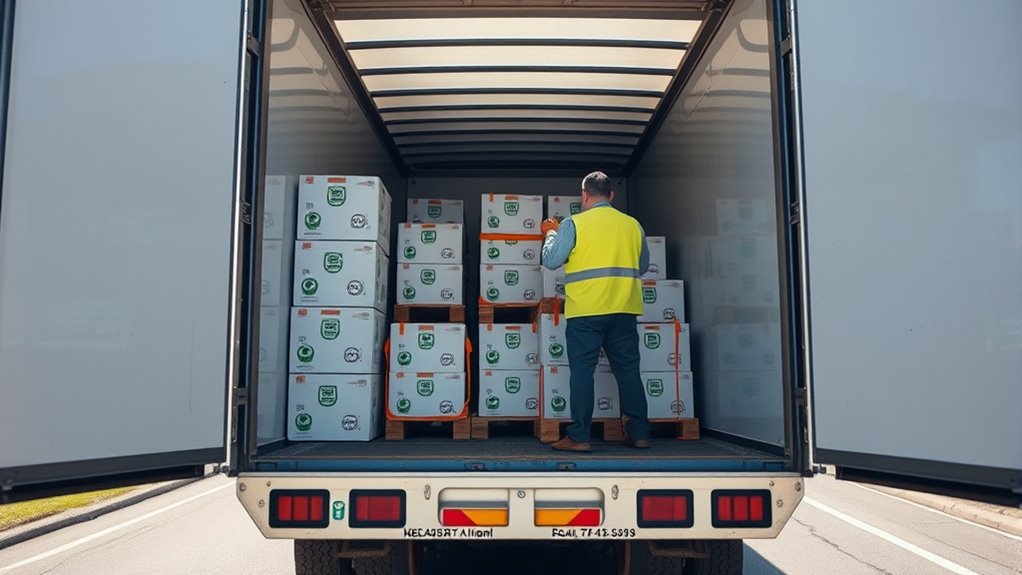
In addition to controlling temperature, packaging standards play an important role in safeguarding supplies during transportation. You should select packaging that’s robust, resistant to leaks, and suitable for the specific type of product. Vacuum-sealed packaging, for example, can prevent contamination and spoilage by eliminating oxygen, while sturdy containers protect fragile items from physical damage. Packaging that complies with industry standards helps prevent cross-contamination, especially when transporting multiple items or different food categories together. Seal all packages securely to avoid spills or exposure to external contaminants. Using tamper-evident packaging also provides an extra layer of security, giving confidence that the contents haven’t been tampered with during transit.
Another key aspect of packaging standards involves labeling. Clear labels indicating the contents, handling instructions, and expiration dates help everyone involved in the transportation process handle supplies properly. Proper labeling ensures that perishable items are prioritized for quick delivery and are stored at the correct conditions once they arrive. Packaging materials should also be resistant to moisture, pests, and temperature fluctuations, which can compromise product quality if not properly addressed. Select packaging options that meet regulatory requirements and industry best practices to maintain compliance and guarantee safety.
Finally, always consider the mode of transportation and the environment you’ll be working in. Temperature control devices, like refrigerated trucks or temperature-sensitive packaging, are essential for longer journeys or hot climates. Regularly monitor and record conditions throughout transit to catch any deviations early. Additionally, staying updated on industry standards helps ensure your transportation methods align with best practices for safety and compliance. By adhering to strict packaging standards and maintaining precise temperature control, you guarantee that food and supplies reach their destination in perfect condition, safe for consumption, and free from contamination. This diligent approach not only protects consumer health but also upholds your reputation for quality and safety.
Frequently Asked Questions
How Do Temperature Fluctuations Affect Food Safety During Transit?
Temperature fluctuations can compromise food safety during transit by disrupting temperature control, which is vital to prevent food spoilage. When temperatures rise or fall unexpectedly, bacteria can grow rapidly, increasing the risk of contamination. You need to monitor and maintain consistent temperatures to keep food safe. Proper insulation and temperature-sensitive equipment help you prevent spoilage, ensuring that food remains safe for consumption upon arrival.
What Are the Best Practices for Securing Fragile Supplies?
Think of it like walking a tightrope—you need steady hands. Use appropriate packaging materials to cushion fragile supplies and prevent damage. Handle items with care, avoiding rough movements that could cause breakage. Secure everything tightly in the vehicle, using straps or padding to keep supplies from shifting during transit. Proper handling techniques and reliable packaging are key to preventing damage and ensuring your fragile supplies arrive intact and ready to use.
How Can Transportation Routes Be Optimized for Safety?
You can optimize transportation routes for safety by focusing on thorough route planning, selecting the safest paths, and avoiding hazardous areas. Regular vehicle maintenance guarantees your vehicles stay reliable and reduce breakdown risks. Use GPS tracking to monitor routes, adjust for weather or traffic conditions, and plan for emergency stops. These steps help you maintain secure, efficient transportation, minimizing risks and safeguarding your supplies during transit.
What Legal Regulations Govern Food Transportation Across Borders?
You need to comply with legal regulations like customs clearance and import tariffs when transporting food across borders. Customs clearance involves submitting necessary documentation and ensuring your shipment meets safety standards. Import tariffs are taxes imposed on imported food, which you must pay to avoid delays. Staying informed about specific country regulations and working with customs authorities helps you navigate these rules efficiently, ensuring your food reaches its destination safely and legally.
How Is Real-Time Monitoring Implemented During Transit?
Did you know that over 80% of food transportation companies now use real-time monitoring? You can implement this by integrating sensors into your fleet, which track temperature, humidity, and location continuously. The data collected feeds into advanced data analytics platforms, allowing you to detect issues instantly and respond proactively. This setup guarantees your supplies remain fresh and safe throughout transit, minimizing spoilage and compliance risks.
Conclusion
By following these guidelines, you guarantee your food and supplies stay safe and fresh—no matter how long the journey. Proper handling, temperature control, and secure packaging are your best tools to prevent spoilage and contamination. Remember, a single mistake can turn your shipment into a disaster faster than you can blink. Stay vigilant and committed; your careful efforts can make the difference between a successful delivery and a costly mess. Keep safety your top priority every step of the way.