To guarantee a safe water supply and proper sanitation, you should regularly test water sources for contaminants, treat water through filtration or chlorination, and maintain sanitation facilities like latrines and sewage systems. Proper waste management and community participation are also key. By investing in infrastructure and practicing good hygiene, you help prevent waterborne diseases and protect everyone’s health. Keep exploring to discover more ways to safeguard water and sanitation for your community.
Key Takeaways
- Regularly test water sources for contaminants, pathogens, and chemicals to ensure safety.
- Invest in proper sanitation infrastructure like latrines and sewage systems to prevent water contamination.
- Implement water treatment methods such as filtration, chlorination, and boiling to improve water quality.
- Promote community awareness and hygiene practices to reduce contamination risks and encourage safe water use.
- Collaborate among governments, communities, and individuals to maintain infrastructure and uphold water safety standards.
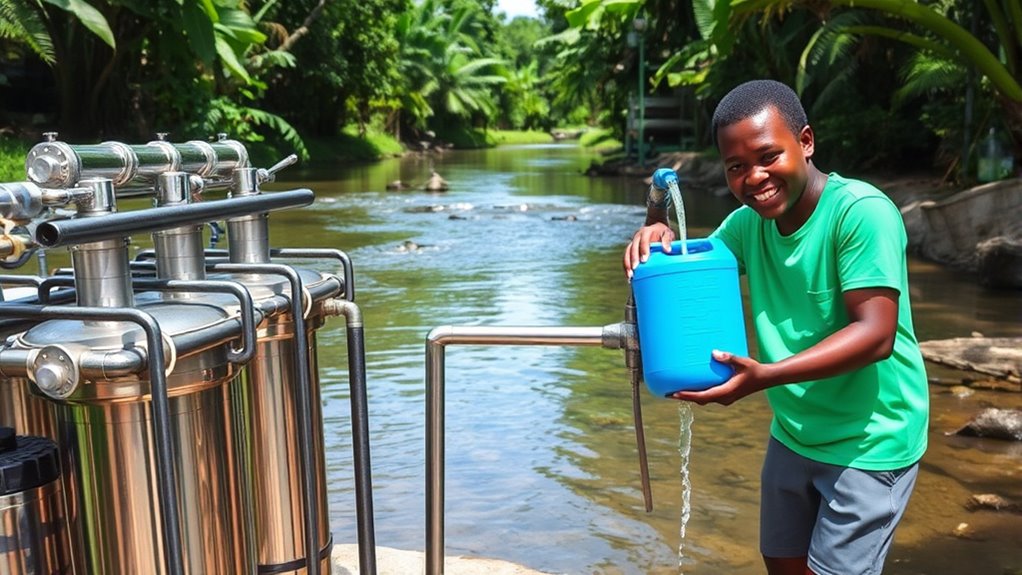
Access to safe water supply and sanitation is essential for maintaining good health and preventing the spread of disease. When you have reliable access to clean water, you reduce the risk of waterborne illnesses like cholera, dysentery, and typhoid. Ensuring water quality is a fundamental part of this, as contaminated water can carry harmful pathogens and chemicals that threaten your wellbeing. It’s important to understand that water quality isn’t just about the water appearing clear; it involves testing for pollutants, bacteria, and toxins that may not be visible. Regular monitoring and treatment of water sources help keep water safe for daily use, whether for drinking, cooking, or hygiene.
Sanitation infrastructure plays a crucial role in keeping communities healthy. Proper sanitation facilities, such as latrines and sewage systems, prevent human waste from contaminating water sources and the environment. When sanitation infrastructure is inadequate or poorly maintained, it creates a cycle where contaminated water spreads disease, impacting everyone. You should advocate for improved sanitation facilities that are accessible, hygienic, and sustainable. This includes designing systems that prevent leaks and backups, and ensuring waste is properly managed and treated. Without proper sanitation, even access to clean water won’t be enough to protect public health. Additionally, water treatment methods like filtration and chlorination are vital tools for maintaining water safety in various settings.
Proper sanitation facilities prevent water contamination and protect community health.
Implementing effective water quality management and strengthening sanitation infrastructure requires collective effort. Governments, local communities, and individuals all have a role to play. For example, maintaining household water filters, practicing good hygiene, and correctly disposing of waste contribute immensely to water safety. Infrastructure investments, such as building reliable piped water systems and sewage treatment plants, create lasting improvements. Education also matters; understanding how water gets contaminated and how to prevent it empowers you to make safer choices. Simple steps like boiling water or using water purification tablets can make a big difference in high-risk areas.
In the end, ensuring safe water supply and sanitation isn’t just about infrastructure or policies; it’s about commitment to health and community wellbeing. When everyone understands the importance of water quality and invests in proper sanitation infrastructure, you create healthier environments. Clean, safe water and effective sanitation are basic rights that protect you and your loved ones from preventable diseases. By prioritizing these aspects, you help build resilient communities capable of thriving despite environmental or economic challenges. Your active participation and awareness are key to making safe water and sanitation accessible for all, today and in the future.
Frequently Asked Questions
How Can Households Detect Contaminated Water Sources?
You can detect contaminated water sources by performing simple water testing at home or locally. Look for contamination indicators like foul odors, strange colors, or cloudiness. You might also notice algae or debris. For more accurate results, use water testing kits to check for bacteria, chemicals, or other pollutants. Regular testing helps you identify contamination early, allowing you to take action and guarantee your household uses safe, clean water.
What Are the Most Affordable Water Purification Methods?
Did you know over 2 billion people lack access to safe drinking water? To save costs, you can use simple filtration techniques like boiling or using cloth filters, which remove bacteria and sediments. Chemical treatments, such as water purification tablets or household bleach, are also affordable options. These methods are effective, easy to implement, and help guarantee your water is safe without breaking the bank.
How Do Climate Changes Affect Water Sanitation Efforts?
Climate change impacts water sanitation efforts by disrupting water sources, making it harder for you to access clean water. You need to focus on climate adaptation strategies that enhance water resilience, such as protecting watersheds and improving infrastructure. These actions help you manage extreme weather events, reduce contamination risks, and ensure safe water supply. By prioritizing water resilience, you can better withstand climate variations and maintain effective sanitation for your community.
What Policies Support Sustainable Water Management?
Think of policies as the steady compass guiding your water journey. You support sustainable water management by advocating for clear water rights, ensuring everyone shares the flow fairly. Strong policy enforcement acts as the lighthouse, keeping illegal practices at bay and safeguarding resources. By championing these policies, you help forge a resilient system where water sustains communities, ecosystems, and future generations, like a river that never runs dry.
How Can Communities Be Engaged in Sanitation Programs?
You can engage communities in sanitation programs by promoting active community participation and organizing education campaigns. Encourage residents to share ideas, take ownership of sanitation efforts, and participate in clean-up activities. Use education campaigns to raise awareness about hygiene practices and the importance of sanitation. When people feel involved and informed, they’re more likely to support and sustain these programs, creating healthier environments for everyone.
Conclusion
Ensuring safe water supply and sanitation is your essential duty, like tending a fragile garden that needs constant care. When you protect water sources and promote good hygiene, you’re building a sturdy shield against illness for your community. Remember, every small effort acts as a drop in the ocean, creating waves of change. By safeguarding this precious resource, you help create a healthier, brighter future where everyone can thrive like a flourishing garden in full bloom.