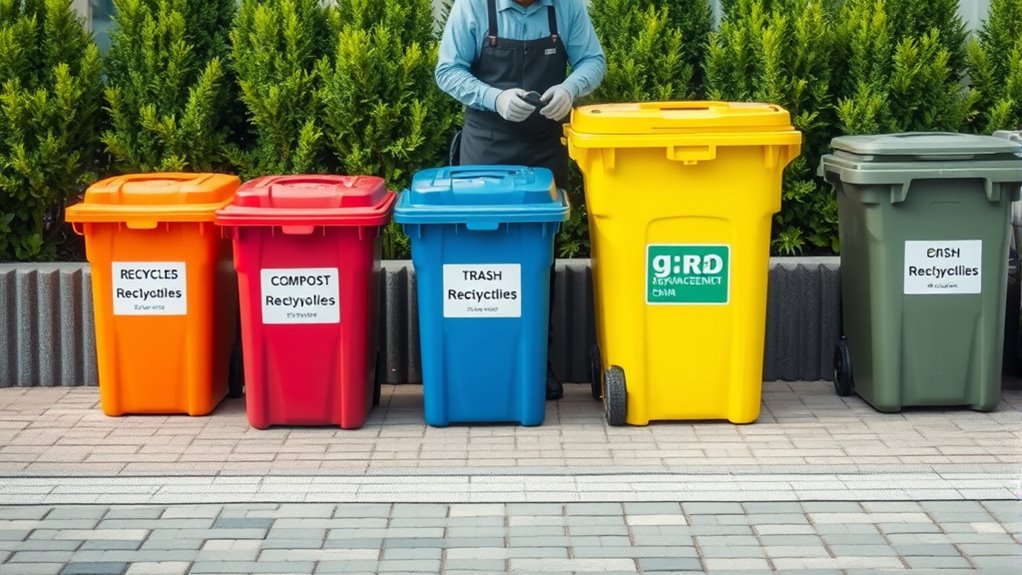

To prevent contamination, you should properly sort and segregate waste into designated containers following local regulations. Handle hazardous waste like chemicals and biomedical materials carefully by labeling and isolating them to avoid exposure. Use appropriate disposal practices, maintain cleanliness, and conduct regular inspections to catch leaks or damages early. Promoting awareness through training and signage helps reinforce proper habits. By implementing these methods, you can markedly reduce environmental risks — and there’s more to explore if you keep going.
Key Takeaways
- Properly segregate and label waste to prevent hazardous materials from mixing with general waste.
- Use designated containers and follow local regulations for safe disposal of different waste types.
- Regularly inspect waste storage areas for leaks, damage, or spills to minimize environmental contamination.
- Train staff on waste management procedures and promote awareness of contamination risks.
- Implement recycling, composting, and waste reduction strategies to decrease overall waste and environmental impact.
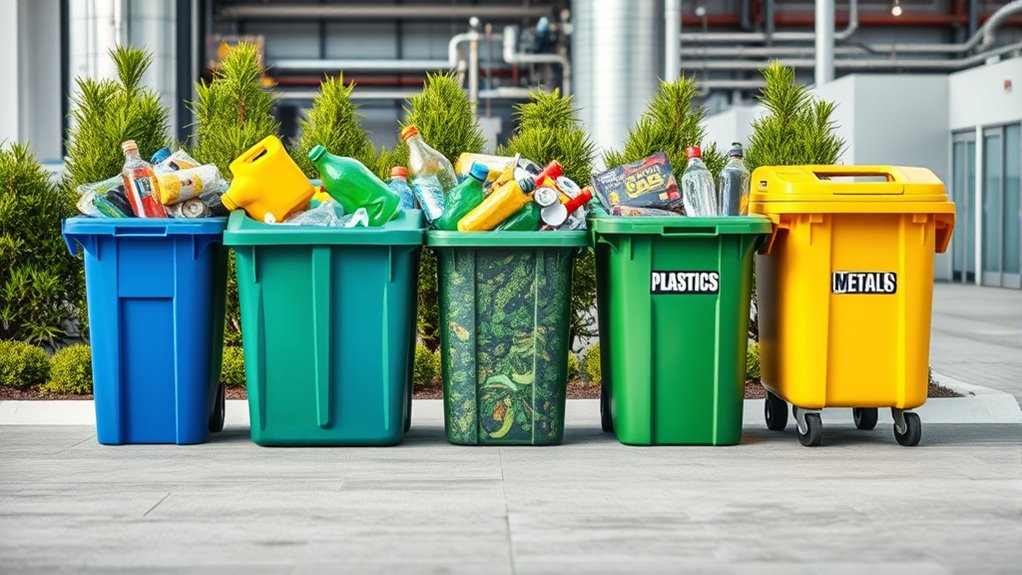
Proper waste management is essential to prevent contamination and protect public health. When you handle waste correctly, you minimize the risk of hazardous materials spreading and causing illness or environmental damage. One of the most critical aspects of waste management is ensuring proper disposal. This means sorting waste accurately, using designated containers, and following local regulations. Proper disposal prevents dangerous materials from mixing with general waste, reducing the chance of leaks or spills that could contaminate soil, water, or air. By taking the time to segregate waste properly—such as separating recyclables, hazardous waste, and organic matter—you contribute to contamination control efforts that safeguard the community and the environment.
Proper waste disposal safeguards health and environment through accurate sorting and adherence to regulations.
Effective contamination control begins with understanding the types of waste you generate and how to manage each category appropriately. For example, biomedical waste or chemical substances require special handling and disposal procedures to prevent exposure or leaks. When you use appropriate containers and label them correctly, you make it easier to identify and isolate hazardous waste. This reduces the likelihood of accidental exposure, which could otherwise lead to contamination of water supplies or nearby ecosystems. Additionally, maintaining a clean environment around waste storage areas is crucial. Regularly inspecting containers for leaks or damage and cleaning spills promptly helps contain potential hazards and minimizes contamination risks.
Education and awareness are key components of managing waste effectively. If you’re responsible for waste disposal at a workplace or facility, make sure everyone understands the importance of proper disposal practices. Providing training on how to handle different waste types and emphasizing contamination control measures ensures that all individuals act responsibly. Clear signage and instructions can reinforce these practices, making it easier for everyone to follow the correct procedures consistently. Furthermore, establishing a routine schedule for waste collection and disposal helps prevent accumulation that could lead to overflow or pest attraction, which increases contamination risks.
Finally, adopting sustainable waste management practices can substantially reduce contamination risks over time. Composting organic waste properly, recycling materials, and reducing waste generation at the source all contribute to contamination control. When you prioritize reducing waste and recycling, you lessen the amount of potentially hazardous materials that need disposal, decreasing the chances of environmental contamination. Proper waste disposal also benefits from innovative waste segregation techniques that improve efficiency and safety. To sum up, managing waste responsibly by ensuring proper disposal and contamination control is crucial for safeguarding health, protecting ecosystems, and promoting a cleaner, safer environment for everyone.
Frequently Asked Questions
How Often Should Waste Disposal Areas Be Inspected?
You should inspect waste disposal areas at least daily to guarantee an effective inspection schedule. Regular checks help catch potential contamination issues early and maintain proper sanitation. Frequent inspections are essential for contamination prevention, especially in high-risk environments. Always document your findings and address any problems promptly. By maintaining a consistent inspection routine, you reduce the risk of contamination and promote a safe, clean environment.
What Are the Best Practices for Labeling Waste Containers?
Did you know that improper labeling accounts for over 30% of waste contamination incidents? To guarantee labeling compliance, you should clearly label each waste container with its contents and hazard level, using standardized color codes and symbols. Always update labels if waste type changes, and ensure labels are visible and legible. Proper container identification helps prevent mix-ups, protects staff, and maintains safety standards efficiently.
How Should Hazardous Waste Be Stored Temporarily?
You should store hazardous waste temporarily in designated, clearly labeled containers that are compatible with the waste type. Keep these containers tightly sealed and stored in a designated area away from other materials to prevent leaks and spills. Follow all hazardous storage regulations to guarantee contamination prevention, and regularly inspect containers for leaks or damage. Properly organizing and labeling your storage area helps minimize risks and ensures safety during waste handling.
What Training Is Necessary for Staff Handling Waste?
They say, “Knowledge is power,” and when handling waste, proper training proves crucial. You need to guarantee staff are trained in using personal protective equipment correctly and know spill response procedures. This training minimizes risks, keeps everyone safe, and prevents contamination. Regular refresher courses boost awareness, so your team handles hazardous waste confidently and responsibly, maintaining a safe environment for all.
How Can Waste Management Practices Be Improved Continuously?
You can improve waste management practices by regularly reviewing and updating procedures, encouraging recycling initiatives, and seeking staff feedback. Educate your team on best practices and incorporate community awareness programs to promote responsible waste disposal. Implementing new technologies and monitoring waste streams helps identify areas for improvement. Staying proactive guarantees your waste management remains effective, reduces contamination risks, and fosters a culture of continuous improvement in your organization.
Conclusion
By managing waste carefully, you hold the key to safeguarding our environment like a shield protecting a precious treasure. Every piece of waste you dispose of responsibly is a brick in building a cleaner, safer world. Think of your actions as planting seeds for a healthier future—each mindful choice sprouting hope. Together, you can turn waste into a symbol of care and resilience, ensuring our shared home remains vibrant for generations to come.