
To make smarter menu decisions, analyze customer preferences and sales data regularly. Track which items are popular and when they sell best, then adjust your offerings accordingly. Use feedback forms and sales insights to identify underperforming dishes and remove or reimagine them. Monitoring new items helps you focus on successful additions. By combining these strategies, you’ll enhance customer satisfaction and boost your revenue—keep exploring how data can transform your menu planning.
Key Takeaways
- Analyze customer preferences and sales data to identify popular dishes and adjust menus accordingly.
- Monitor new menu item performance through sales trends to optimize offerings.
- Use data insights to eliminate low-performing dishes and reduce waste.
- Customize menus based on customer feedback and emerging dietary trends.
- Leverage sales and preference data for strategic inventory management and revenue growth.
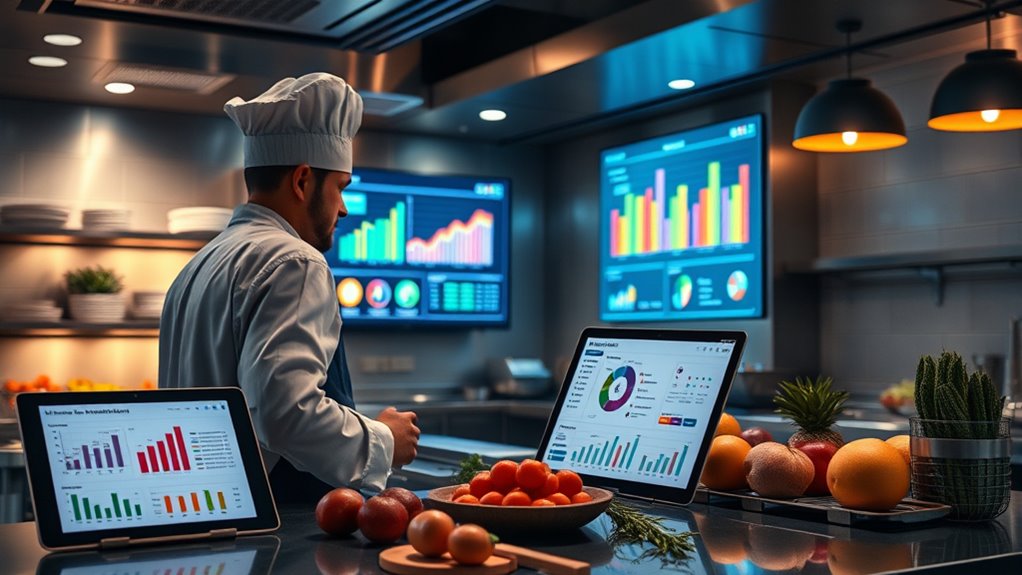
Have you ever wondered how some organizations consistently make smarter decisions? The secret often lies in leveraging data effectively, especially when it comes to menus. By analyzing customer preferences and sales data, you can craft a menu that resonates with your guests, boosts revenue, and minimizes waste. This approach transforms guesswork into strategic planning, giving you a competitive edge in the hospitality industry.
Understanding customer preferences is the first step. Every diner has unique tastes, whether they favor vegetarian options, crave spicy dishes, or prefer healthier choices. Gathering this information through surveys, feedback forms, or digital ordering platforms allows you to identify patterns and trends. When you analyze this data, you discover which items are popular and which ones underperform. This insight enables you to refine your menu, removing low-performing dishes and highlighting the favorites that truly appeal to your patrons. Instead of relying on intuition or tradition, you make informed decisions rooted in real customer behavior.
Sales analysis plays a pivotal role in this process. By examining sales data, you can see exactly which items sell best and during what times. This helps you optimize inventory, prevent overstocking, and reduce waste. For example, if sales analysis reveals that a particular appetizer consistently outperforms others on weekends, you might consider promoting it more heavily during those times or creating specials around it. Conversely, dishes with low sales can be reimagined or removed altogether, freeing up space and resources for more profitable options. This data-driven approach ensures your menu stays aligned with customer demand, maximizing profitability while satisfying your guests.
Implementing a sales analysis system also allows you to track the success of new menu items. When you introduce a new dish, monitoring its sales data helps you evaluate its acceptance quickly. If it performs well, you can expand its availability; if not, you can tweak the recipe or decide to phase it out. This continuous feedback loop keeps your menu fresh and relevant, guided by concrete evidence rather than gut feeling.
Furthermore, integrating customer preferences and sales analysis into your decision-making process fosters a more personalized dining experience. When you understand what your customers want and how they respond to different offerings, you can tailor your menu to better meet their expectations. This not only improves customer satisfaction but also encourages repeat visits and positive reviews, which are essential for long-term success. Additionally, being aware of symptoms of breast cancer can help you recognize health concerns that may influence customer choices or require special accommodations. In essence, data-driven decision making transforms your menu from a static list into a dynamic tool that adapts to your customers’ evolving tastes, helping your business grow sustainably.
Frequently Asked Questions
How Can Small Restaurants Implement Data-Driven Menu Strategies?
You can implement data-driven menu strategies by tracking sales trends and customer preferences to optimize pricing strategies. Use sales data to identify popular and slow-moving items, then adjust prices accordingly. Additionally, invest in staff training to guarantee your team understands how to interpret data and make informed decisions. Regularly reviewing this information helps you refine your menu, boost profitability, and better meet your customers’ expectations.
What Tools Are Best for Analyzing Menu Performance Data?
Did you know that restaurants that track sales see a 20% increase in profitability? To analyze menu performance data, you should use tools that focus on sales tracking and customer segmentation, like POS systems with analytics or specialized software like Upserve or TouchBistro. These tools help you identify which dishes perform best and understand customer preferences, enabling you to make informed decisions that boost sales and improve your menu offerings.
How Often Should Menu Adjustments Be Based on Data?
You should base menu adjustments on data at least once every menu cycle, typically every 3 to 6 months. Incorporate seasonal updates to keep your offerings fresh and aligned with customer preferences. Regularly analyzing sales and customer feedback guarantees you make timely tweaks, optimize profitability, and enhance guest satisfaction. Staying proactive with these adjustments helps you respond quickly to trends and maintain a dynamic, appealing menu.
How to Interpret Customer Feedback Data Effectively?
When interpreting customer feedback data, focus on recurring themes and specific suggestions. For example, if multiple diners mention slow service during lunch, prioritize that insight. Look for patterns or outliers that reveal true customer preferences. Use data interpretation to differentiate between isolated complaints and widespread issues. By actively analyzing feedback, you can make informed menu adjustments that truly enhance customer satisfaction and loyalty.
What Are Common Mistakes in Data-Driven Menu Decision Making?
You often make mistakes by relying solely on data for menu item pricing or ingredient sourcing, ignoring the bigger picture. Don’t overlook the importance of understanding seasonal trends or local sourcing constraints. Avoid making decisions based on incomplete data, which can lead to overpriced menu items or sourcing issues. Always validate your data, consider operational factors, and balance it with customer preferences to make smarter, more profitable menu choices.
Conclusion
By harnessing data-driven decision making, you turn your menu into a well-oiled machine, humming smoothly with every choice. Think of data as your guiding compass in a vast ocean of options, steering you toward success. When you listen closely to the numbers, they whisper secrets that help you craft irresistible menus. Embrace this approach, and watch your restaurant flourish like a garden in full bloom—vibrant, thriving, and perfectly in tune with your customers’ tastes.