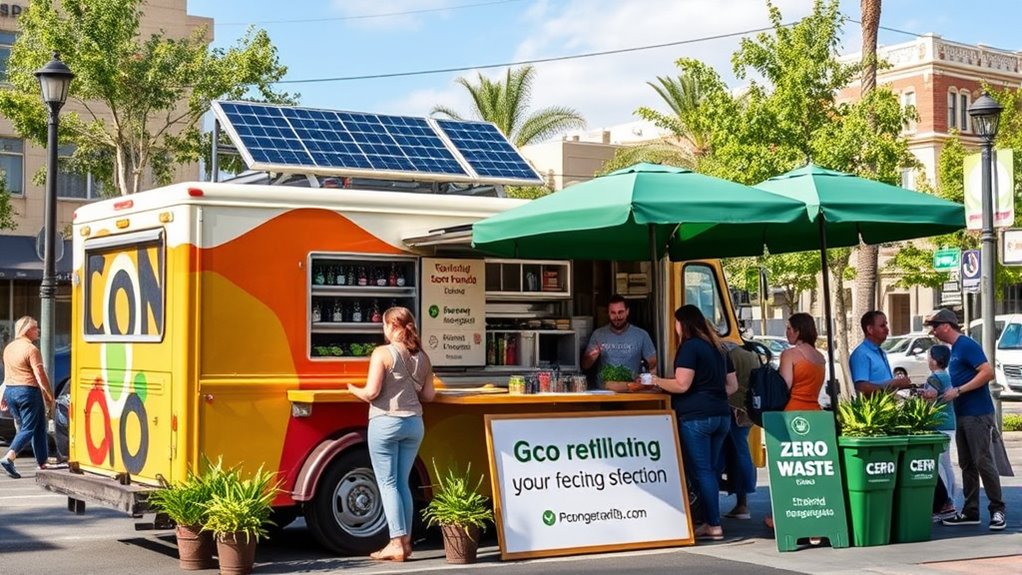

To stay ahead in the food truck industry, embrace zero-waste and sustainable trends like biodegradable packaging and composting initiatives. Partner with local composting facilities, encourage customers to sort waste properly, and use eco-friendly materials for your service. These efforts reduce plastic waste and improve your environmental footprint. Incorporating industry trends and customer education can boost your sustainability efforts. Keep exploring how you can make your food truck more eco-conscious—you’ll find valuable ideas ahead.
Key Takeaways
- Adoption of biodegradable and reusable packaging materials reduces plastic waste in food trucks.
- Implementation of composting systems for organic waste minimizes landfill contributions.
- Partnerships with local composting facilities enhance sustainable waste management practices.
- Industry trends emphasize eco-conscious operations inspired by broader sustainability initiatives.
- Customer participation through waste sorting and educational signage promotes community engagement in sustainability.
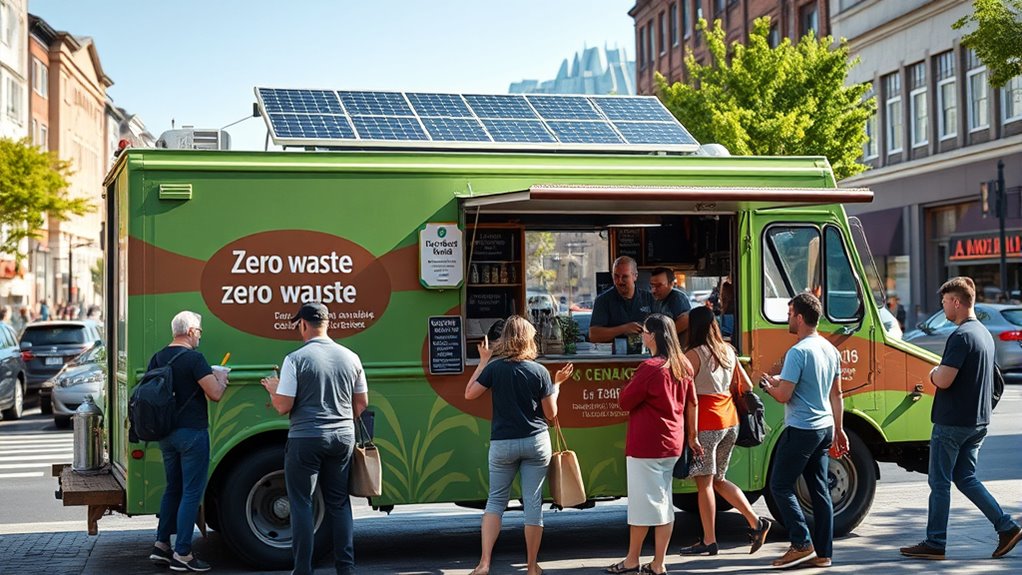
As more consumers prioritize sustainability, zero-waste practices are transforming the food truck industry. You’re likely noticing that many trucks now use eco-friendly packaging to reduce their environmental footprint. Instead of traditional containers that end up in landfills, these trucks opt for biodegradable, compostable, or reusable materials. This shift isn’t just about appearance; it’s a conscious effort to decrease plastic waste and promote responsible consumption. When you order your favorite meal, you might see your food served in compostable bowls or wrapped in paper that can be composted after use. These small changes make a significant impact, especially when scaled across numerous trucks and events.
In addition to eco-friendly packaging, composting initiatives are increasingly common among food trucks committed to zero waste. Many operators have set up systems to compost organic waste, such as food scraps and used napkins, instead of discarding them in trash bins. By doing so, they divert waste from landfills, reduce methane emissions, and create nutrient-rich compost that can be used for urban gardens or community green spaces. You might notice signs on trucks encouraging customers to separate compostable waste or even offering compost bins alongside trash and recycling options. This not only demonstrates a commitment to sustainability but also educates consumers about responsible waste management.
Implementing these initiatives requires thoughtful planning and collaboration with local composting facilities. Some food trucks partner with composting programs that pick up waste regularly, making it easy for them to manage organic materials efficiently. Others might create on-site composting setups if space allows, turning their waste into valuable compost that can be used for gardening or donated to community projects. These efforts showcase how small businesses can make a big difference in reducing environmental impact. Additionally, many of these trucks are inspired by sustainable food truck trends that emphasize eco-conscious practices. As a customer, your participation—such as sorting your waste correctly—further supports these initiatives.
Frequently Asked Questions
How Do Zero-Waste Food Trucks Manage Waste Disposal?
You manage waste disposal by implementing waste reduction strategies like using compostable containers and utensils. Food composting plays a key role, where you separate organic waste for composting instead of trash. You also minimize waste by donating excess food and reusing materials whenever possible. By actively sorting waste and composting, you reduce landfill contributions, making your food truck more sustainable and aligned with zero-waste principles.
What Certification Processes Verify Sustainability Claims?
You’re asking how certification processes verify sustainability claims. Think of it as a gold standard—certification standards like Green Seal or LEED ensure your food truck meets strict sustainability verification criteria. These organizations conduct rigorous audits, review sourcing practices, waste management, and energy use. By earning these certifications, you prove your commitment to sustainability, giving customers confidence that your claims are supported by credible, independent verification.
How Do These Trucks Source Eco-Friendly Ingredients?
You source eco-friendly ingredients by prioritizing local sourcing, which reduces transportation emissions and supports nearby farmers. You also look for organic certifications to guarantee your ingredients meet strict standards for sustainability and avoid harmful chemicals. By building relationships with local producers and verifying certifications, you can confidently offer menu items that are both environmentally friendly and high quality, aligning with your commitment to sustainability.
What Are Cost Implications of Adopting Zero-Waste Practices?
Adopting zero-waste practices can initially increase costs, like investing in recycling programs and composting systems. You might spend more upfront on eco-friendly containers and waste management, but over time, these efforts save money by reducing waste disposal fees. For example, a food truck in Portland cut waste costs by 30% after implementing composting and recycling. While there’s an initial investment, long-term savings and environmental benefits make it worthwhile.
How Do Customers Influence Sustainability Efforts?
You influence sustainability efforts considerably through customer feedback and social media influence. When you share positive experiences, it encourages food trucks to adopt eco-friendly practices. Your comments can highlight areas for improvement, pushing vendors to implement zero-waste initiatives. Additionally, social media amplifies your voice, shaping trends and motivating others to support sustainable practices. Your engagement directly impacts the food truck industry’s commitment to environmental responsibility and continuous improvement.
Conclusion
Embracing zero-waste and sustainable food truck trends gently guides you toward a more harmonious relationship with our planet. As you enjoy delicious meals on the go, remember that every small step, like reducing waste or choosing eco-friendly practices, subtly contributes to a brighter future. By supporting these mindful trends, you’re not just savoring great food—you’re nurturing a greener world, one delightful bite at a time. It’s a journey worth savoring, with every choice making a gentle difference.