
Understanding business licenses for food trucks is essential to operate legally and avoid fines or shutdowns. You’ll need to learn the specific requirements in your area, including health and safety standards, and complete the necessary registration or application steps. These licenses show your commitment to food safety and credibility with customers. Staying compliant involves routine inspections and maintaining high standards—if you want to get everything right, keep going to discover more key tips and details.
Key Takeaways
- Business licenses are essential for legal food truck operation and help avoid fines or shutdowns.
- Licensing requirements differ by location and include health, safety, and business registration standards.
- Food safety standards ensure proper handling, storage, and sanitation, which are inspected by health departments.
- Preparing for inspections involves maintaining equipment, adhering to temperature controls, and following sanitation protocols.
- Regulatory agencies oversee licensing processes, ensuring compliance and facilitating smoother approval for food trucks.
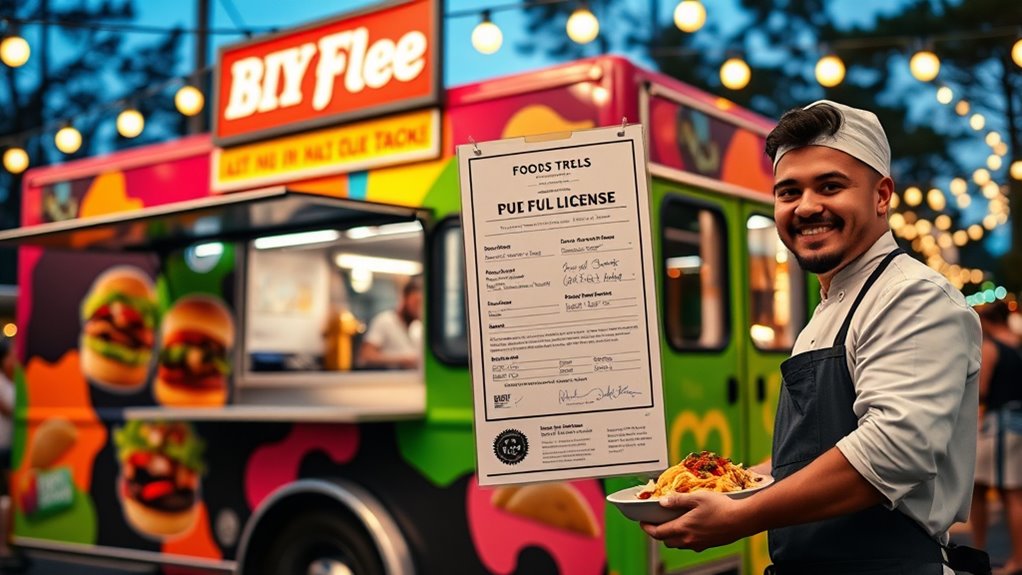
Getting a business license is an essential first step if you want to operate a food truck legally. Without it, you risk fines, shutdowns, and other legal complications that can seriously hamper your efforts. Securing the right license ensures you meet local regulations and helps establish your credibility with customers and vendors alike. When applying for your license, you’ll need to understand the specific licensing requirements in your area, which often include a variety of health and safety standards, along with business registration rules. These requirements are designed to promote food safety and protect public health, so they’re not just bureaucratic hurdles—they’re vital for running a responsible and reputable operation.
One of the most important aspects of licensing is understanding the food safety standards you must meet. Food safety isn’t just about avoiding illness; it’s about maintaining high standards that keep your customers safe and encourage repeat business. Local health departments typically inspect your food truck to verify that you follow proper food handling, storage, and sanitation procedures. This includes keeping your equipment clean, ensuring proper temperatures for cooked and stored foods, and preventing cross-contamination. Understanding these food safety protocols as part of your licensing process can help you prepare for inspections and avoid costly violations. It’s in your best interest to stay up-to-date with the latest food safety guidelines and incorporate them into your daily operations. Additionally, knowing regulatory agencies involved can help you navigate the licensing process more smoothly.
Frequently Asked Questions
How Long Does the License Application Process Typically Take?
The application processing for your food truck license usually takes about 2 to 4 weeks, depending on your location and completeness of your documents. During this time, authorities review your application and conduct any necessary inspections. The license approval timeline can vary, so it’s wise to submit your application well in advance of your planned launch. Staying in contact with local agencies can also help speed up the process if issues arise.
Are There Specific Licenses for Different Types of Cuisine?
Did you know that nearly 60% of cities require cuisine-specific permits for food trucks? You’ll need specialty food licenses if you serve particular types of cuisine, like seafood or ethnic dishes. These cuisine-specific permits guarantee you meet health and safety standards tailored to your menu. Always check local regulations because some areas might have unique requirements for different food types, helping you avoid fines and operate smoothly.
Can I Operate Without a Business License Temporarily?
You can’t operate your food truck without a business license, even temporarily. Temporary operation without a license isn’t allowed, and attempting license exemption could lead to fines or shutdowns. Always verify you secure the proper license before starting, as authorities take compliance seriously. If you need a short-term solution, check if local regulations offer any temporary permits or exemptions, but don’t rely on them for long-term or full operations.
How Often Do I Need to Renew My Food Truck License?
Your food truck license is like a garden that needs regular watering. Typically, you’ll need to renew it annually before the renewal deadline to avoid license expiration. Keep an eye on those renewal deadlines, as missing them can cause your license to expire, halting your operations. Staying proactive guarantees your license stays fresh and valid, letting your culinary journey continue smoothly without any unexpected roadblocks.
Are There Any Special Permits for Parking or Vending Locations?
Yes, you need special permits for parking and vending locations. Check local regulations for parking restrictions and vending zone regulations, as they differ by city and area. You might require a specific parking permit or vendor license to operate legally in designated zones. Always review city ordinances or contact local authorities to confirm you adhere to all parking and vending requirements, avoiding fines or penalties.
Conclusion
Getting the right business license for your food truck is like planting a seed—it sets the foundation for your journey. While the process might seem straightforward, it’s your careful attention that helps your venture flourish. Remember, a little patience and preparation can turn the road ahead into a smooth ride. Embrace the necessary steps, and you’ll find that success often blooms in the most unexpected places. Keep moving forward, and your food truck dreams will come to life.