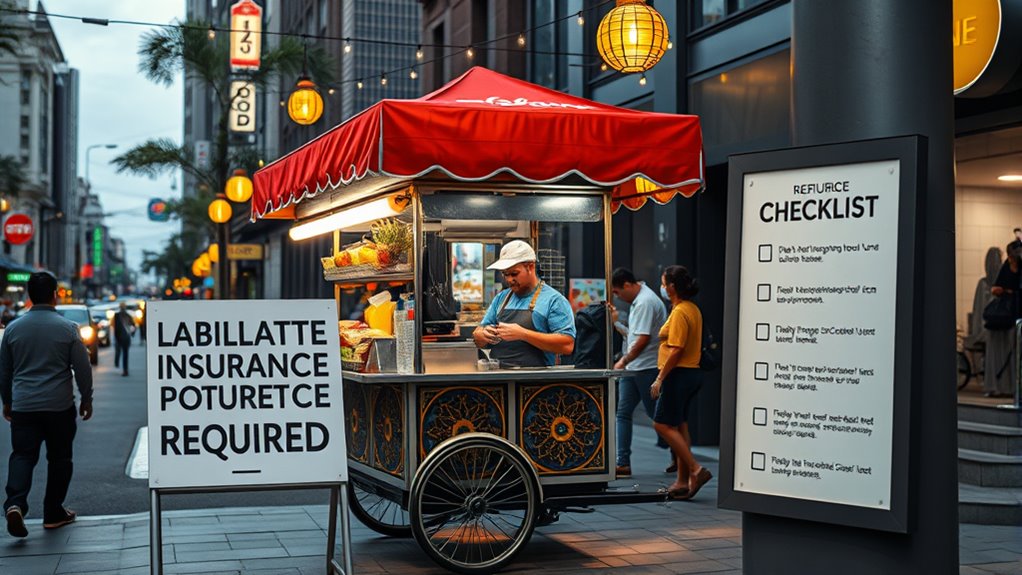

Liability insurance is often a must for mobile vendors to meet local rules and keep your business protected. Most permits require proof of coverage to operate legally at events, markets, or street setups. It helps cover costs if someone gets injured or if you damage property, preventing costly lawsuits. Having the right coverage guarantees you stay compliant and prepared for accidents in changing locations. Keep exploring to learn more about how to meet these insurance requirements effectively.
Key Takeaways
- Local health departments often require proof of liability insurance for permit approval.
- Insurance coverage must meet minimum amounts specified by permits or regulations.
- Liability insurance protects against claims from slips, falls, or property damage during operations.
- Providing proof of insurance is mandatory for event setup and permit renewal processes.
- Carrying adequate insurance demonstrates professionalism and ensures compliance with safety standards.
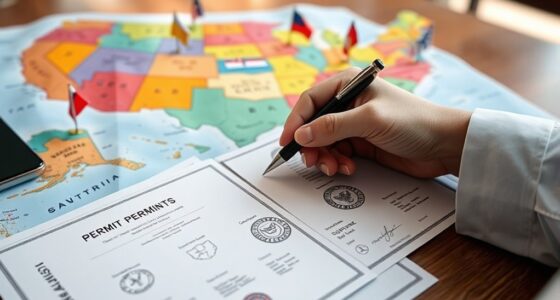
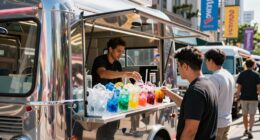
If you’re a mobile vendor, securing liability insurance is essential to protect your business from unexpected claims and financial setbacks. Operating a food truck or mobile food cart involves steering through various regulations, including food safety standards and obtaining the necessary vendor permits. These permits not only legitimize your operation but also demonstrate your commitment to complying with local health codes, which can be vital if you ever face an inspection or dispute. However, even with permits in hand, accidents or mishaps can happen. That’s where liability insurance comes in—it acts as a safety net, covering legal costs, medical expenses, and damages if someone gets hurt or if you accidentally cause property damage.
Liability insurance protects mobile vendors from accidents, legal costs, and property damage, ensuring business continuity and safety compliance.
Food safety is at the core of your business, and local health departments often require proof of insurance as part of the permit process. Having liability insurance shows that you’re serious about maintaining a safe environment for your customers and that you’re prepared for the unexpected. It can also prevent minor issues from escalating into costly lawsuits that could shut down your operations. Many permits will specify minimum coverage amounts, so it’s essential to understand these requirements before you start selling. Not adhering to food safety standards or neglecting to carry proper insurance can lead to fines, permit revocations, or even the suspension of your ability to operate.
Liability insurance doesn’t just protect you from claims related to food safety violations; it also covers incidents like slips and falls outside your vehicle, property damage, or injuries caused by your equipment. Since mobile vendors operate in different locations, you face unique risks that fixed restaurants might not encounter. Each new spot you set up means a different environment, different crowd, and different potential hazards. Having adequate liability insurance ensures you’re covered regardless of where you’re working. Additionally, some policies can be tailored to include coverage for weather-related disruptions, which are common in outdoor settings.
Additionally, many event organizers and markets now require vendors to carry liability insurance before they’re allowed to set up. This requirement keeps everyone safe and limits liability for event hosts. When applying for or renewing your vendor permits, providing proof of insurance is often mandatory. It’s a straightforward way to demonstrate your professionalism and commitment to safety. In the long run, investing in liability insurance helps you avoid devastating financial losses and keeps your business running smoothly, so you can focus on serving your customers and growing your brand.
Frequently Asked Questions
Are Liability Insurance Requirements Different for Food Trucks Versus Other Mobile Vendors?
Yes, liability insurance requirements differ for food trucks compared to other mobile vendors. Food truck regulations often mandate higher coverage limits due to food safety risks and public interaction, while vendor insurance policies for other mobile vendors may focus more on property damage or general liability. You should verify local regulations to confirm your insurance meets specific requirements for your type of mobile business, helping you stay compliant and protected.
How Often Must Mobile Vendors Update Their Liability Insurance Policy?
Think of your insurance renewal as tending a garden—you need to do it regularly to keep it healthy. You should update your liability insurance policy before it reaches policy expiration, typically annually or as required by your local regulations. Staying on top of these dates guarantees continuous coverage, avoiding gaps that could leave you exposed. Set reminders to review and renew your policy, keeping your mobile vending business protected and thriving.
What Are the Penalties for Operating Without Liability Insurance?
If you operate without liability insurance, you risk hefty penalties, including fines and suspension of your business license. If an accident occurs, insurance claims may be denied due to policy exclusions, leaving you financially responsible. Without proper coverage, you could face legal actions and damage to your reputation. It’s essential to adhere to insurance laws to protect your business and ensure smooth operations, avoiding costly consequences.
Can Liability Insurance Requirements Vary by City or State?
You might think insurance standards are the same everywhere, but local regulations can change things. Cities and states often set their own liability insurance requirements for mobile vendors, influencing coverage minimums and policy specifics. It is crucial to check your local regulations because they may have stricter or more lenient standards. Staying compliant means understanding these variations, ensuring your insurance coverage meets the specific requirements of your city or state to avoid penalties.
Are There Specific Coverage Limits Recommended for Mobile Vendors?
You should consider setting coverage limits based on your risk assessment, typically at least $1 million for general liability. Higher limits might be necessary if you handle expensive equipment or serve food. Evaluate your specific risks, such as accidents or property damage, to determine appropriate coverage. Consulting with an insurance agent can help you identify the best coverage limits, ensuring you’re protected without overpaying.
Conclusion
Steering liability insurance for your mobile vending business is like steering a ship through unpredictable waters—you need the right insurance to keep you afloat. With proper coverage, you’re shielded from storms that could sink your dreams, allowing you to focus on sharing your passion with the world. Don’t let unforeseen mishaps be the anchors that hold you back; instead, set your course with confidence and ride the waves of success.