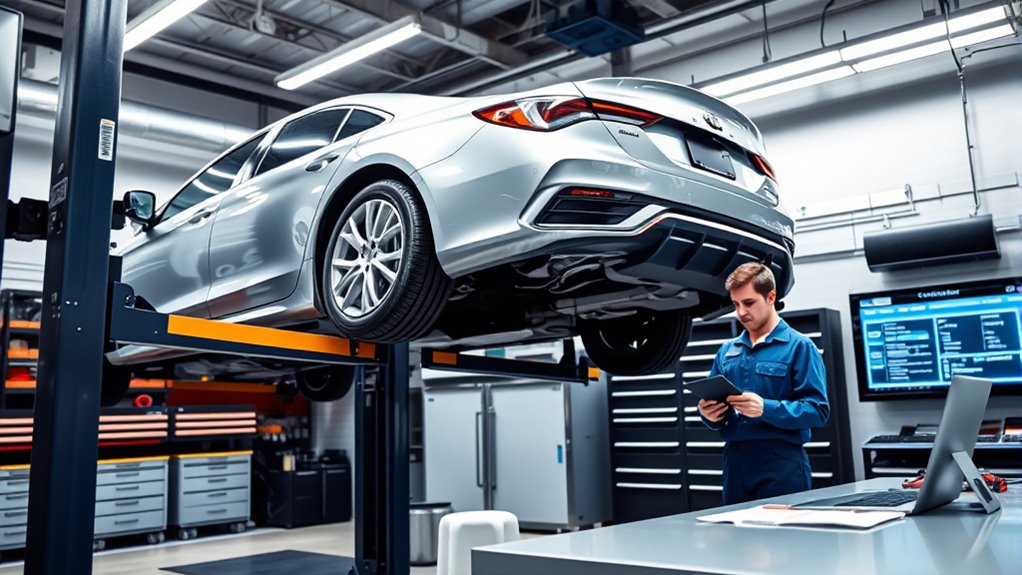

To complete your vehicle inspection and registration, you’ll need to verify your car passes the emissions test for environmental compliance, then gather proof of ownership, insurance, and identification. Bring these documents to your local DMV or register online if available, pay the required fees based on your vehicle’s details, and submit your inspection certificate if needed. Keep in mind, renewals and updates may be necessary over time—stay informed about local requirements to keep your vehicle legally on the road.
Key Takeaways
- Vehicles must pass emission inspections to confirm compliance with environmental standards before registration.
- Registration fees depend on vehicle weight, age, and type, and may include additional charges for emissions testing.
- Necessary documentation includes proof of ownership, insurance, valid ID, and possibly a passing inspection certificate.
- Registration renewal typically requires current inspection, fee payment, and must be completed before deadlines to avoid penalties.
- Many regions offer online registration services, but in-person visits provide direct assistance and verification.
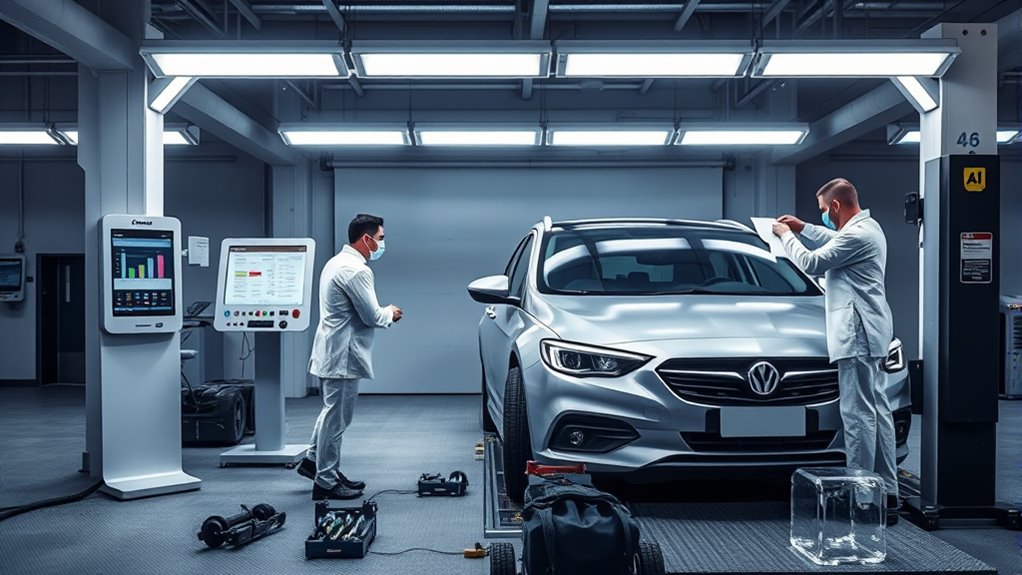
Understanding the vehicle inspection and registration processes is essential for ensuring your vehicle complies with legal standards and remains roadworthy. When you’re preparing to register your vehicle, you’ll need to be aware of the emission standards that apply in your area. These standards are designed to limit harmful pollutants released into the environment, and they can vary depending on your vehicle’s make, model, and age. Before you can complete your registration, your vehicle must pass an inspection that confirms it meets these emission requirements. If your vehicle fails, you’ll need to address the issues—such as repairing the exhaust system or updating emission control devices—before re-inspecting. This step not only ensures compliance but also helps reduce your vehicle’s environmental impact.
Once your vehicle passes the inspection, you’ll be required to pay registration fees to finalize the process. These fees are typically based on factors like your vehicle’s weight, age, and type, and they contribute to road maintenance and infrastructure. It’s important to budget for these costs ahead of time because they can vary considerably depending on your location and vehicle specifics. Some regions also impose additional fees for specialty plates or emissions testing, so it’s a good idea to check with your local department of motor vehicles (DMV) or equivalent agency to understand exactly what you’ll owe.
The registration process often involves submitting certain documents, such as proof of ownership, proof of insurance, and a valid identification. You may also need to provide a certificate of passing inspection if your area requires it. Many jurisdictions now offer online registration services, making it easier to complete paperwork without visiting a DMV office in person. However, if you prefer, you can still go in person, where a clerk will guide you through the necessary steps.
It’s worth noting that registration isn’t a one-time event. Most areas require annual or biennial renewals, which typically involve a current inspection and payment of registration fees. Staying on top of these renewal deadlines ensures you avoid fines or penalties that come with driving an unregistered vehicle. Additionally, some regions might update emission standards periodically, so keeping informed about changes will help you maintain compliance effortlessly. Regular inspections also help ensure your vehicle remains in good condition and adheres to the emission standards set by authorities.
Frequently Asked Questions
How Often Must I Renew My Vehicle Registration?
You need to renew your vehicle registration annually. Keep an eye on renewal reminders sent by your DMV or check registration deadlines on your registration card. To avoid penalties, renew before the due date. Most states offer online renewal options, making it easier to stay compliant. Remember, timely renewal helps you avoid fines and keeps your vehicle legally on the road. Stay alert to renewal reminders and meet registration deadlines promptly.
What Documents Are Required for Vehicle Inspection?
Did you know that over 80% of vehicles pass their inspection on the first try? To prepare, you’ll need your registration papers, proof of insurance, and a valid ID. Your inspection checklist includes checking brakes, lights, tires, and emissions. Make sure your vehicle meets registration requirements, like having proper registration tags and updated documentation. Being organized guarantees a smooth inspection process and helps you stay compliant with local vehicle laws.
Are There Penalties for Late Registration Renewal?
Yes, there are penalties for late registration renewal. If you don’t renew on time, you might face late renewal penalties, which can increase your costs. However, you can explore registration extension options if you’re unable to renew by the deadline. To avoid fines, it’s best to renew your registration promptly, or contact your local DMV to learn about possible extensions and avoid unnecessary penalties.
Can I Register My Vehicle Online?
Imagine your vehicle’s paperwork as a key to smooth roads ahead. Yes, you can register your vehicle online through the digital vehicle registration system. This method lets you breeze through the process from your cozy corner at home, saving time and effort. Simply log into the official portal, fill out your details, and submit your documents digitally. It’s convenient, quick, and keeps you moving without the hassle of in-person visits.
What Is the Cost of Vehicle Inspection and Registration?
The inspection fees typically range from $20 to $50, depending on your location and vehicle type. Registration costs vary based on vehicle weight, model, and age, usually between $50 and $150. You should check your local DMV for exact amounts, but be prepared for additional fees like taxes or special surcharges. Budget accordingly to confirm you cover all inspection fees and registration costs to avoid delays.
Conclusion
By following these vehicle inspection and registration steps, you’ll open the secret to owning a perfectly roadworthy masterpiece. Imagine cruising with a car so flawless, it practically glows, turning heads everywhere you go. Skipping any part of this process could turn your dream ride into a nightmare on wheels. So, buckle up, follow the steps diligently, and transform your vehicle into the envy of every driver on the road—your ticket to automotive greatness!