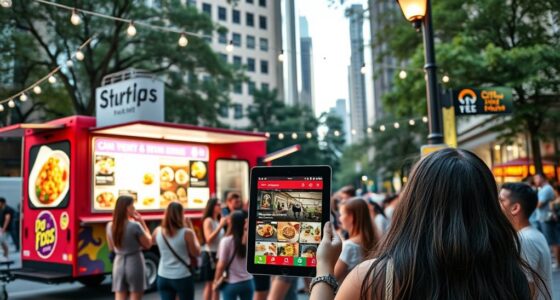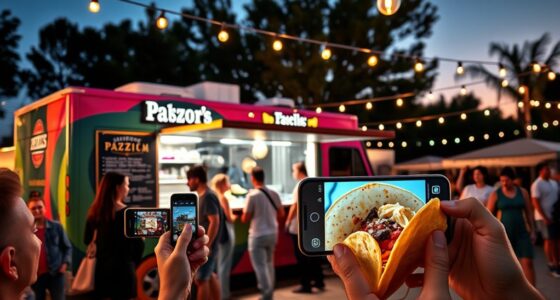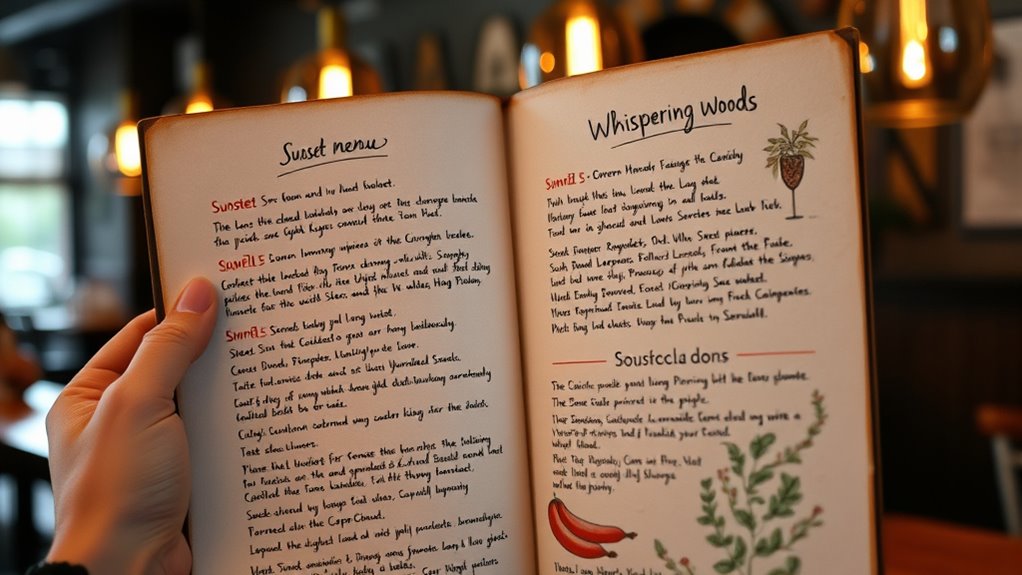

When you craft menu names and descriptions, you create stories that take diners on a journey, evoke emotions, and showcase cultural influences. Using descriptive, poetic, or playful titles like “Mediterranean Breeze” or “Sakura Blossom Roll” connects dishes to place and tradition. These names do more than inform—they spark curiosity and deepen engagement, transforming a simple meal into an unforgettable experience. Keep exploring, and you’ll discover how storytelling enhances every aspect of your menu.
Key Takeaways
- Menu names craft narratives that evoke imagery, culture, and emotion, transforming dishes into storytelling experiences.
- Descriptive and poetic names create visual connections, enhancing diners’ anticipation and engagement.
- Incorporating cultural references and history in menu titles deepens authenticity and cultural pride.
- Well-crafted descriptions complement names, providing context and enriching the storytelling journey.
- Modern strategies, like AI analysis, optimize menu storytelling to create immersive and memorable dining experiences.

Menus are more than just a list of dishes—they’re a storytelling tool that can transport diners to different worlds. When you think about it, the way a menu is crafted reveals a lot about cultural influences and the art of menu naming conventions. These elements work together to evoke emotions, spark curiosity, and create memorable dining experiences. By understanding how cultural influences shape menu names, you can better appreciate the stories behind each dish and how they connect to a place or tradition. For example, a menu might feature “Mediterranean Breeze,” hinting at fresh herbs, olive oil, and vibrant flavors from the region. Such names don’t just describe ingredients—they evoke a sense of place, culture, and history, inviting diners to imagine themselves in that environment before even taking a bite.
Menus tell stories, connecting dishes to culture, history, and place before the first bite.
Menu naming conventions are a *vital* part of this storytelling approach. Many restaurants use descriptive, poetic, or playful names to make their dishes stand out. Instead of simply listing “chicken salad,” you might see “Sunset Chicken Salad” or “Garden Harvest Salad,” which instantly creates a visual or emotional connection. These conventions help convey the dish’s essence while also aligning with the restaurant’s branding or theme. Whether opting for alliteration, cultural references, or historical nods, the names serve as mini-stories that set expectations and spark interest. When you’re choosing a dish, a well-crafted name can influence your perception, making the experience more engaging and immersive. Additionally, incorporating AI security technologies can help restaurants analyze customer preferences and optimize their menu storytelling strategies to further enhance the dining experience.
Cultural influences heavily impact how menus are designed and named. They reflect regional ingredients, cooking techniques, and traditional storytelling methods. For instance, a Japanese-inspired menu might include names like “Sakura Blossom Roll” or “Tsukiji Tide,” which evoke specific cultural imagery and culinary heritage. These names aren’t just labels—they’re a nod to history, geography, and cultural pride. Incorporating cultural influences through menu naming conventions allows you to celebrate diversity and authenticity, making each dish a story in its own right. When a menu thoughtfully integrates these elements, it doesn’t just serve food—it offers a cultural journey, inviting you to explore a new world with every meal.
In the end, effective menu names and descriptions do more than inform—they tell stories. They connect you to traditions, evoke imagery, and enhance your overall dining experience. Recognizing how cultural influences and naming conventions work together can deepen your appreciation for the artistry behind every menu, transforming a simple meal into a memorable adventure.
Frequently Asked Questions
How Can Storytelling Improve Customer Engagement?
Storytelling improves customer engagement by creating an emotional connection that resonates with your audience. When your menu names and descriptions tell a story, customers feel more connected to your brand, making the experience memorable. This emotional bond encourages brand loyalty, as they associate positive feelings with your restaurant. By weaving stories into your menu, you turn a simple meal into an engaging experience, fostering repeat visits and long-term loyalty.
What Are Common Themes for Storytelling in Menus?
You’ll find common themes for storytelling in menus often revolve around ingredient symbolism and narrative structure. Using ingredient symbolism, you highlight the significance of key ingredients, creating a meaningful connection. Narrative structure helps you craft a story flow, guiding customers through each dish. By weaving these themes into menu descriptions, you make the dining experience more engaging, memorable, and emotionally resonant, encouraging customers to explore and appreciate each dish’s story.
How Do Cultural Differences Influence Menu Storytelling?
Did you know that 65% of diners choose dishes based on cultural symbolism in menu descriptions? You’ll find that cultural differences shape menu storytelling through linguistic nuances and symbolism, making dishes resonate differently worldwide. When you understand these elements, you can craft menu stories that connect emotionally across cultures, enhancing customer experience. Adjust your language and symbolism to reflect local traditions, creating a more authentic and engaging dining experience for every guest.
Can Storytelling Increase Menu Item Sales?
Yes, storytelling can boost your menu item sales by leveraging menu psychology and strengthening your brand identity. When you craft compelling stories around your dishes, customers feel more connected and motivated to try them. Effective storytelling taps into emotions and perceptions, encouraging impulse buys and loyalty. By integrating these elements into your menu, you create a memorable experience that differentiates your brand and increases sales naturally.
What Are Mistakes to Avoid in Menu Storytelling?
Think of menu storytelling as a delicate dance; avoid stepping on toes by overloading dish naming and descriptive language. Don’t use vague or overly complex descriptions that confuse your guests, like a tangled web. Keep it clear, enticing, and authentic. Steer clear of clichés or exaggerations that seem insincere. Instead, craft genuine stories that spark curiosity without overwhelming, ensuring your storytelling enhances rather than distracts from the dining experience.
Conclusion
As you craft your menu, remember that every name and description is a story waiting to unfold. Your choices can spark curiosity, tempt taste buds, and keep diners guessing what’s next. Will they discover hidden flavors or unexpected surprises? The power lies in your words—use them wisely. One small detail could turn a simple meal into an unforgettable experience. Are you ready to tell a story that keeps your guests coming back for more?