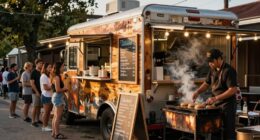
To design a balanced food truck menu, focus on offering a variety of appealing, nutritious options that cater to diverse diets. Incorporate lean proteins, fresh vegetables, whole grains, and customizable choices to satisfy different preferences. Include options for dietary restrictions, like gluten-free or vegan dishes, and keep your menu manageable for quality and consistency. By balancing flavor, nutrition, and variety, you’ll attract loyal customers. Keep exploring, and you’ll discover how to refine your menu even further for success.
Key Takeaways
- Incorporate a variety of lean proteins, fresh vegetables, and whole grains to ensure nutritional balance and appeal.
- Offer customizable portion sizes and toppings to cater to diverse dietary preferences and needs.
- Include options for dietary restrictions like gluten-free, vegan, and low-sodium to increase inclusivity.
- Maintain a manageable menu with core dishes, updating regularly to keep offerings fresh and operationally efficient.
- Design the menu to attract a broad customer base, promoting health, comfort, and vegetarian choices for repeat visits.
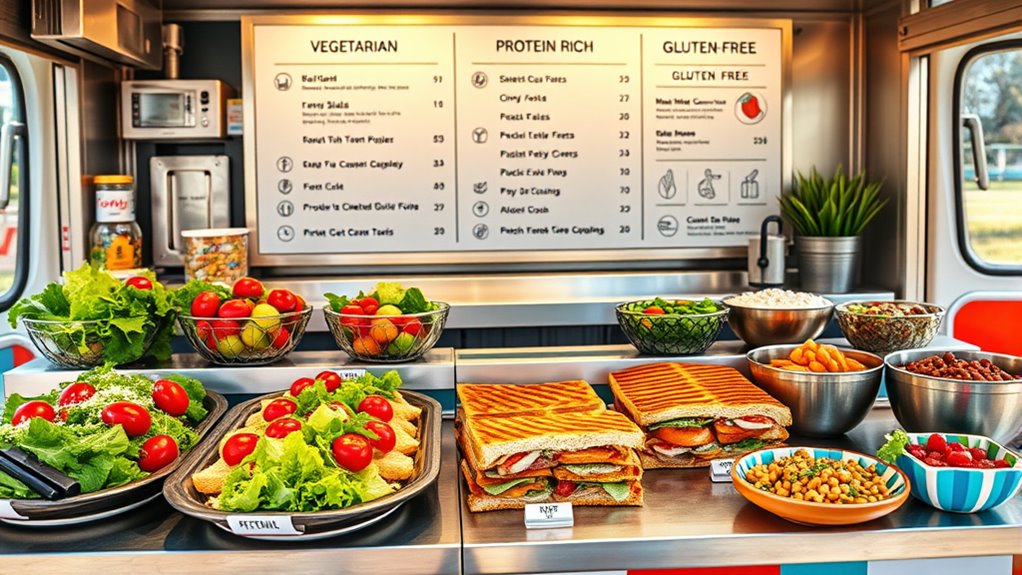
Creating a balanced food truck menu is essential for attracting a diverse range of customers and ensuring repeat business. When you focus on nutritional balance, you’re offering options that cater to different dietary needs and preferences, which helps build trust and loyalty. A well-designed menu should include a variety of dishes that appeal to health-conscious customers, vegetarians, and those craving indulgent comfort foods. This menu variety doesn’t just keep things interesting for your customers; it also encourages them to try new items, increasing their overall satisfaction and the chances they’ll return.
A balanced menu attracts diverse customers and encourages repeat visits through variety and nutritional focus.
To achieve this, start by evaluating your core offerings and think about how you can diversify them. Include lean proteins like chicken, fish, or plant-based alternatives to appeal to health-minded patrons. Incorporate fresh vegetables and fruits to add color, flavor, and nutritional value. Whole grains such as brown rice, quinoa, or whole-wheat buns can be incorporated into sandwiches, bowls, or side dishes, promoting a sense of wholesomeness. These choices help create a menu that’s not just tasty but also balanced, giving customers options that fit their dietary goals without sacrificing flavor.
It’s also important to contemplate portion sizes and ingredient quality. Smaller, nutrient-dense portions can satisfy those looking for lighter options, while larger, more indulgent dishes can cater to customers craving a hearty meal. Offering customization options, like toppings, sauces, or side choices, allows patrons to tailor their meals to their nutritional needs and taste preferences. For example, providing a variety of healthy toppings or low-calorie dressings encourages healthier choices without limiting flavor.
Having a diverse menu also means planning for different dietary restrictions. Include gluten-free, vegan, or low-sodium options to widen your appeal. Clearly labeling these choices helps customers quickly identify what suits their needs, enhancing their overall experience and boosting your reputation for inclusivity. Additionally, understanding the importance of emotional support can help you connect with customers on a deeper level, fostering loyalty and positive word-of-mouth.
Finally, keep your menu manageable. While variety is important, too many options can overwhelm you and your staff. Focus on a core set of dishes that you can execute well, ensuring consistency and quality. Regularly update or rotate menu items to keep things fresh and exciting, encouraging repeat visits. By balancing nutritional considerations with menu variety, you not only satisfy a broad audience but also position your food truck as a versatile, customer-focused business that values health, flavor, and innovation.
Frequently Asked Questions
How Do I Price Menu Items for Maximum Profit?
To price menu items for maximum profit, you should develop a strong pricing strategy that considers your food costs and target profit margins. Calculate the cost of ingredients and add a markup that guarantees profitability without discouraging customers. Keep an eye on competitors’ prices, and adjust when necessary. Regularly review your profit margins, and be willing to experiment with pricing to find the sweet spot that maximizes earnings while remaining attractive.
What Are the Best Marketing Strategies for Food Trucks?
Imagine your food truck as a beacon in a bustling cityscape. You should leverage social media to create buzz and showcase your daily specials, turning followers into loyal customers. Combine this with guerrilla marketing—think eye-catching signage or street performances—to grab attention in unexpected places. These strategies make your truck stand out, drawing crowds and turning passersby into enthusiastic diners, ensuring your brand’s flavor lingers long after they walk away.
How Can I Source Fresh Ingredients on a Budget?
You can source fresh ingredients on a budget by connecting directly with local farmers and buying seasonal produce. Visit farmers’ markets regularly to find affordable, fresh items. Building relationships with local growers may lead to discounts or wholesale prices. Prioritize seasonal produce, as it’s typically cheaper and more flavorful. This approach guarantees you get quality ingredients without overspending, helping your food truck stand out with fresh, local flavors.
What Permits and Licenses Are Necessary to Operate?
You need to obtain permits and licenses to operate legally, including a food service license and a mobile vendor permit. Check local zoning regulations to confirm your truck is allowed in your chosen locations. Prioritize food safety by following health department requirements, such as proper food handling and sanitation standards. These steps help you stay compliant and protect your reputation, ensuring your food truck runs smoothly and legally.
How Do I Handle Dietary Restrictions and Allergies?
Imagine a vibrant food truck serving diverse needs—gluten-free options and vegan substitutions stand side by side like colorful dishes on a menu. You handle dietary restrictions by clearly labeling ingredients and offering customizable choices. Train your staff to understand allergies, prevent cross-contamination, and communicate with customers. By prioritizing transparency and flexibility, you create an inclusive experience that makes every customer feel cared for and confident in their meal.
Conclusion
Creating a balanced food truck menu is like crafting a colorful painting—you want variety, harmony, and appeal. By including diverse options that cater to different tastes and dietary needs, you’ll keep customers coming back for more. Remember, a well-rounded menu isn’t just about nutrition; it’s about offering a delightful experience. So, put your heart into it, experiment, and enjoy the process—just like tasting a perfect bite that leaves you craving the next.