
To offer gluten-free and allergen-friendly options in your truck, focus on clear labeling, dedicated prep areas, and visible signage that emphasizes your commitment to safety and inclusivity. Customize your vehicle with separate storage compartments and allergen-conscious zones to prevent cross-contamination. Training your staff thoroughly and showcasing your safety practices will build trust with customers. If you’re interested in creating a responsible, inclusive experience, there are simple steps to elevate your truck’s offerings that you’ll want to explore.
Key Takeaways
- Outfit trucks with dedicated prep areas and labeled storage to prevent cross-contamination of allergen-free and gluten-free ingredients.
- Use clear signage and menu labels to communicate allergen-friendly and gluten-free options to customers.
- Train staff thoroughly on allergen handling procedures and proper ingredient labeling for safety.
- Incorporate allergen-conscious branding through vehicle decals, wraps, and signage to highlight your commitment.
- Implement sustainable safety measures like natural filtration systems and responsible ingredient management to enhance trust.
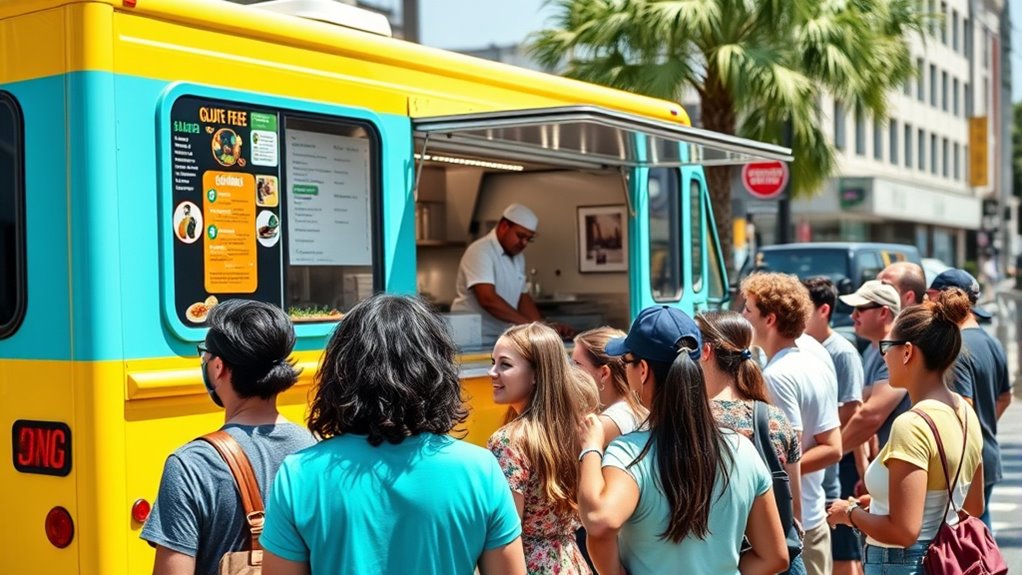
If you’re managing a food truck or simply looking for safe, inclusive options, offering gluten-free and allergen-friendly choices is vital. Not only does this demonstrate your commitment to customer safety, but it also expands your reach to a broader audience. When you focus on food truck branding, highlighting your allergen-friendly options can set you apart from competitors. Make it clear in your branding materials that you prioritize health-conscious, safe options, which can attract more customers seeking trustworthy food experiences. Incorporating allergen information into your marketing helps build trust and loyalty, especially among those with dietary restrictions. Vehicle customization plays a key role here—by outfitting your truck with dedicated prep areas, you can avoid cross-contamination and guarantee your gluten-free and allergen-sensitive dishes are safely prepared.
Your vehicle customization options should include clearly labeled storage for gluten-free ingredients and allergen-free products, making it easier for staff to maintain strict separation. Adding visible signage on your truck about your allergen-friendly offerings also reinforces your brand’s commitment to safety and inclusion. This transparency is vital to gaining customer confidence, especially in busy environments where quick decisions are often made. As part of your branding, consider designing eye-catching decals or wraps that communicate your allergen-conscious philosophy. This not only makes your truck more recognizable but also signals to potential customers that they can trust your menu choices.
Label storage clearly and display signage to showcase your allergen-friendly offerings and build customer trust.
Beyond aesthetics, vehicle customization can improve operational efficiency. Implementing separate prep zones or storage compartments for allergen-free ingredients minimizes the risk of cross-contact. This proactive approach demonstrates professionalism and dedication, which appeals to health-conscious consumers. Moreover, training your staff about allergen handling and clearly labeling ingredients on your menu show your attention to detail—these actions reinforce the trust built through effective branding and vehicle customization. When customers see your truck embracing these standards, they feel more comfortable ordering, knowing you’re committed to their safety.
A focus on natural filtration systems can also enhance the safety and sustainability of your allergen-friendly offerings, making your truck stand out as environmentally conscious. Ultimately, integrating allergen-friendly options into your food truck’s branding and customizing your vehicle to support safe food prep can greatly enhance your reputation. It’s about creating an environment where everyone feels welcome and confident in their choices. By doing so, you not only broaden your customer base but also establish your truck as a responsible, inclusive food destination. This approach ensures that your business remains competitive, respected, and aligned with current dietary trends, all while serving delicious, safe food.
Frequently Asked Questions
How Do Food Trucks Maintain Cross-Contamination Prevention?
You can prevent cross-contact by implementing strict sanitation protocols and practicing cross-contact mitigation. Always sanitize surfaces, utensils, and equipment between uses, especially when handling allergen-free or gluten-free items. Use separate tools and prep areas for different ingredients, and clearly label food stations. Educate staff on allergen awareness and proper procedures. These steps help guarantee that allergens don’t accidentally contaminate foods, keeping your customers safe and confident in your offerings.
Are Gluten-Free Options Suitable for All Food Allergies?
Think of gluten-free options like a carefully designed blueprint—while they’re safe for many, they aren’t universal. You can’t assume they suit all allergies because ingredient sourcing and product labeling vary. I once saw a truck accidentally serve a nut allergy sufferer, highlighting the importance of transparent labels. Always check ingredient sourcing and read product labels carefully, as some gluten-free items may still contain traces of other allergens, making them unsuitable for everyone.
What Certifications Verify Allergen Safety in Truck Foods?
You should look for certifications like Safe Quality Food (SQF), Gluten-Free Certification Organization (GFCO), and NSF International that verify allergen safety in truck foods. These certification standards guarantee rigorous allergen verification, confirming that the food complies with strict safety protocols. When selecting truck foods, always check for these certifications to guarantee that allergen management is verified and that the food is safe for those with allergies.
How Are Allergen-Friendly Ingredients Stored and Prepared?
You should store allergen-friendly ingredients separately in clearly labeled, airtight containers to prevent cross-contact. Use designated storage areas for gluten-free or allergy-sensitive items, and make certain all ingredients are kept at proper temperatures. Maintain strict kitchen sanitation by cleaning surfaces and utensils thoroughly before preparing allergen-friendly foods. This minimizes contamination risks and ensures safe, allergen-free options for your customers. Proper ingredient storage and sanitation are essential for maintaining safety and trust.
Can Trucks Accommodate Specific Dietary Restrictions Beyond Gluten and Common Allergens?
Yes, trucks can accommodate specific dietary restrictions beyond gluten and common allergens by offering a specialized menu tailored to individual needs. You can work with the truck’s team to source ingredients that meet your restrictions, ensuring safe options are available. This personalized approach involves clear communication and ingredient sourcing, so you get meals that align with your dietary requirements without compromising on taste or variety.
Conclusion
So, after all this talk about gluten-free and allergen-friendly options, you’d think trucks would be a haven for everyone, right? Yet, here you are, still scanning menus and asking questions. It’s almost ironic—designed to be inclusive, but sometimes it feels like a game of culinary hide-and-seek. Still, knowing these options are out there means you can keep searching, trusting that one day, your food truck experience will finally match your needs without the extra hassle.