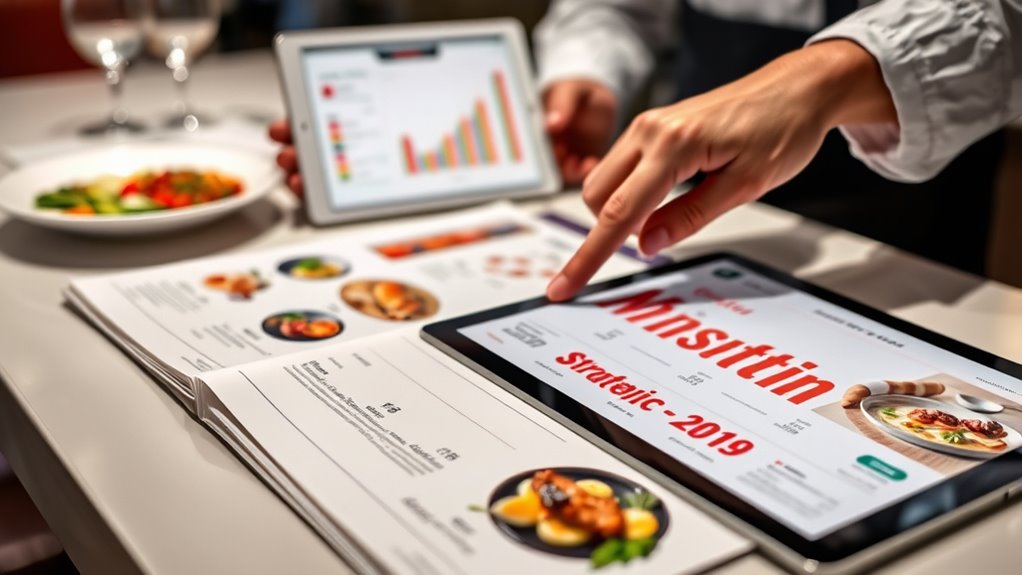

To boost your restaurant’s profitability, use strategic menu pricing by adjusting prices based on demand, peak times, and customer perceptions of value. Incorporate dynamic pricing to capitalize on busy periods and offer discounts during slow times. Align prices with what your customers value most, considering regional trends and ingredients. Regularly monitor sales and customer feedback to refine your pricing tactics. Keep these principles in mind, and you’ll discover more ways to maximize your profits.
Key Takeaways
- Implement dynamic pricing by adjusting menu prices based on demand, time, and seasonal trends.
- Use value-based pricing to align menu prices with customer perceptions and perceived dish worth.
- Balance competitive pricing with profit goals by analyzing sales data and customer feedback regularly.
- Tailor menu offerings and prices to regional market factors and local customer preferences.
- Continuously monitor, test, and refine pricing strategies to adapt to market changes and maximize profitability.
Have you ever wondered how restaurants decide what to charge for each dish? It’s often a mix of art and science, where strategic menu pricing plays a vital role in ensuring profitability. One key approach is dynamic pricing, which allows you to adjust prices based on various factors such as demand, time of day, or seasonality. For example, during peak hours or special events, raising prices slightly can maximize revenue without alienating loyal customers. Conversely, offering discounts or lower prices during off-peak times can attract more diners and fill seats that might otherwise stay empty. This flexibility helps you respond swiftly to market conditions and customer behavior, guaranteeing you optimize sales and profit margins.
Another essential concept is value-based strategies, which focus on pricing dishes according to the perceived value they offer your customers. Instead of simply marking up ingredients, you consider what your patrons believe a dish is worth. For instance, a gourmet dish with premium ingredients or a unique presentation might command a higher price because customers see it as a special experience. Conversely, everyday comfort foods may be priced more affordably to appeal to a broader audience. When you align your prices with what customers value most, you not only enhance their satisfaction but also increase the likelihood of repeat business. This approach requires you to understand your target market deeply—what they prioritize, how much they’re willing to pay, and what competitive options they have nearby.
Align prices with perceived value to boost customer satisfaction and encourage repeat business.
Implementing dynamic pricing and value-based strategies together enables you to create a flexible, customer-centric menu. It’s about balancing the need to stay competitive with the desire to maximize profit. For example, if you notice that a particular dish consistently sells well during certain seasons or events, you might raise its price slightly to capitalize on its popularity. Alternatively, if a dish isn’t performing as expected, you can adjust its price or tweak its presentation to increase its perceived value. You also need to monitor customer feedback and sales data regularly, so you can refine your pricing tactics over time.
Additionally, understanding regional factors such as local divorce statistics or community demographics can help tailor your menu offerings and pricing strategies to better suit your target audience, ensuring your restaurant remains relevant and profitable.
Ultimately, strategic menu pricing isn’t just about covering costs; it’s about understanding your customers, market trends, and your restaurant’s unique value proposition. By leveraging dynamic pricing and value-based strategies, you can set prices that attract more diners, boost revenues, and guarantee your restaurant’s long-term profitability. It’s a continuous process of testing, analyzing, and adjusting—one that keeps your menu competitive and your business thriving.
Frequently Asked Questions
How Often Should Menu Prices Be Reviewed and Adjusted?
You should review and adjust your menu prices at least quarterly to stay ahead of seasonal fluctuations and supplier costs. Regular checks help you respond quickly to changes, ensuring profitability. Keep an eye on market trends, customer preferences, and cost increases, and update prices accordingly. This proactive approach maintains your margins and keeps your menu competitive, preventing losses from unforeseen cost hikes or seasonal demand shifts.
What Tools Can Help Analyze Menu Item Profitability?
Did you know that analyzing menu elasticity can increase profitability by up to 15%? To do this, use tools like POS systems and menu engineering software that perform detailed cost analysis and track sales data. These tools help identify which items are most profitable, how pricing affects customer demand, and where adjustments can boost margins. Leveraging such analytics enables smarter pricing decisions, optimizing your menu for maximum profitability.
How Do Customer Perceptions Influence Pricing Decisions?
You should consider customer psychology and price elasticity when making pricing decisions. Your customers’ perceptions of value heavily influence how they respond to price changes; if they see a price as fair, they’re more likely to purchase. By understanding price elasticity, you can set prices that optimize profitability while still appealing to your target audience. Adjusting prices based on these insights helps you meet customer expectations and drive sales effectively.
What Role Does Competitor Pricing Play in Menu Strategy?
Ever wondered how competitor pricing shapes your menu strategy? You should leverage competitive analysis to see how others price similar items, ensuring your offerings remain attractive yet profitable. By understanding market positioning, you can set prices that differentiate your restaurant and appeal to your target audience. This approach helps you stay competitive, attract more customers, and optimize profit margins without undercutting your value. Do you know what your competitors’ menus really say about your market?
How Can Menu Design Impact Perceived Value and Pricing?
Your menu design greatly influences perceived value and pricing through visual hierarchy and layout. By highlighting high-margin items with strategic placement and appealing visuals, you guide customers’ attention, making them more likely to choose profitable options. A clear, organized menu layout reduces decision fatigue, encouraging quicker choices and higher spending. You can boost perceived value by balancing images, descriptions, and pricing, creating an inviting experience that justifies premium prices.
Conclusion
By applying strategic menu pricing, you steer your restaurant toward sustained profitability, much like a captain charts a steady course through unpredictable waters. Remember, every price point you set is a compass guiding customer choices and your bottom line. Keep analyzing your costs, customer preferences, and competition to stay on course. With thoughtful pricing, you’ll turn your menu into a well-tuned engine driving success rather than a static list of dishes.