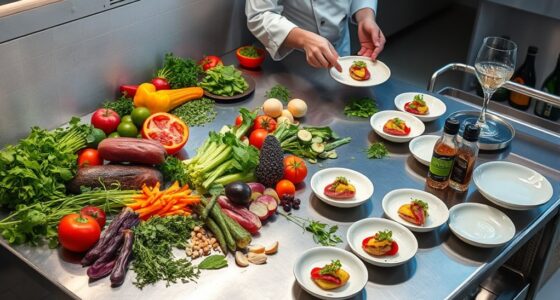

To keep your menu fresh with rotation schedules, plan periodic updates aligned with seasons or every few months. Integrate seasonal ingredients to inspire creativity, improve flavor, and showcase quality. Communicate updates clearly to your team and source ingredients in advance for smooth operations. This approach keeps your offerings exciting, encourages customer return visits, and supports sustainability. Want to learn more about designing an effective rotation plan that boosts your success? Continue exploring these strategies.
Key Takeaways
- Establish regular menu update schedules (seasonal, quarterly, bi-annual) to maintain freshness and customer interest.
- Incorporate seasonal ingredients to inspire creative dishes and showcase peak produce.
- Plan ahead for ingredient availability and cost fluctuations to ensure smooth transitions.
- Communicate menu changes clearly to staff and customers to manage expectations effectively.
- Use rotation schedules to introduce innovative offerings, boost loyalty, and prevent menu fatigue.
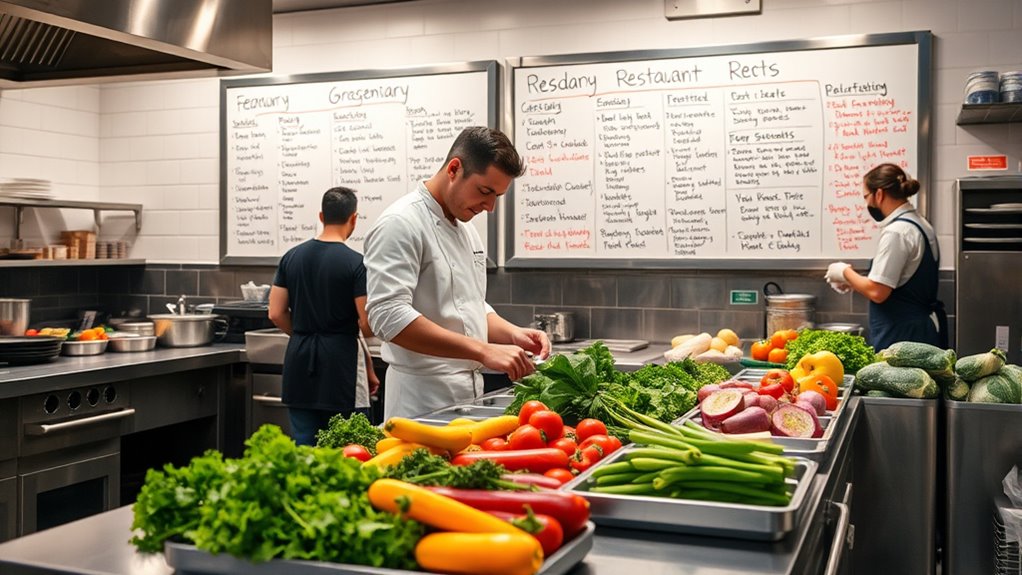
A well-planned menu rotation schedule is vital for keeping your offerings fresh and appealing to your customers. When you organize your menu thoughtfully, you guarantee that ingredient diversity is a key focus, providing a variety of flavors, textures, and nutritional options that excite your patrons. Regularly updating your menu with seasonal ingredients not only inspires creativity but also shows your commitment to quality and freshness. By aligning your menu changes with seasonal updates, you take advantage of peak produce and ingredients, which tend to be more flavorful and cost-effective. This approach encourages customers to return, enthusiastic to experience new dishes that highlight the best of each season.
Implementing a rotation schedule means you can plan ahead for ingredient availability and pricing fluctuations. For example, during spring, you might introduce dishes featuring asparagus, peas, and strawberries, while in fall, you could highlight pumpkin, apples, and root vegetables. This strategic approach ensures that your menu always feels current, relevant, and exciting. It also helps prevent menu fatigue—customers can enjoy familiar favorites, but with fresh variations that keep their interest piqued. Consistent updates tied to seasonal changes demonstrate your dedication to quality and freshness, reinforcing your reputation as a thoughtful and innovative chef or restaurant owner.
Plan seasonal menus to stay current, excite guests, and showcase fresh, local ingredients.
Furthermore, ingredient diversity plays a vital role in keeping your menu dynamic. Rotating ingredients allows you to experiment with different flavors and cooking techniques, which can lead to new signature dishes and unique customer experiences. It also broadens your supply chain, reducing dependency on certain ingredients and helping you manage costs more effectively. When you incorporate seasonal updates into your rotation schedule, you’re not only offering variety but also emphasizing sustainability and responsible sourcing. Customers increasingly appreciate establishments that support local farmers and use seasonal ingredients, so this approach can boost your reputation and customer loyalty.
To make the most of your menu rotation schedule, set clear timelines—quarterly, bi-annually, or seasonally—and communicate upcoming changes to your team. This preparation helps you source ingredients in advance and plan your kitchen operations smoothly. Remember, consistency is key; your customers will come to expect and look forward to these updates. By thoughtfully managing ingredient diversity and seasonal updates within your rotation schedule, you keep your menu vibrant, your offerings relevant, and your customers enthusiastic to return. This strategic effort not only enhances the dining experience but also strengthens your business’s reputation as a fresh, innovative, and customer-focused establishment. Incorporating business and economy principles can help optimize your supply chain and cost management for sustainable growth.
Frequently Asked Questions
How Often Should I Change My Menu Items?
You should change your menu items seasonally or every 3 to 6 months to foster menu innovation and keep customers excited. Regular updates encourage ingredient sourcing opportunities, allowing you to introduce fresh dishes and adapt to current trends. By rotating your menu, you stay relevant and showcase your creativity, while also supporting local suppliers with new ingredient sourcing options. This approach keeps your restaurant dynamic and appealing to a diverse customer base.
What Are Signs My Menu Needs a Refresh?
Your menu needs a refresh when it feels like it’s losing its sparkle. If you notice declining customer interest, or dishes no longer reflect seasonal ingredients and culinary trends, it’s time to shake things up. Keep an eye on ingredient availability and customer feedback. When your menu starts to seem stale, it’s a sign you should introduce fresh options to stay relevant and exciting for your guests.
How Do I Manage Seasonal Menu Changes?
You manage seasonal menu changes by sourcing ingredients locally at their peak freshness and aligning your menu with what’s available. Use staff training strategies to guarantee your team understands new dishes and seasonal ingredients, encouraging enthusiasm and consistency. Regularly plan ahead for seasonal shifts, update recipes, and communicate changes clearly. This way, you keep your menu exciting, fresh, and aligned with the changing seasons, delighting your customers every time.
Can Menu Rotation Boost Customer Engagement?
Did you know that 70% of customers say they’re more likely to visit a restaurant with a dynamic menu? Rotation boosts customer engagement by tapping into menu psychology, making your offerings feel fresh and exciting. By regularly updating dishes based on customer preferences, you create anticipation and loyalty. This strategy keeps your menu relevant, encourages repeat visits, and shows you’re attentive to what your guests want.
What Tools Help Track Menu Performance?
You can track menu performance effectively with tools like inventory management systems and customer feedback platforms. Inventory management helps you monitor ingredient usage and sales trends, revealing what’s popular or needs adjustments. Customer feedback tools gather direct insights about dishes, allowing you to identify favorites and areas for improvement. Combining these tools allows you to make informed decisions, ensuring your menu stays fresh and appealing, ultimately boosting customer satisfaction and sales.
Conclusion
Think of your menu like a garden—you need to rotate your crops to keep the soil healthy and the flavors vibrant. When you implement a smart rotation schedule, you’re giving your dishes new life and enticing customers to keep coming back. I once saw a restaurant double its sales just by revitalizing their menu every season. Keep your offerings fresh, and your business will bloom—just like that garden, thriving with careful care and strategic change.