To develop tapas and small plates for sharing, focus on creating a variety of flavors, textures, and styles that complement each other. Use attractive presentation methods like small bowls, boards, and colorful ceramics to make dishes inviting and easy to share. Pair your menu with versatile wines that enhance the flavors. Designing simple, finger-friendly bites fosters a relaxed, communal atmosphere. Keep these principles in mind and explore further to craft a truly memorable tapas experience.
Key Takeaways
- Curate a variety of flavors and textures, balancing vegetarian and meat options for inclusive, cohesive sharing plates.
- Use attractive, accessible presentation styles like small bowls and wooden boards to encourage sampling and socialization.
- Pair a diverse selection of versatile wines, such as light reds and crisp whites, to enhance flavors and refresh the palate.
- Design small, finger-friendly bites that promote a relaxed, communal dining experience and easy sharing.
- Ensure visual harmony and flow in the spread, creating an engaging, memorable tasting journey that stimulates conversation.
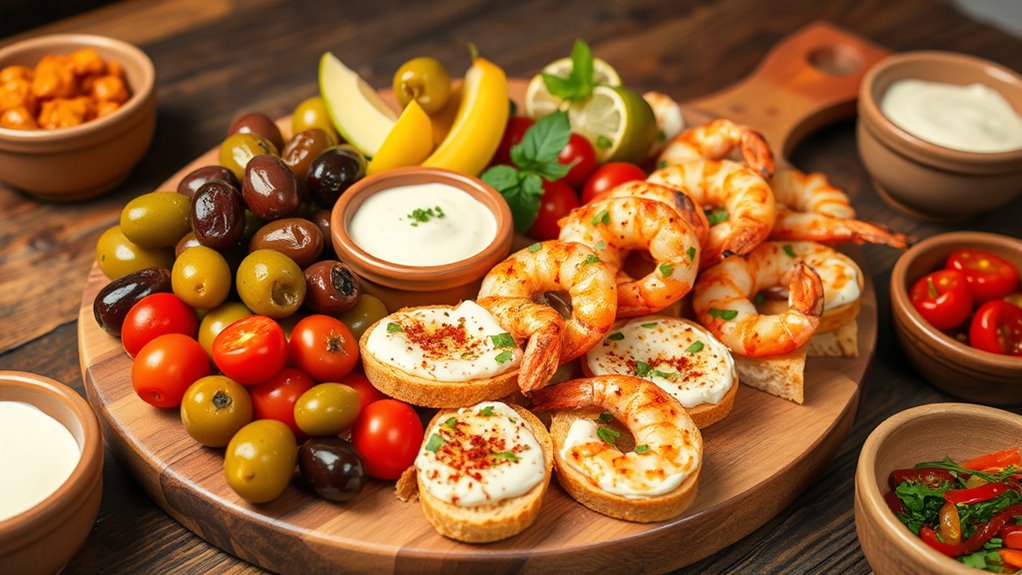
Tapas and small plates offer a vibrant way to enjoy a variety of flavors in one meal. When you’re developing these dishes for sharing, you want to focus on creating a balanced assortment that appeals to different tastes and textures. Think about how each plate complements the others, offering a mix of salty, sweet, savory, and tangy options. The goal is to encourage conversation and a communal dining experience, so your presentation styles should enhance this sense of togetherness. Use attractive, varied plating techniques—small bowls, wooden boards, or colorful ceramic dishes—to make each item inviting and easy to access. Presentation plays an essential role in stimulating appetite and setting the tone, so consider how the visual arrangement can make the meal more engaging. When it comes to pairing wine, aim for versatility; select wines that can match multiple flavors without overpowering the dishes. Light reds like Pinot Noir or Tempranillo, crisp whites such as Albariño or Verdejo, and sparkling wines like Cava all work well with a broad range of tapas, from seafood to charcuterie. Keep in mind that the wine’s acidity and freshness can elevate the flavors and refresh the palate between bites, encouraging your guests to explore more of your offerings. As you develop your menu, think about how the flavors will interact and how to serve them in a way that invites sharing. Small bites should be easy to eat with fingers or small utensils, fostering a relaxed atmosphere. Including a variety of vegetarian and meat options ensures there’s something for everyone and adds to the visual appeal. Garnishes like fresh herbs, citrus zest, or drizzles of olive oil not only enhance flavor but also add a splash of color to your presentation. When arranging the plates, consider the flow—placing lighter, milder flavors alongside more robust ones—so guests can easily navigate their tasting journey. Remember, your goal is to create a cohesive yet diverse spread that encourages guests to sample everything and engage with each other. Pairing wine thoughtfully with each dish can elevate the dining experience, making every sip and bite memorable. Ultimately, the success of your tapas and small plates lies in how well you balance variety, presentation styles, and beverage pairing, turning an ordinary meal into a lively, shared celebration of flavors. Additionally, understanding how to balance flavors and textures is crucial for creating a memorable tasting experience.
Frequently Asked Questions
How Do I Balance Flavors in a Small Plate Menu?
To balance flavors in a small plate menu, you should focus on ingredient pairing and flavor balancing. Start with a mix of salty, sweet, sour, and umami elements. Use fresh herbs and acids to brighten dishes, and incorporate rich or spicy components carefully. Tasting as you go helps make certain each plate complements the others, creating a harmonious experience. This approach keeps your menu flavorful, balanced, and appealing to a variety of palates.
What Are Some Innovative Tapas Ideas for Fusion Cuisines?
Think outside the box to create innovative fusion tapas by blending molecular gastronomy with ingredient substitutions. You can surprise your guests by transforming familiar flavors into avant-garde dishes, like foamed sauces or edible spheres. Experiment with combining elements from different cuisines, such as Korean kimchi with Mexican tacos or Japanese wasabi with Mediterranean dips. Such creative twists will keep your menu fresh and exciting, turning ordinary into extraordinary.
How Can I Cater to Dietary Restrictions With Small Plates?
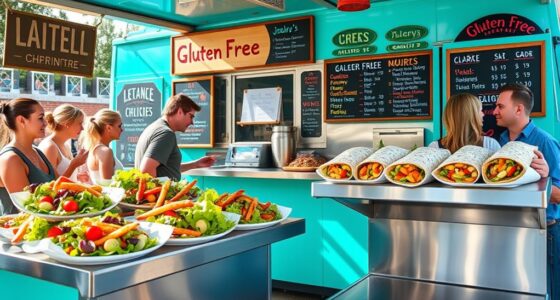
You can cater to dietary restrictions by offering gluten-free options like veggie-based bites and rice paper wraps. Incorporate vegan modifications by substituting dairy and animal products with plant-based ingredients, such as tofu or chickpeas. Clearly label each small plate to highlight gluten-free and vegan choices, making it easy for guests to select dishes that suit their needs. This approach shows your commitment to inclusivity and enhances the dining experience.
What Is the Ideal Portion Size for Sharing Plates?
The ideal portion size for sharing plates is about 3–4 bites, ensuring you master portion control and uphold proper serving etiquette. Ironically, smaller plates encourage more conversation and variety, while larger ones risk ending up as a food fight. Keep each plate balanced—just enough to satisfy without overwhelming—so everyone gets a taste without the chaos, making your shared experience both enjoyable and sophisticated.
How Do I Arrange a Tapas Menu for a Large Group?
To arrange a tapas menu for a large group, focus on presentation aesthetics and strategic plating techniques. Mix vibrant colors and varied textures to keep it visually appealing. Plate dishes in small, accessible portions, and arrange them thoughtfully across serving platters or boards for easy sharing. Guarantee each dish complements others, creating a cohesive, inviting display that encourages mingling and sampling. This approach keeps the experience engaging and dynamic for everyone.
Conclusion
Now that you’ve mastered the art of developing tapas and small plates, you’re ready to impress your guests with flavorful, shareable bites. Think of it like hosting a legendary Renaissance feast, but with a modern twist—no need for a time machine. Just trust your palate and creativity. Keep experimenting, and soon, your kitchen will become the hottest spot in town, where every dish is a conversation starter. Cheers to your culinary adventure!