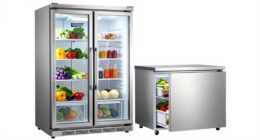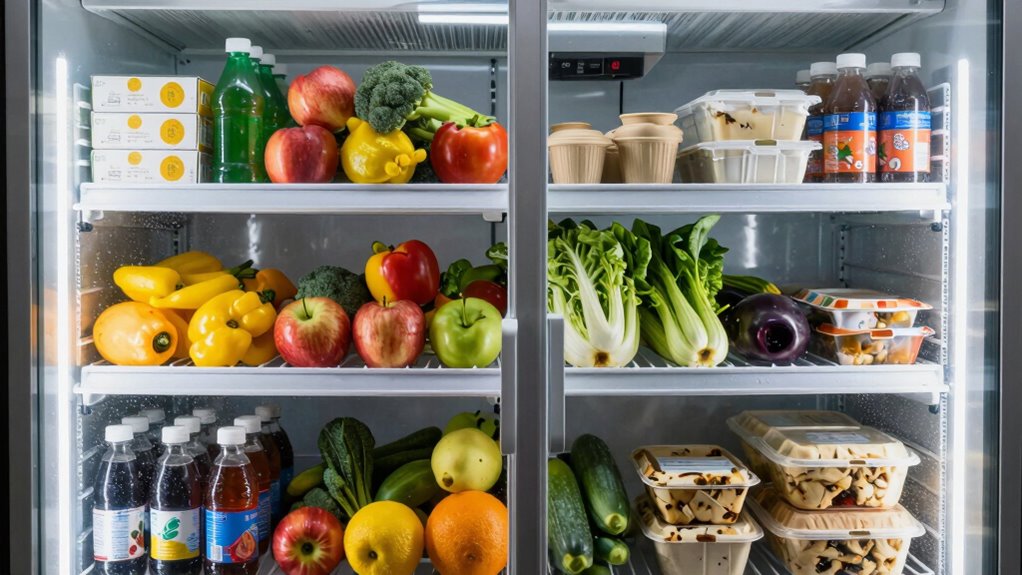
Improper shelf setup and overloading cause commercial refrigerators to work twice as hard by blocking airflow and creating hotspots, which reduces cooling efficiency. When shelves are overcrowded or items are stacked too high, cold air can’t circulate properly, forcing the system to run more often and wear out faster. To avoid this, make sure shelves are well-organized, spaced correctly, and not overloaded. Keep going to discover proven ways to optimize your fridge’s performance and save energy.
Key Takeaways
- Overloading shelves blocks airflow, causing uneven cooling and forcing the compressor to work harder.
- Improper shelf spacing restricts cold air circulation, increasing energy consumption.
- Stacking items too high creates hotspots, forcing the refrigeration system to compensate.
- Ignoring airflow pathways leads to temperature fluctuations and increased system strain.
- Failing to regularly organize and adjust shelves results in inefficient operation and faster equipment wear.
Why Shelf Arrangement Matters for Refrigerator Efficiency

Have you ever wondered how the way you arrange shelves in a commercial refrigerator affects its performance? Proper shelf arrangement directly impacts temperature consistency, which is essential for food safety and quality. When shelves are well-organized, airflow circulates evenly, maintaining a uniform temperature throughout the unit. Choosing the right shelf material also makes a difference; stainless steel is durable and easy to clean, helping to prevent contamination and temperature fluctuations. Proper airflow management is crucial for maintaining consistent temperatures and preventing hot spots. Avoid overcrowding shelves, as blocking airflow can cause hot spots and reduce efficiency. Using appropriate DIY tools can help you adjust shelves safely and accurately. Additionally, understanding how air circulation works within your unit can help you optimize your setup for maximum efficiency. By thoughtfully arranging your shelves, you guarantee consistent cooling, reduce energy consumption, and extend the lifespan of your refrigerator. Small changes in setup can lead to significant improvements in performance and food preservation.
Common Shelf Setup Mistakes That Hurt Performance

One common mistake is overcrowding shelves, which blocks airflow and reduces cooling efficiency. Ignoring airflow pathways can cause uneven temperature distribution, compromising food safety. To keep your refrigerator running at its best, you need to balance storage with proper ventilation. Proper shelf organization ensures optimal airflow and maintains consistent temperatures throughout the unit. Additionally, using car accessories like ventilated shelf liners can help improve airflow and prevent items from blocking vents. Recognizing the importance of air circulation can further enhance your refrigerator’s performance and energy efficiency. Incorporating landscaping elements that promote natural airflow around outdoor units can also support these efforts. Being mindful of airflow pathways within the refrigerator can make a noticeable difference in overall performance.
Overcrowding Shelves Frequently
Why do shelves often become overcrowded in commercial refrigerators? It’s usually because you’re trying to maximize space without considering proper organization. Overcrowding makes it hard to see shelf labeling clearly, leading to misplaced items and inconsistent stock rotation. When shelves are packed tightly, airflow gets blocked, and temperature zones can fluctuate, compromising food safety. To prevent this, avoid stacking items too high or cramming products together. Use clear shelf labeling to keep everything organized and ensure staff can quickly identify items. Proper spacing helps maintain consistent temperatures across different zones, improving efficiency and reducing energy consumption. Remember, a well-structured shelf setup isn’t just about maximizing space—it’s about creating a system that supports ideal performance and food safety.
Ignoring Airflow Pathways
Are you overlooking the importance of airflow pathways when setting up your commercial refrigerator shelves? Airflow obstruction occurs when shelves are packed too tightly or placed too close together, restricting proper circulation. Poor shelf spacing prevents cold air from moving evenly throughout the unit, causing temperature fluctuations and reducing efficiency. When airflow is blocked, the refrigerator works harder to maintain the desired temperature, increasing energy consumption and wear on components. To optimize performance, guarantee adequate space between shelves and avoid overcrowding. Proper airflow pathways allow cold air to circulate freely, maintaining consistent temperatures and saving energy. Regularly check and adjust shelf spacing to prevent airflow obstructions and keep your refrigerator running smoothly and efficiently. Additionally, utilizing proper shelf placement techniques can further enhance airflow and system performance. Ensuring airflow pathways are unobstructed is crucial for maintaining optimal refrigerator function and energy efficiency.
The Importance of Proper Airflow in Commercial Refrigerators
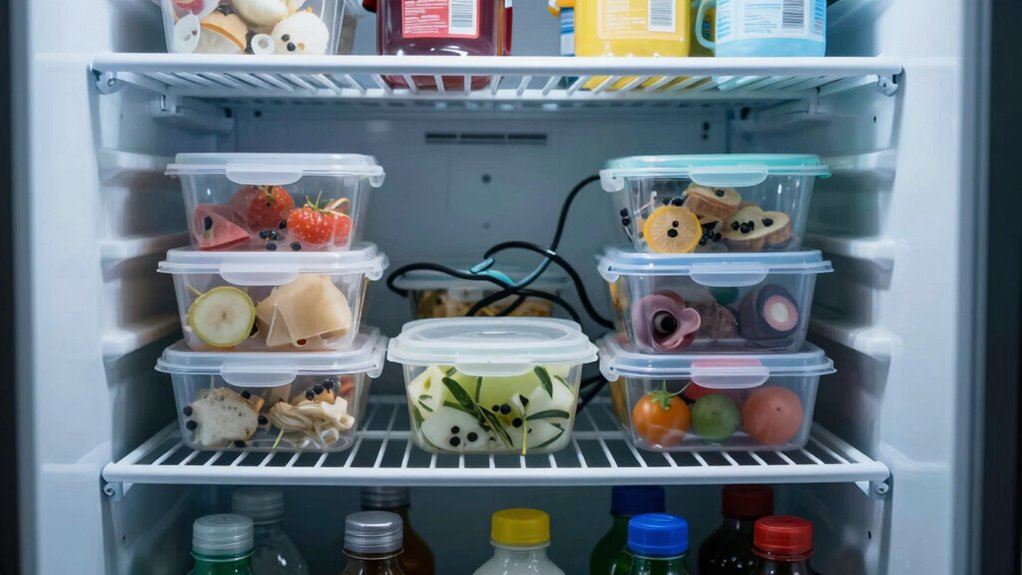
Proper airflow is vital for maintaining consistent temperatures and preventing spoilage in commercial refrigerators. Understanding airflow dynamics helps you guarantee that cold air circulates evenly throughout the unit. When airflow is unobstructed, refrigeration technology works more efficiently, reducing energy consumption and extending equipment lifespan. Poor airflow causes temperature fluctuations, which can lead to food spoilage and safety concerns. To optimize airflow, avoid overcrowding shelves and keep vents clear. Properly arranged shelves allow cold air to reach every corner, preventing warm spots. Additionally, implementing airflow management techniques can further enhance the efficiency of your refrigeration system. Maintaining ventilation efficiency is essential for preventing airflow blockages caused by dust and debris. Regularly inspecting and cleaning your vents ensures unobstructed airflow, which is a vital aspect of refrigeration efficiency. Ensuring proper storage practices can also help maintain optimal airflow and temperature consistency. Proper airflow is especially important for maintaining the emotional needs of the stored products, ensuring they stay fresh and safe. By paying attention to airflow patterns, you enable your refrigerator to operate at peak performance, saving you money and reducing waste.
How to Optimize Shelf Placement for Better Air Circulation
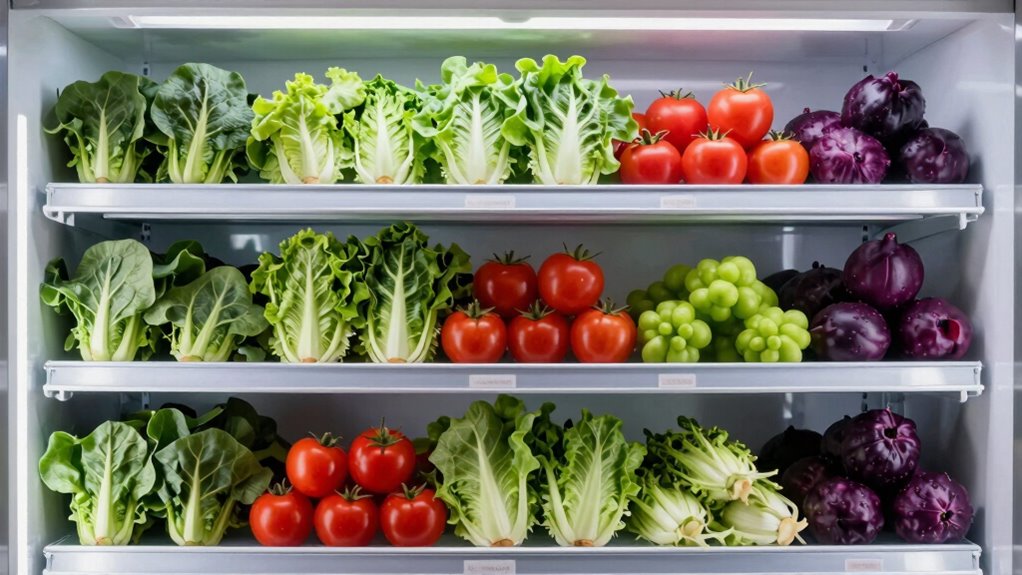
To guarantee your commercial refrigerator maintains ideal airflow, you need to carefully plan shelf placement. Proper positioning assures even distribution of cold air, preventing temperature fluctuations. Use storage accessories to create dedicated zones for different items, which improves airflow and organization. Keep items that require similar temperatures together, aligning with specific temperature zones. Leave space between shelves to promote air circulation. Additionally, understanding regional flavors and pairings can help you organize products more effectively based on their storage needs. Properly airflow management is essential for maintaining consistent temperatures and extending food freshness. Implementing storage best practices can further enhance the efficiency of your refrigerator. Being aware of airflow dynamics helps in designing layouts that optimize cold air circulation throughout the unit. Recognizing how airflow patterns influence temperature distribution can lead to more strategic shelf placement. Here’s a visual to help:
| Shelf Level | Placement Focus |
|---|---|
| Top | Light storage, less airflow needed |
| Middle | Core storage, maximize circulation |
| Bottom | Heavy items, stable temperature |
| Storage Accessories | Divide zones effectively |
| Space Between Shelves | Enhance airflow |
Optimizing shelf placement keeps your fridge running efficiently and preserves food quality.
Overloading Shelves? Here’s How It Increases Energy Use
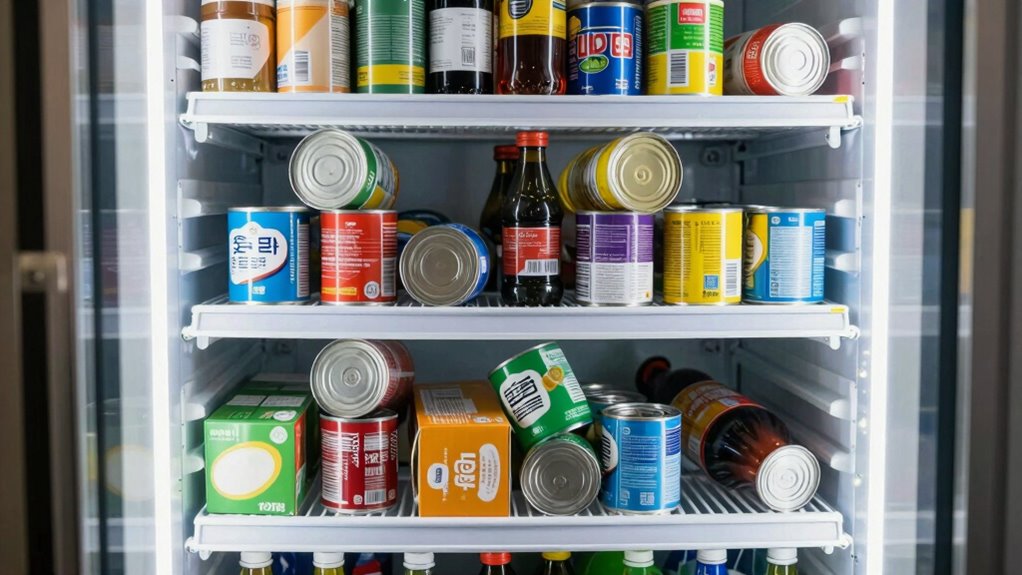
When shelves are overloaded, your refrigerator has to work harder to maintain the desired temperature. Excess items block airflow, causing uneven cooling and forcing the compressor to run longer. This increases energy consumption and wears down refrigeration components faster. To improve energy efficiency, consider these energy saving strategies:
- Avoid stacking items too tightly to guarantee proper air circulation
- Distribute weight evenly across shelves
- Regularly check and clear clutter to prevent overloading
- Schedule routine refrigeration maintenance
- Use appropriately sized shelves to avoid overcrowding
- Incorporate modern refrigeration technology to optimize cooling performance and reduce energy use. Additionally, understanding how energy efficiency impacts your overall electricity consumption can help you make more informed decisions about refrigerator use and maintenance. Properly managing airflow and load distribution can significantly extend the lifespan of your refrigerator’s components and improve its overall system performance. Regularly monitoring and adjusting your refrigerator settings can further enhance its energy savings.
Smart Tips to Organize Items and Reduce Compressor Strain
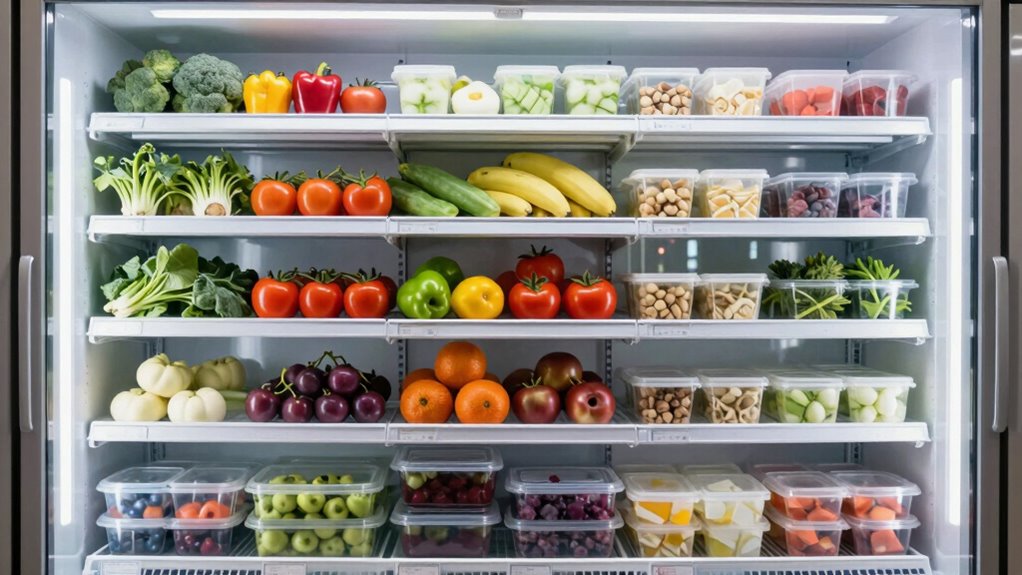
Organizing items efficiently in your commercial refrigerator can considerably reduce compressor strain and improve energy efficiency. Use clear shelf labeling to designate specific temperature zones for different food types, preventing unnecessary temperature fluctuations. Place frequently used items at the front or in easily accessible zones to minimize door openings and maintain consistent temperatures. Keep perishable items grouped together in colder zones, and store less sensitive goods in higher or warmer shelves. Avoid overcrowding, which blocks airflow and forces the compressor to work harder. By clearly labeling shelves and organizing items based on their storage needs, you help maintain ideal temperature zones, reducing compressor workload. Implementing efficient storage solutions can further optimize airflow and temperature consistency. Efficient organization ensures the refrigerator runs smoothly, saves energy, and prolongs equipment lifespan.
Regularly Check and Adjust Shelves for Long-Term Efficiency
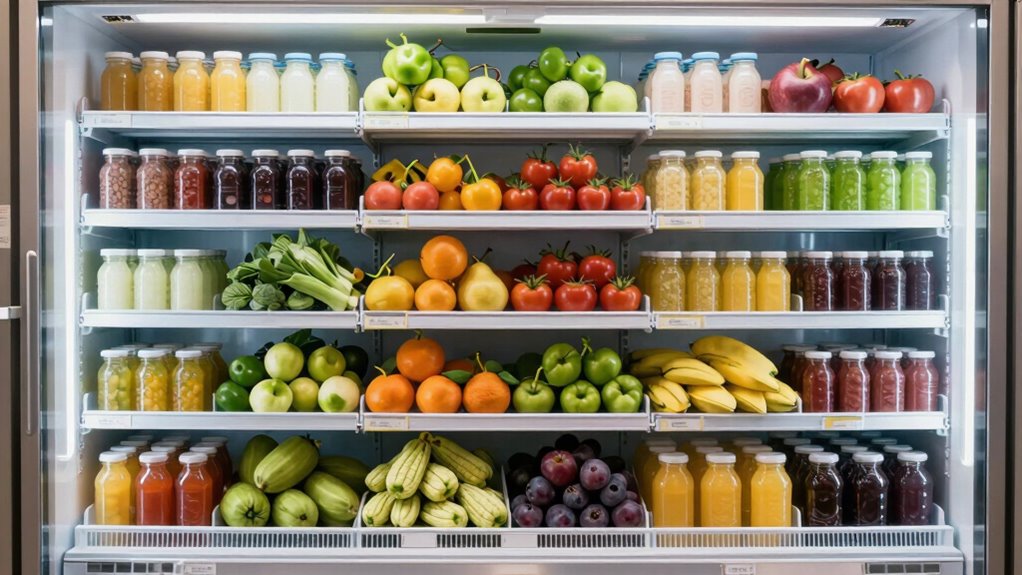
Regularly inspecting and adjusting your shelves helps maintain proper airflow and prevents uneven cooling. Make certain shelves aren’t overloaded to avoid stressing the refrigerator’s compressor. Keeping everything balanced ensures your unit runs efficiently over the long term.
Optimize Airflow Circulation
Have you ever noticed how uneven airflow can cause temperature inconsistencies in your refrigerator? Proper airflow guarantees humidity control and maintains distinct temperature zones, which is vital for preserving freshness. To optimize circulation, regularly check that shelves aren’t blocking vents or air pathways. Keep items spaced out to prevent air from stagnating. Adjust shelves to promote even airflow distribution across all zones. Confirm that colder and warmer sections stay separated properly. Avoid overcrowding, as it hampers movement of cool air. Use fans or airflow vents if available to boost circulation. By maintaining clear pathways and proper shelf alignment, you’ll enhance efficiency, reduce energy consumption, and keep products at ideal temperatures longer. Proper airflow is key to long-term refrigerator performance.
Prevent Shelf Overloading
Overloading shelves can substantially impair your refrigerator’s efficiency and compromise food safety. When shelves are overcrowded, airflow gets blocked, leading to uneven temperatures and increased energy consumption. To prevent this, regularly check and adjust your shelves, making sure they aren’t overloaded. Use clear shelf labeling to organize items and make it easier to identify when shelves need clearing or rearranging. Proper organization helps maintain ideal airflow and consistent temperature monitoring, which is vital for food safety. Avoid stacking items too high, as this can create cold spots or hotspots. Consistent oversight ensures shelves stay balanced, reducing strain on the refrigeration system. By staying proactive, you help your commercial refrigerator operate efficiently, save energy, and keep food safe for longer.
Frequently Asked Questions
How Often Should Shelves Be Cleaned to Maintain Efficiency?
You should clean your shelves at least once a week to guarantee efficiency. Follow a consistent shelf cleaning schedule to prevent buildup of dirt and spills that can strain your refrigerator’s compressor. Use shelf maintenance tips like removing items carefully and using gentle cleaning solutions. Regular cleaning keeps your refrigeration system running smoothly, saves energy, and extends the lifespan of your equipment. Don’t skip these steps for peak performance.
Can Specific Materials for Shelves Improve Refrigerator Performance?
Choosing shelf material with good thermal conductivity, like metal, can improve your refrigerator’s performance by helping maintain consistent temperatures. Metal shelves transfer heat more efficiently, reducing temperature fluctuations and allowing the compressor to work less. Avoid non-conductive materials like plastic or wood if temperature stability is a priority. By selecting the right shelf material, you optimize cooling efficiency and extend your refrigerator’s lifespan.
What Signs Indicate Shelves Are Causing Airflow Blockages?
You’ll notice airflow blockages when shelves become unstable or overcrowded, disrupting airflow efficiency. Signs include uneven cooling, frost buildup, or hot spots inside the fridge. Unstable shelves can shift and block vents, impeding airflow. To prevent this, guarantee shelves are stable and properly positioned, maintaining ideal airflow efficiency. Regularly check for obstructions and avoid overloading, so your refrigerator runs smoothly and keeps everything properly cooled.
How Do Temperature Fluctuations Affect Shelf Organization?
Temperature fluctuations can disrupt your fridge’s temperature stability, causing uneven cooling. If shelves aren’t properly organized or lack shelf insulation, air can’t circulate effectively, leading to hot spots. When shelves are overcrowded or poorly spaced, airflow is blocked, intensifying fluctuations. To maintain consistent temperatures, make certain of proper shelf organization, avoid overcrowding, and use shelves with good insulation. This helps your refrigerator operate efficiently and keeps food fresh longer.
Are There Recommended Shelf Heights for Different Food Types?
Yes, there are recommended shelf heights for different food types to guarantee ideal stacking and shelf durability. You should place heavier, bulkier items on lower shelves to prevent damage and maintain stability. Light, delicate foods go on higher shelves for easy access. Adjusting shelf heights helps maximize space, reduces strain on shelves, and keeps your refrigeration system running efficiently. Proper organization minimizes temperature fluctuations and preserves food quality.
Conclusion
By organizing your shelves wisely, you can turn your refrigerator into a well-oiled machine, preventing it from working overtime like a hamster on a wheel. When you prioritize proper airflow and avoid overloading, you’ll see energy bills shrink and your equipment last longer. Think of your shelves as the lungs of your fridge—when they’re clear and well-placed, your refrigeration system breathes easier, keeping everything fresh without breaking a sweat.