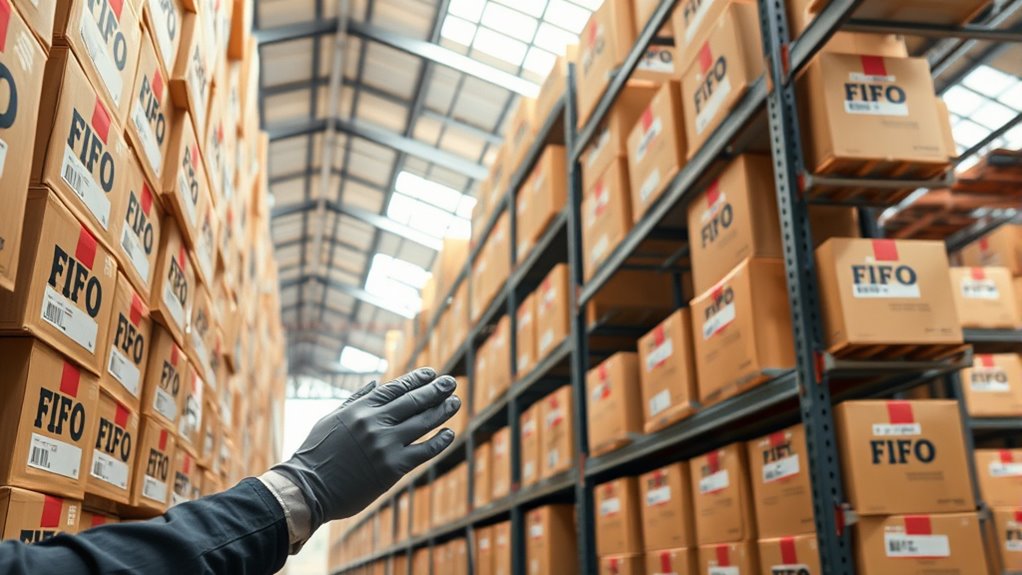

To master inventory management with FIFO, organize your stock to prioritize older items at the front or easily accessible areas. Use inventory software or clear shelving to track purchase dates and guarantee staff follow proper handling procedures. Regularly review and move stock as needed to prevent spoilage and reduce waste, especially for perishable goods. This approach helps maximize profits and improve customer satisfaction. Keep exploring to discover how to implement FIFO effectively in your business.

Get kitchen staples and gadgets delivered free with Prime
- Fast, free delivery on millions of items
- Prime Video, Amazon Music and more included
- Member-only deals all year
Key Takeaways
- Organize inventory to prioritize selling older stock first, ensuring proper stock rotation and reducing waste.
- Implement accurate record-keeping and regular inventory reviews to maintain FIFO compliance.
- Use inventory management tools or software to automate stock rotation and monitor expiration dates.
- Train staff on FIFO principles and proper handling procedures to ensure consistent application.
- Monitor inventory levels continuously to prevent spoilage, improve product freshness, and boost customer satisfaction.

Effective inventory management is essential for maintaining profitability and minimizing waste, and one popular method to achieve this is FIFO—First-In, First-Out. This approach ensures that your oldest stock gets sold first, which is especially important when dealing with perishable goods or items with expiration dates. When you implement FIFO correctly, you facilitate efficient stock rotation, making sure products move smoothly through your inventory without lingering too long. This process helps prevent spoilage, which can lead to significant financial losses and damaged customer trust. By always prioritizing the sale of older items, you reduce the risk that products become obsolete or unusable, ultimately boosting your bottom line.
Effective inventory management with FIFO reduces waste and boosts profits by ensuring older stock sells first.
Stock rotation is at the core of FIFO. When you organize your inventory to follow this principle, you systematically move older stock to the front or easily accessible areas, ensuring they are sold before newer arrivals. This might involve arranging shelves with the oldest items in front or using inventory management software to track purchase dates. Proper stock rotation not only streamlines your operations but also minimizes the chance of products expiring or deteriorating while waiting to be sold. It’s a proactive way to handle your inventory, keeping everything fresh and relevant, and helping you avoid the costs associated with spoiled or outdated goods. Additionally, skin care ingredients such as hyaluronic acid and collagen are common in eye patches, and proper inventory management helps ensure these beneficial components are used before they degrade.
Spoilage prevention is a key benefit of adhering to FIFO. When you stick to this method, you’re less likely to hold onto products longer than they’re viable, which directly reduces waste. For perishable items like food, pharmaceuticals, or cosmetics, spoilage can be a serious issue, leading to financial loss and potential health risks. FIFO ensures that these items are sold within their shelf life, making it easier to manage expiration dates and maintain product quality. Furthermore, consistent stock rotation and spoilage prevention contribute to a better reputation for your business, as you’re less likely to distribute expired or compromised products to your customers.
In practice, mastering FIFO involves more than just rearranging shelves; it requires discipline and organization. You need to keep accurate records of purchase dates, regularly review inventory levels, and train staff on proper stock handling procedures. Implementing FIFO with the right tools can automate many of these tasks, making stock rotation seamless and reliable. Ultimately, this approach not only safeguards your inventory from spoilage but also maximizes your profits by reducing waste and ensuring customer satisfaction through the delivery of fresh, quality products.
Frequently Asked Questions
How Does FIFO Impact Inventory Turnover Ratios?
FIFO increases your inventory turnover ratio because it guarantees older stock is sold first, improving inventory accuracy and reducing excess stock. By maintaining a consistent cost flow, you can better match costs with sales, boosting efficiency. This method helps you identify slow-moving items, optimize stock levels, and improve overall inventory management, leading to more accurate financial reporting and a healthier cash flow.
Can FIFO Be Integrated With Automated Inventory Systems?
Think of FIFO as a well-oiled clock, where each gear moves seamlessly. You can easily integrate FIFO with automated tracking through system integration, allowing real-time updates and accuracy. Automated inventory systems streamline the process, ensuring older stock is sold first without manual oversight. By combining FIFO with automation, you enhance efficiency, reduce errors, and keep your inventory flowing smoothly—like a perfectly synchronized clock ticking in harmony.
What Are Common Challenges When Implementing FIFO?
You might face challenges with FIFO, especially around proper stock rotation and managing shelf life. Ensuring older inventory is used first requires diligent monitoring, which can be tough during busy periods. Additionally, if staff aren’t trained well, it’s easy to accidentally overlook expired items or mismanage stock. Automating these processes helps, but initial setup and ongoing oversight are essential to avoid waste and maintain product freshness.
How Does FIFO Affect Inventory Valuation During Inflation?
During inflation, FIFO causes your cost flow to reflect older, lower costs, which means your inventory valuation during financial reporting appears lower. This can inflate your profit margins because the cost of goods sold is based on outdated prices. As a result, you’ll see higher net income, but it may not accurately represent current market conditions. FIFO’s impact on inventory valuation can therefore influence your financial statements markedly during inflation.
Is FIFO Suitable for Perishable Versus Non-Perishable Goods?
FIFO is perfect for perishable goods because it guarantees you sell the oldest items first, preventing spoilage and waste. For non-perishable goods, FIFO still works well, maintaining a logical flow of inventory. While not always ideal for every scenario, FIFO’s suitability shines for perishables by reducing loss and for non-perishables, it keeps stock rotation simple. Overall, FIFO’s flexibility makes it a top choice in most inventory management situations.
Conclusion
By mastering FIFO, you keep your inventory fresh and your profits steady. But remember, while it simplifies stock rotation, neglecting other methods can lead to overlooked opportunities. FIFO is your foundation, yet flexibility is key. Embrace its benefits, but stay vigilant to changing trends. Ultimately, effective inventory management isn’t just about keeping stock moving—it’s about balancing consistency with adaptability to thrive in a competitive market.
Columbus Day / Indigenous Peoples' Day Picks
long weekend sales
As an affiliate, we earn on qualifying purchases.