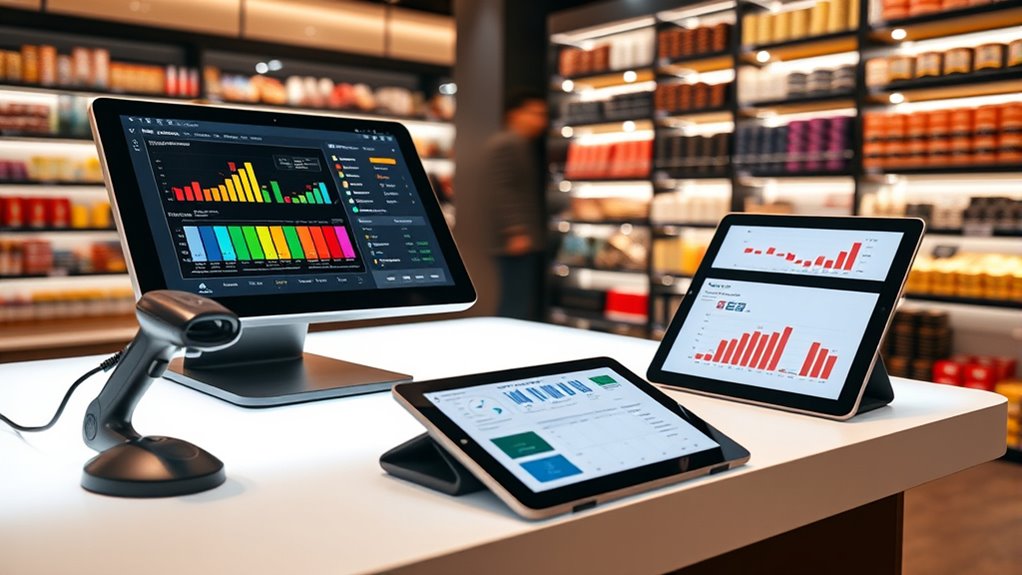

Integrating inventory software with POS systems helps you streamline operations, ensuring real-time stock updates and reducing manual errors. That way, your inventory remains accurate automatically as sales occur, preventing stockouts or overstock. It also provides instant product availability info to your staff, boosting customer satisfaction. Besides, it generates useful reports for smarter reordering and sales analysis. Keep exploring to see how seamless integration can transform your business efficiency and decision-making.
Key Takeaways
- Seamlessly connect inventory management with POS for real-time stock updates and accuracy.
- Automate stock level synchronization to prevent manual errors and reduce inventory discrepancies.
- Improve customer experience by providing accurate product availability during sales transactions.
- Generate precise reports and analytics to optimize stock levels and support decision-making.
- Enhance operational efficiency through automation of routine inventory tasks and streamlined workflows.
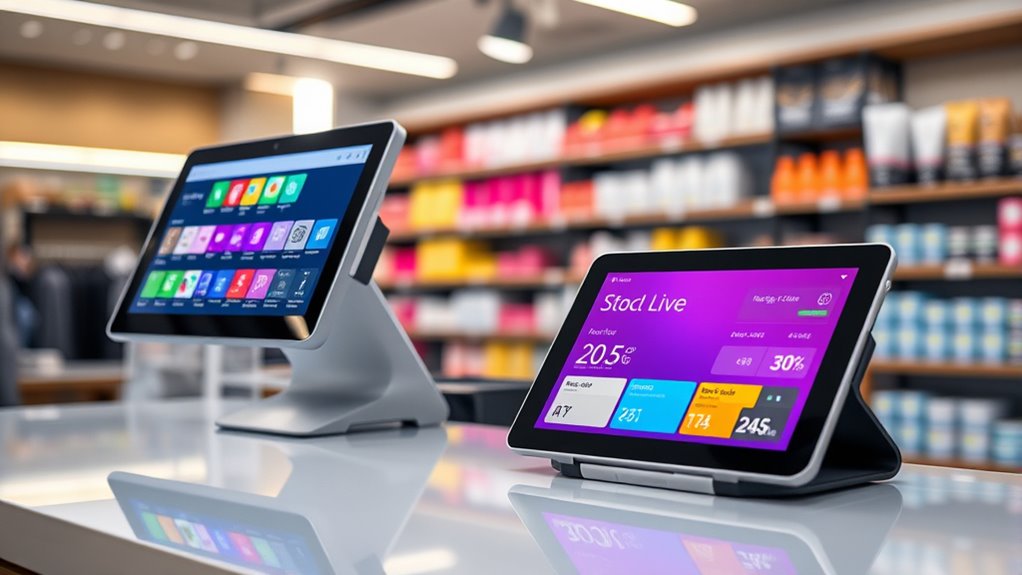
Integrating inventory software with point-of-sale (POS) systems can considerably streamline your business operations by providing real-time data and reducing manual errors. When you connect these systems seamlessly, you gain the ability to maintain accurate stock levels at all times, which is essential for meeting customer demand and avoiding stockouts or overstocking. Stock synchronization becomes effortless because updates happen automatically as sales are completed, purchases are received, or stock levels change. This means your inventory counts stay current without needing to manually adjust records, saving you time and reducing the risk of human error.
With real-time updates, you can instantly see the impact of every sale or return on your inventory. As soon as a customer makes a purchase, the software updates stock levels across all your sales channels immediately. This immediate feedback helps you make smarter decisions about reordering or promotions, preventing stock shortages and overstock situations. Additionally, real-time updates ensure that your staff always has accurate information, reducing confusion during busy hours and improving customer service, as you can quickly check product availability without delays.
The synchronization of inventory data across your POS and software systems also simplifies reporting and analytics. You can generate accurate sales reports, inventory valuation, and reorder alerts based on current data, rather than outdated or manually entered figures. This insight allows you to identify trends, optimize stock levels, and improve overall inventory turnover. Because the data is consistent across platforms, you avoid discrepancies that could lead to incorrect stock counts or financial errors.
Furthermore, integrating inventory software with POS systems enhances operational efficiency. You no longer need to manually transfer data between different systems, which minimizes errors and accelerates processes like inventory audits or stock replenishment. This integration also enables automation of routine tasks—such as automatic reordering when stock dips below a set threshold—streamlining your supply chain management. Vetted – Mad Tasting
Frequently Asked Questions
Can Existing POS Systems Be Easily Integrated With Inventory Software?
Yes, existing POS systems can often be integrated with inventory software, but compatibility issues may arise. The key integration benefits include real-time stock updates and streamlined processes. You should check if your current POS supports integration or if you need additional tools or updates. Often, working with software providers makes the process smoother, ensuring you get the most out of your inventory management and POS systems working together seamlessly.
What Are the Common Challenges During Integration?
Like steering a ship through stormy waters, you might face challenges such as ensuring data security and proper staff training during integration. Data security risks, like breaches, require robust measures, while staff unfamiliarity can slow down the process. You need to plan carefully, providing thorough training and safeguarding sensitive information, to smoothly connect your inventory software with your POS system and avoid costly setbacks.
How Does Integration Improve Inventory Accuracy?
Integration enhances your inventory accuracy by enabling real-time synchronization, so your stock levels update instantly across all systems. This reduces errors caused by manual entry and guarantees data consistency, giving you a clear view of your inventory at all times. With accurate, up-to-date information, you can make better decisions, manage stock efficiently, and avoid issues like overstocking or stockouts, ultimately enhancing your business operations.
Is Technical Support Available During the Setup Process?
Like a seasoned navigator, you’ll find technical support available during setup, guiding you through each step. They assist with customer training and make sure software compatibility, making the process smooth and worry-free. Whether you’re facing challenges or just need reassurance, support teams are there to help you troubleshoot issues, answer questions, and optimize your system integration. This guidance helps you confidently leverage your inventory software and POS system together, maximizing their benefits.
What Are the Costs Associated With Integration?
The costs for integration vary depending on your chosen vendor and the complexity of your setup. You should conduct a thorough cost analysis, considering licensing fees, setup charges, and ongoing support costs. Comparing vendors helps you identify the best value and avoid hidden fees. Some vendors offer bundled packages with support, while others charge separately, so vendor comparison is essential for making an informed decision.
Conclusion
When you seamlessly integrate your inventory software with your POS system, everything seems to fall into place—like a puzzle suddenly complete. It’s funny how small changes can make such a big difference, isn’t it? You might start noticing smoother transactions, better stock management, and happier customers without even planning for it. Sometimes, the right connection at the right time just happens, transforming your business in ways you never expected.