
To load and unload safely and efficiently, always wear the right PPE like gloves, steel-toed boots, and eye protection. Check your vehicle and equipment before starting, ensuring brakes, lights, and loading surfaces are in good condition. Communicate clearly with your team, use well-maintained tools, and secure loads properly with straps or ropes. Stay aware of your surroundings and hazards throughout the process. Keep these tips in mind, and you’ll improve safety and efficiency each time—learn more to enhance your skills further.
Key Takeaways
- Always wear appropriate PPE, including gloves, safety shoes, and eye protection, to prevent injuries during loading and unloading.
- Conduct vehicle and area inspections to identify and address hazards like spills, debris, or equipment malfunctions.
- Use properly maintained equipment and secure loads with straps or ropes to ensure stability and prevent shifting.
- Communicate clearly with team members using hand signals or radios to coordinate movements safely and efficiently.
- Regularly monitor the load and surroundings to maintain stability, prevent accidents, and ensure compliance with safety procedures.
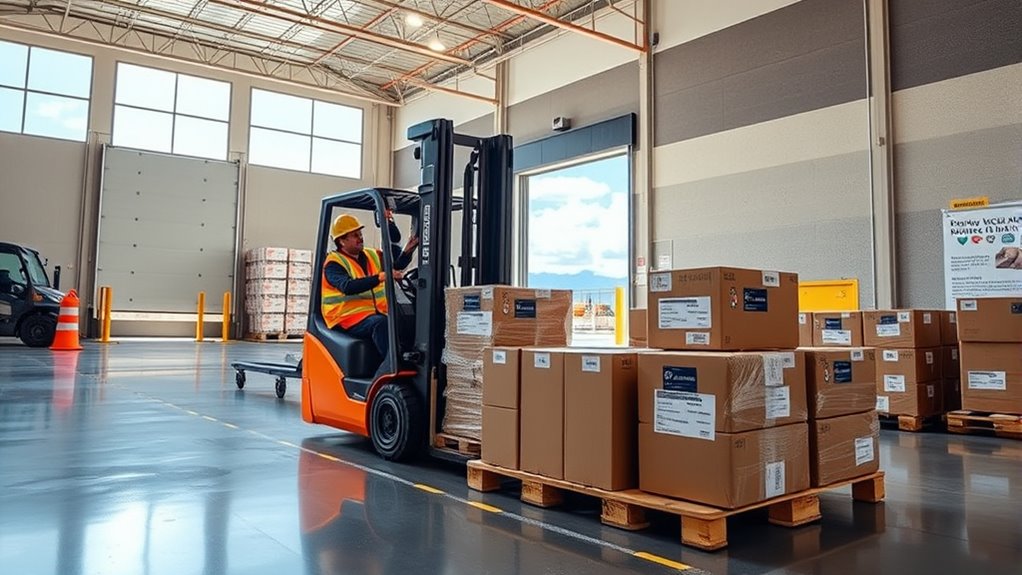
Loading and unloading may seem straightforward, but doing it safely and efficiently requires careful planning and attention. Before you even start moving goods, make sure you’re equipped with proper PPE. Personal protective equipment isn’t just a formality; it’s your first line of defense against potential injuries. Wear safety gloves to protect your hands from sharp edges and splinters, steel-toed boots to shield your feet from falling objects, and a high-visibility vest so you’re easily seen by others. Eye protection is vital if there’s a risk of debris or dust, and hearing protection might be necessary if you’re working around loud machinery. Proper PPE helps prevent accidents and guarantees you can focus on the task without unnecessary worry.
Equally important is conducting a thorough vehicle inspection before you begin loading or unloading. This step can’t be skipped, as it guarantees the safety of the vehicle and the stability of your load. Check the brakes, tires, and lights to ensure everything is functioning properly. Examine the loading dock area for hazards like spills, debris, or uneven surfaces that could cause slips or trips. Verify that the vehicle’s stability locks are engaged, and confirm that the lift gates or ramps are in good working condition. Making sure the vehicle is secure and in proper condition reduces the risk of accidents during the process. Remember, a well-maintained vehicle not only keeps you safe but also protects your cargo from damage.
When you start loading or unloading, always follow proper procedures. Use equipment like forklifts or hand trucks correctly, making sure they’re in good condition and operated by trained personnel. Distribute weight evenly to prevent the vehicle from becoming unbalanced, which can cause tipping or shifting during transit. Communicate clearly with your team, using hand signals or radios to coordinate movements smoothly. Take your time to secure the load properly using straps, ropes, or locks—nothing should be left loose, as it could fall or shift unexpectedly. Regularly check your work as you proceed, guaranteeing everything remains stable and secure. Incorporating vibrational stability techniques can further enhance safety by ensuring loads are properly balanced and less prone to shifting during transit.
Frequently Asked Questions
What Are the Common Hazards During Loading and Unloading?
During cargo handling, you face hazards like falling objects, slips, and strains from improper lifting. Poor weight distribution can cause shifts or falls, risking injury. You might also encounter equipment malfunctions or unstable loads, leading to accidents. Always stay alert, guarantee proper securing of cargo, and follow safety protocols to prevent injuries. Maintaining awareness of these hazards helps you load and unload efficiently while minimizing risks.
How Do Weather Conditions Affect Loading and Unloading Safety?
Like an old sailor steering treacherous waters, you must adapt to weather hazards during loading and unloading. Rain, snow, and ice create slippery surfaces, increasing fall risks. Seasonal challenges, such as strong winds or extreme temperatures, can compromise equipment and worker safety. Always check weather forecasts, use appropriate PPE, and adjust your procedures accordingly. Staying vigilant helps prevent accidents, ensuring a smooth process despite nature’s unpredictable moods.
What Equipment Maintenance Is Essential for Safe Operations?
You need to perform regular equipment inspections to identify any wear or damage that could cause accidents. Preventive maintenance is essential; it keeps your machinery in top condition, reducing breakdowns and safety hazards. Check all safety features, fluid levels, and structural integrity frequently. Proper maintenance guarantees safe operations, protects your team, and increases equipment lifespan. Don’t overlook these steps—they’re indispensable for a secure and efficient loading and unloading process.
How Can Workers Be Trained Effectively for These Tasks?
Did you know that proper training reduces workplace accidents by 50%? To train workers effectively, develop thorough training programs that focus on hands-on practice and real-world scenarios. Emphasize safety protocols during every session, and use visual aids and demonstrations to reinforce learning. Regular refresher courses ensure skills stay sharp. By actively engaging your team and emphasizing safety, you create a safer, more efficient working environment for everyone involved.
What Are the Legal Regulations Governing Loading and Unloading Procedures?
You must follow legal regulations governing cargo handling to guarantee safety and compliance. These laws typically set standards for weight limits, equipment use, and safety procedures. You’re responsible for understanding and implementing these rules, such as OSHA standards or local transportation laws, to prevent accidents and legal issues. By adhering to legal compliance, you protect yourself, your colleagues, and your company from penalties and liabilities related to improper loading and unloading practices.
Conclusion
By prioritizing safety and efficiency, you protect both yourself and your cargo. Rushing might seem like a way to save time, but it often leads to accidents and damage. Conversely, careful planning and adherence to protocols may take a moment longer, yet guarantee smooth operations. Balancing these elements transforms loading and unloading from a risky chore into a confident, controlled task. Ultimately, safety and efficiency aren’t opposite—they’re two sides of the same coin that keep you moving forward.