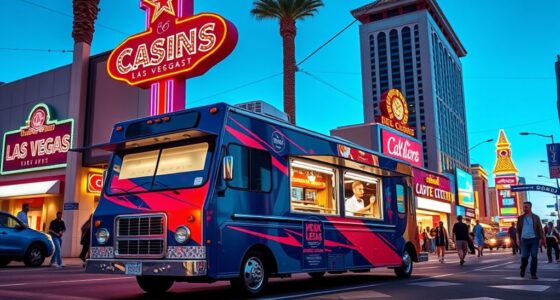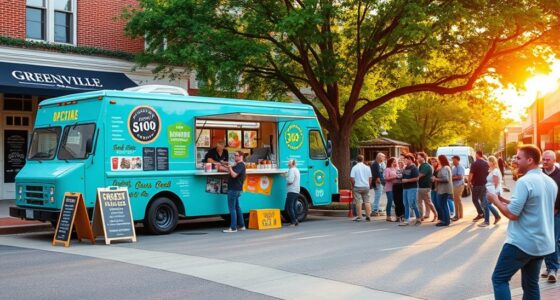
To find and outfit your food truck, start by choosing a reliable, well-maintained vehicle that fits your size and layout needs. Regular maintenance and inspections keep it running smoothly and boost customer trust. Focus on eye-catching branding, including graphics and wraps, to stand out. Customize the interior to suit your menu and workflow, investing in quality appliances. For more tips on launching your mobile eatery, discover how to perfect your truck’s setup and branding strategies.
Key Takeaways
- Assess truck size, layout, and condition, ensuring it aligns with your menu and operational needs.
- Conduct thorough vehicle inspections or consult professionals to verify reliability and maintenance history.
- Prioritize branding and exterior design with eye-catching graphics and signage that reflect your business identity.
- Customize the interior for safety, hygiene, and workflow efficiency, investing in durable appliances and fixtures.
- Maintain routine upkeep and branding updates to project a professional image and support long-term success.
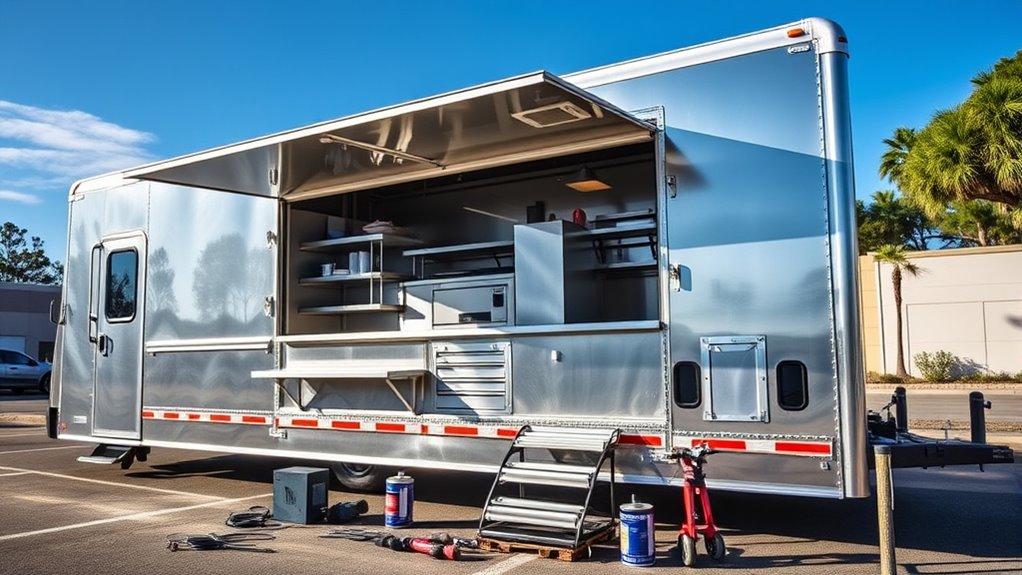
Choosing the right food truck is a essential first step in turning your culinary vision into a mobile reality. You need to find a vehicle that fits your menu, budget, and long-term goals. When selecting a truck, consider its size, layout, and condition. A well-maintained truck ensures smooth operations and minimizes downtime. You’ll want to inspect the vehicle thoroughly or work with a professional to evaluate its mechanical state. This vehicle evaluation process helps prevent costly repairs down the line and keeps your business running efficiently. Remember, a reliable truck isn’t just about function—it’s also a canvas for your branding strategies. A visually appealing exterior can attract customers and build recognition. Think about how your truck’s design, colors, and signage will reflect your brand identity. The right branding can turn your truck into a moving billboard, drawing attention and making a memorable impression. Once you find your ideal vehicle, outfitting it becomes the next crucial step. This involves customizing the interior to suit your menu and workflow, ensuring everything is organized for maximum efficiency. Your kitchen setup should prioritize safety, hygiene, and ease of movement. Investing in quality appliances and fixtures is essential. But beyond functionality, your truck’s appearance plays a key role in branding. Custom graphics, logos, and eye-catching wraps can make your truck stand out amid competitors. Well-planned branding strategies help you communicate your unique selling points clearly, whether it’s organic ingredients, specialty cuisine, or exceptional service. As you outfit your truck, keep in mind that maintenance is ongoing. Regular truck maintenance isn’t just about fixing problems—it’s about preventing them. Establish a routine check for mechanical issues, fluid levels, and cleanliness. Proper maintenance extends your vehicle’s lifespan and guarantees your truck remains safe and reliable for daily operations. Incorporate branding strategies into your maintenance routine by keeping your truck’s exterior clean and looking professional. A tidy, well-branded truck boosts your credibility and keeps customers coming back. Overall, selecting and outfitting your food truck requires careful planning and attention to detail. Focus on a vehicle that’s reliable and easy to maintain, and develop branding strategies that truly capture your business’s essence. This foundation will set you up for success as you hit the streets, serve your signature dishes, and grow your brand. Remember, your truck isn’t just a mobile kitchen—it’s a representation of your culinary passion and your business identity. Putting thought into maintenance and branding from the start will help you create a thriving, recognizable food truck that stands out in a competitive market.
Frequently Asked Questions
What Permits Are Required to Operate a Food Truck Locally?
You need to get food truck licensing and meet local regulations before operating. Check with your city or county’s health department for permits related to food service, mobile vending, and vehicle registration. You might also need a business license, fire department approval, and parking permits. Ensuring you comply with all local regulations helps you avoid fines and run your food truck smoothly. Always stay updated on any changes in requirements.
How Do I Choose the Best Location for My Food Truck?
Choosing the best location for your food truck is like finding a hidden treasure. You need to take into account parking regulations to make sure you’re legally parked and avoid fines. Look for spots with high customer accessibility, such as busy streets, office parks, or event venues. Observe foot traffic and footfall patterns, and test different sites. A prime location maximizes sales and builds your reputation, so choose wisely and adapt as needed.
What Are the Costs Involved in Outfitting a Food Truck?
The costs involved in outfitting your food truck include a detailed cost breakdown of equipment expenses, such as kitchen appliances, refrigeration, and cooking tools. You should also budget for vehicle modifications, safety gear, licensing, and initial inventory. Expect to spend anywhere from $20,000 to $100,000 depending on your menu and truck size. Planning for these expenses helps make certain you’re financially prepared to launch and operate smoothly.
How Can I Ensure My Truck Meets Health and Safety Standards?
Think of it like upgrading your vintage radio—attention to detail matters. You guarantee your truck meets health and safety standards by completing food safety training and maintaining rigorous equipment sanitation. Regularly inspect your kitchen, follow local regulations, and keep documentation handy. Staying proactive and informed helps you pass health inspections with flying colors, so your customers trust your food and your business stays legit.
What Are Effective Marketing Strategies for New Food Trucks?
To effectively market your new food truck, leverage social media by posting appealing photos, special offers, and updates regularly to attract followers. Engage with your local community through events, collaborations, and partnerships to build loyalty and word-of-mouth buzz. Encourage satisfied customers to share their experiences online and leave reviews. Consistent, authentic community engagement and active social media presence will help you stand out and draw in more customers.
Conclusion
Just as the pioneers charted new territories, your food truck journey begins with bold steps. With your truck found and outfitted, you’re ready to carve out your place on the streets. Embrace the adventure ahead, knowing every turn and twist shapes your story—like a modern-day explorer. Keep your passion fueled, your wheels turning, and let the open road be your canvas. The path is yours to create; now go and make your mark.